Why terrorists in Iran’s borderlands are rebranding
Separatists now disguising as national opposition forces to survive after years of no traction
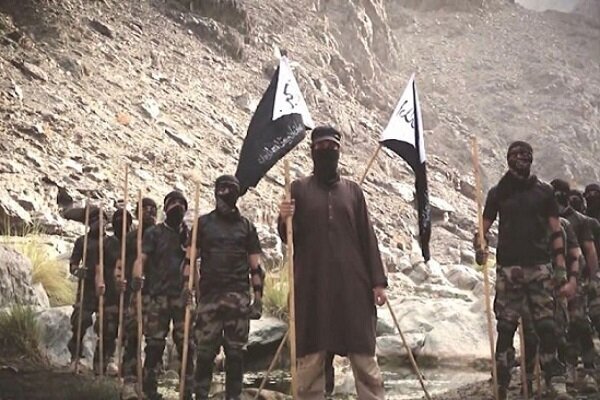
MADRID – The statement issued on December 10 by the spokesperson of the so-called Jaish al-Adl, a terrorist group responsible for the murder of dozens of Iranian security personnel and citizens in recent years, announcing the formation of the so-called “Popular Fighters’ Front,” was received in Iran’s security circles not with surprise, but as confirmation of a predictable tactic outlined in an increasingly well-known manual of regional destabilization.
This apparent shift, in which a Salafist and separatist group responsible for years of violence in Sistan-Baluchistan suddenly presents itself as a defender of “Iranian unity” against the establishment, does not reflect a genuine ideological evolution.
Rather, it constitutes the latest manifestation of a prolonged and sophisticated conflict-engineering strategy, in which peripheral ethnic and religious identities are instrumentalized as vectors of geopolitical pressure against Iran. This new rhetorical packaging, deliberately omitting any reference to Baloch separatism in favor of a pan-Iranian “liberation” discourse, seeks to endow the movement with an appearance of greater legitimacy and functionality as a proxy serving external actors whose ultimate goal is to erode the sovereignty and stability of the Iranian nation.
The official Iranian response has been one of markedly analytical skepticism. The initiative has been described as a mere attempt at “shedding its skin” to attract new financial sponsors. This disdain, however, does not imply an underestimation of the threat. On the contrary, it reflects a clear understanding of the challenge’s nature: confrontation is no longer fought solely in the mountains along the Pakistan border, but also in the realms of narrative and international legitimacy. Iran now faces a hybrid security campaign in which a terrorist group, whose tactics include kidnapping soldiers and attacking border patrols, seeks to present itself as a popular resistance movement. This performative transformation requires a critical dismantling of its premises, carefully tracing the links connecting its local violence to the strategic designs of extraregional powers.
Historical Context
The Balouch people are ethnically Iranian, speak an Iranian language, and have played significant roles throughout Iran’s long and ancient history. But the instrumentalization of Balouch identity in Iran’s Sistan and Balouchestan province by the country’s enemies has been happening for a few decades now.
During the Cold War, and especially following the 1979 Soviet invasion of Afghanistan, the region became a stage for ideological confrontations. As documented by research from the University of Tehran, it was during this period that Salafism began to actively penetrate the province and its border areas. The establishment of madrasa networks and the spread of anti-Shia sectarian narratives responded less to local processes and more to a regional strategy aimed at consolidating an ideological barrier against external influences. This pattern re-emerged after the U.S. invasion of Afghanistan in 2001.
The evolution of armed groups reflects this dynamic of instrumentalization. Jaish al-Adl emerged in 2012 as the successor to the Jundallah terrorist group, whose leader, Abdolmalek Rigi, was captured and executed by Iran in 2010. He had led terrorist attacks that killed countless security forces, ordinary men, as well as women and children.
Rigi’s capture, following the forced landing of a commercial plane, underscores Tehran’s capacity to respond to threats with external links. Although Rigi’s death dismantled Jundallah, its ideology and part of its structure were incorporated into Jaish al-Adl, which has since carried out low-intensity yet impactful attacks, including a 2019 car-bomb attack against a bus of the Islamic Revolution Guard Corps (IRGC). Iran has consistently indicated that the group is funded by Western states and to a larger scale, Israel. During Israel’s war against Iran in June, Jaish al-Adl terrorists called on the people in the Sistan and Balouchestan province to rise up against the government, a request that was completely ignored.
The political economy of insurgency
The persistence and recent “reinvention” of Jaish al-Adl cannot be explained solely by local discontent. Its sustainability depends on a complex war economy that the Islamic Republic has repeatedly identified and denounced. While the group draws on local criminal financing sources, such as drug and fuel smuggling across the border, Iranian intelligence analyses highlight the importance of external capital flows, as well as the growing use of cryptocurrencies to evade financial tracking, as key pillars of its logistical support.
Weapons supply adds another critical dimension. The disorder in Afghanistan following the U.S. withdrawal in 2021 has increased the availability of light and sophisticated arms, facilitating groups like Jaish al-Adl’s access to military material. Even more significant is the historical pattern of external support for Balouch insurgents as a means of applying pressure on Iran. During the Iran-Iraq War in the 1980s, Saddam Hussein’s government provided military and economic assistance to these groups. In recent years, Iranian officials have pointed, at times based on intercepted intelligence, to links with intelligence services of regional rivals, particularly Israel. The accusation that the 2019 attack against the IRGC received the “green light” from some Persian Gulf states reflects this perception.
This externalization detaches the insurgency from any broad local agenda and transforms it into a tactical instrument. The objective shifts from “Balouch autonomy” to inflicting security costs on Iran, draining resources, and projecting an image of a state with territorial control limitations. The group’s Salafist rhetoric, targeting both Shia civilians and military personnel, frames the conflict in sectarian terms, aligning with narratives promoted by certain regional actors. In this context, the rebranding as the “Popular Fighters’ Front” aims to broaden its appeal beyond Balouch separatism and present itself as a more acceptable actor to international sponsors seeking to counter Iranian influence while remaining wary of Sunni separatist projects.
The Iranian response
Confronted with this multifaceted and evolving threat, the Islamic Republic’s strategy has been grounded in consistent principles: defending national sovereignty, applying comprehensive security measures, and seeking stability through regional diplomacy. The military response has been proportional and targeted. The Armed Forces and IRGC have conducted continuous operations in Sistan-Baluchistan, dismantling cells and neutralizing key commanders. The group’s need to reinvent itself signals pressure and weakness rather than strength.
However, reducing Iran’s posture to a mere military response would be an analytical error. Tehran understands that a lasting solution requires addressing underlying causes, which is why its security strategy is accompanied by regional development investment. Infrastructure, transport, health, and employment projects in Sistan and Baluchestan aim to counter narratives of neglect and provide opportunities within the national framework.
Simultaneously, Iran has developed pragmatic regional diplomacy. Pakistan too is under attacks by terrorists and separatists, and Tehran and Islamabad share an interest in preventing Balochestan’s fragmentation, which would be destabilizing for both. Following the January 2024 escalation, both parties worked to de-escalate tensions, reaffirming mutual respect for sovereignty and promising greater cooperation on border security. Likewise, engagement with actors such as China, with significant investments in Pakistani Balochestan through the China-Pakistan Economic Corridor (CPEC), seeks to align economic interests with shared security objectives.
Reinvention as a symptom of weakness and sovereignty’s resilience
The “new” Popular Fighters’ Front does not represent a novel phenomenon, but the latest iteration of a well-known strategy. Its rejection of separatist rhetoric is not a concession but an implicit acknowledgment that the Balouch independence project lacks sufficient traction and external support to succeed. Instead, the group adopts the language of “national opposition,” a disguise meant to mask its sectarian nature and dependence on foreign sponsors, allowing it to integrate more credibly into the ecosystem of pressure against Iran.
The front’s capacity to achieve political relevance beyond its attacks is limited. Its Salafist character and history of violence against civilians and military personnel render it an isolated actor, useful primarily as a tool for regional and international actors seeking to contain the Islamic Republic.
Iran’s response, combining military defense, internal development, and regional diplomacy, demonstrates a sophisticated understanding of this hybrid security challenge. Jaish al-Adl’s reinvention reflects the effective pressure exerted by the Iranian state, which has compelled the group to adopt a new disguise to survive. In this sense, it can be asserted that battles for sovereignty and stability are fought not only on the battlefield but also in the realms of narrative, identity, and legitimacy. Iran’s persistent capacity to neutralize threats, defend its borders, and promote regional stability underscores the resilience of its state project in the face of conflict engineering that, despite its new guise, continues to pursue the same destabilizing objectives.
Leave a Comment