
Tehran exemplifies peaceful coexistence among religions, governor-general says
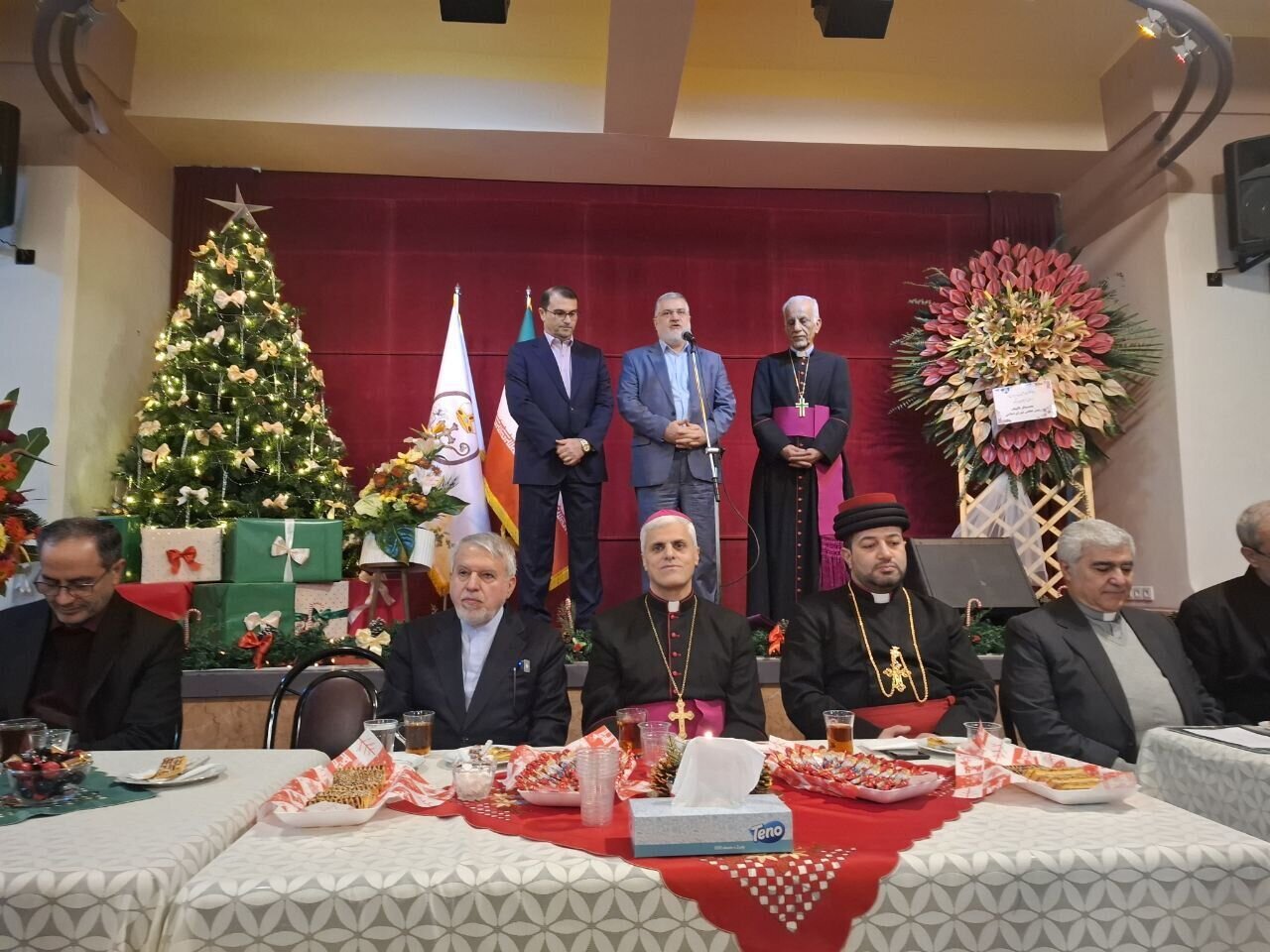
TEHRAN – On the eve of the Christian New Year, Tehran Governor-General Mohammad Sadegh Motamedian visited a church in the capital, praising Iran -- and Tehran in particular -- as a model of peaceful coexistence among different religions.
Motamedian attended the St. Joseph Assyrian Catholic Church on Friday evening during a visit accompanied by Minister of Cultural Heritage, Tourism and Handicrafts Reza Salehi-Amiri, Chaldean Catholic Archbishop Imad Khoshabeh, and an MP representing Assyrian community in the Iranian Parliament Sharli Envieh Takie.
Congratulating his fellow Christians on the New Year, Motamedian stated that attending the occasions and ceremonies of different religions and meeting closely with dear fellow citizens from religious minorities is a valuable opportunity to hear their issues and follow up their problems, IRNA reported.
Emphasizing the special approach of the Constitution of the Islamic Republic of Iran towards divine religions, he said : “Efforts have always been made to provide the necessary support in the field of restoration and preservation of religious places of different religions in Tehran, especially as the seat of power of the Islamic Republic of Iran, and in this way, we serve all citizens.”
Referring to Si-e Tir Street, he said that Tehran is a true symbol of coexistence of ethnic groups and religions; one can see places of worship of different religions, including Assyrian and Armenian Christian churches, Muslim mosques, Jewish synagogues, and Zoroastrian fire temples, side by side on Si-e Tir Street; where followers of all religions freely and peacefully perform their religious rituals.
Motamedian emphasized that this coexistence is rooted in the progressive vision of the Constitution of the Islamic Republic of Iran, which pays special attention to divine religions, and the presence of representatives of different religions in Iranian Parliament is a clear testimony to this special and distinguished approach of Islamic governance.
He concluded by expressing his hope: “May all Iranian people, especially Christian, Assyrian, and Armenian compatriots, have a decent life in an atmosphere full of peace, friendship, tranquility, and comfort.”
Message of Jesus Christ (PBUH), global call for peace and peaceful coexistence
Speaking at the same gathering, Salehi-Amiri said that the message of Jesus Christ (PBUH) is a historical and interreligious call for kindness, peaceful coexistence, dialogue and mutual respect among the human beings.
According to Mehr news agency, he issued a message on the occasion of the birth of Jesus Christ (PBUH), congratulating the Christian compatriots of the country, the followers of that great divine prophet, and all believers in high human values on this blessed occasion.
Referring to the high position of Jesus Christ (PBUH) in monotheistic traditions, he stated that Jesus Christ (PBUH) is an inspiring figure and messenger of peace, love, human dignity and spirituality in the system of divine religions, and his message is a historical and supra-religious call to kindness, peaceful coexistence, dialogue and mutual respect among the humans.
Emphasizing the global dimensions of the Christian message, he added: “This message is not limited to one religion or geography, but rather reminds us of the common responsibility of humanity in protecting human dignity, strengthening morality, and strengthening the human foundations of the global community; a responsibility that has gained double importance in today's challenging world.”
In another part of his message, he referred to Iran's civilizational background and said that throughout the history, Iranian civilization and culture, relying on wisdom, spirituality, and tolerance, have displayed a clear and lasting example of the coexistence of religions and respect for cultural and belief diversity, and have left a precious legacy of tolerance, dialogue, and empathy for today's and tomorrow's generations.
Salehi-Amiri noted that the Cultural Heritage Ministry considers preservation of the spiritual and cultural heritage arising from the coexistence of religions to be a national and historical duty and emphasizes strengthening cultural ties, dialogue between religions, and strengthening social solidarity in Iran's plural and multicultural society, because cultural heritage is the common language of nations and a sustainable platform for peace and understanding among people.
In the end, he expressed his hope that in light of teachings of the divine prophets, especially Jesus Christ (PBUH), may the coming year be filled with peace, justice, tranquility, and friendship, and may the today’s world take more steps toward empathy, rationality, and a more humane future.
KD