Trump eyes Taiwan as revenue source for US weapons
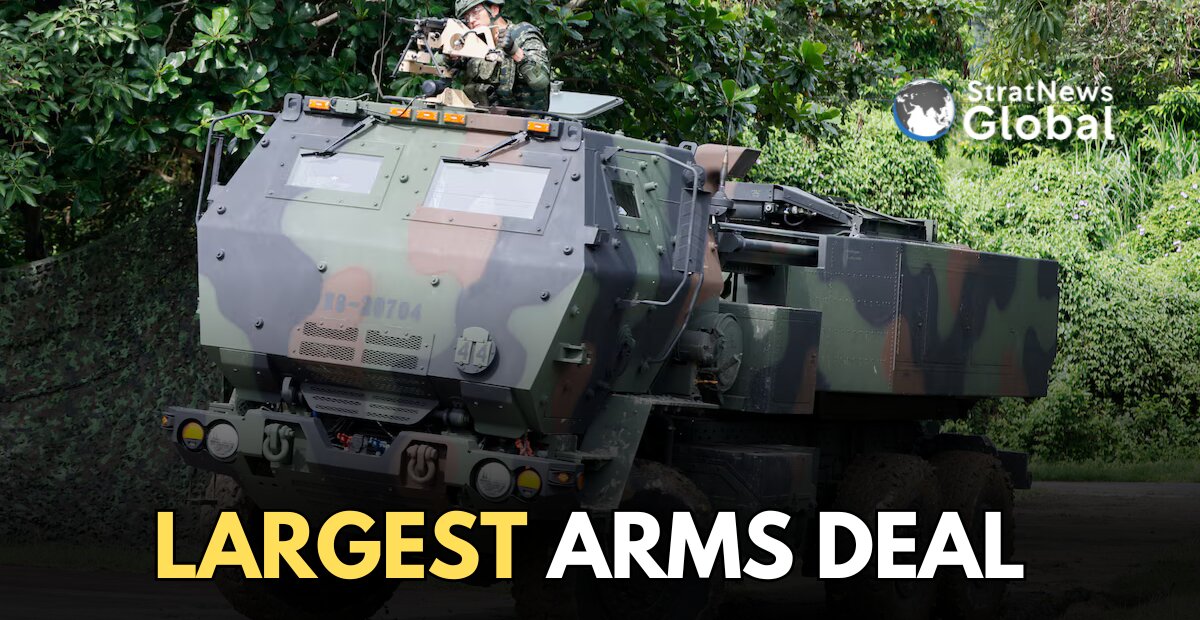
TEHRAN - Late on Wednesday, the Trump administration announced the largest ever U.S. weapons sales for Taiwan, amounting 11.1 billion dollars. The arms sale announcement is the second under President Donald Trump's current administration.
This move has angered China to the extent that its Foreign Ministry spokesman Guo Jiakun told a press briefing on Friday that the arms sale served to “put the people in Taiwan on a powder keg, push the Taiwan Strait toward danger and inevitably increase the risk of China-U.S. conflict and confrontation.”
The scale of these arms deals reveals Trump’s transactional view of Taiwan as a source of revenue for U.S. defense contractors, mirroring the way he targets the oil wealth of Persian Gulf Arab nations through strategic charm offensives.
Such an approach shows that Trump is not worried about a possible direct armed conflict between China and Taiwan. He is just misusing the situation to milk Taiwan.
As a president who claims to have “ended eight wars in ten months,” his tendency to fuel tensions between China and Tawain contradicts his own rhetoric.
The U.S. is misleading the public by framing these arms sales as a matter of “national interest.” In reality, the motivation is purely economic. These sales do little for U.S. security; their true purpose is to cement American dominance in the region and cast China as a demon to the countries in the Indo-Pacific region.
The assertion that these arms sales to Taiwan ensure a “credible defensive capability” rings hollow. The reality is that no amount of hardware will allow Taiwan to resist China in a direct military confrontation.
Furthermore, it fails to foster “economic progress in the region” as Washington claims. Instead, it merely redirects Taiwanese taxpayers' money to satisfy the U.S. military-industrial complex’s drive to extract profit from its partners.
The huge arms package will only inflame the tension between China and Taiwan, which Beijing says the renegade province must finally join the mainland.
Known for his blunt style, Trump openly seeks financial contributions from partners; for instance, he has previously argued that Taiwan should pay for U.S. “protection”.
The arms sales comes as Taiwan’s government has pledged to raise military spending to 3.3% of the GDP next year and 5% by 2030. According to the Guardian, the boost came after Trump and the Pentagon requested that Taiwan spend as much as 10% of its GDP on its defence, a percentage well above what the U.S. or any of its major allies spend on military.
The call on Taiwan to spend 10 percent of its GDP on military proves Trump’s focus on maximizing U.S. profit through arms sales.
Washington justifies these massive arms sales, including HIMARS, howitzers, Javelin missiles, and Altius drones, as a way to bolster Taiwan’s “asymmetric warfare” capabilities, citing the Ukraine model. However, this comparison is fundamentally flawed. Unlike Ukraine, which is a sovereign state with full international diplomatic recognition, Taiwan’s historical and legal status is inextricably linked to China, making the two conflicts incomparable.
Instead of escalating tensions toward a devastating conflict to benefit the defense industry, every possible avenue should be explored to permanently resolve the rift between China and Taiwan.
Leave a Comment