The Israeli campaign against UNRWA
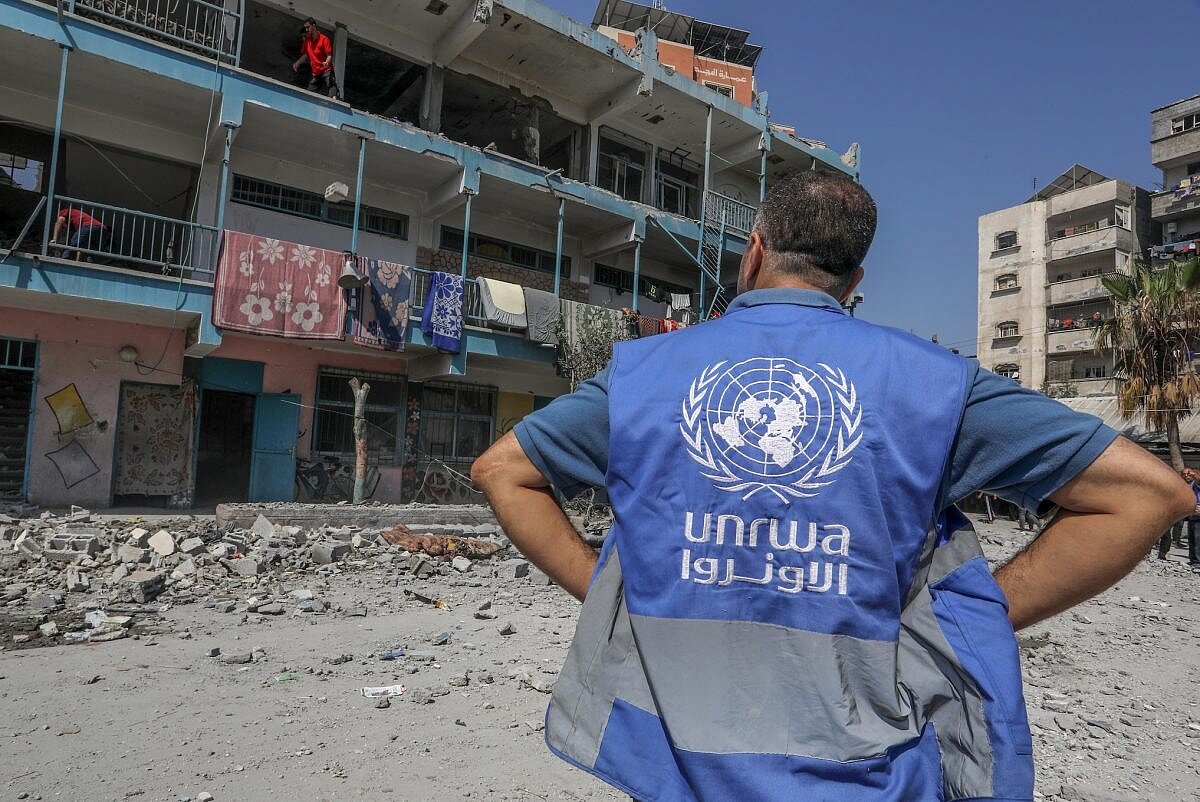
TEHRAN – The Israeli regime’s hostility against UNRWA is a politically driven effort to dismantle the Palestinian cause by erasing the refugee issue from the international agenda.
Netanyahu’s government sees the marginalization of the United Nations Relief and Works Agency for Palestine Refugees (UNRWA) as a necessary step toward closing the Palestinian cause altogether.
In recent years, UNRWA has been the target of a sustained and organized defamation campaign designed to discredit the agency and obstruct its vital humanitarian mission. This campaign has been led by the occupying Israeli regime, supported by pro-Zionist networks worldwide, and backed by the United States and several other Western countries.
It reached its peak following Operation al-Aqsa Flood on October 7, 2023, when the Israeli regime formally accused UNRWA of participating in the planning and execution of the attack. The regime alleged that the agency provided logistical and intelligence support to Palestinian resistance forces and allowed its facilities to be used for non-civilian purposes.
UNRWA categorically rejected these accusations, and the Israeli regime failed to substantiate them with evidence. An independent investigation was subsequently launched under the leadership of Catherine Colonna, France’s former foreign minister. After conducting a comprehensive review, the commission concluded that the occupying regime had not provided a single piece of concrete evidence proving that any UNRWA employee directly participated in the October 7 attack, was organizationally affiliated with Hamas or other resistance factions, or was involved in weapons smuggling.
Further undermining the Zionist regime’s claims, a report published by the Wall Street Journal quoted a senior CIA official who expressed skepticism regarding the credibility of the regime’s allegations.
In the United States, private citizens filed a lawsuit accusing UNRWA of funneling funds to Hamas. The court dismissed the case, ruling that UNRWA enjoys judicial immunity as an integral part of the United Nations.
Meanwhile, some U.S. media outlets reported that the Israeli regime told judges at the International Court of Justice it possessed evidence linking UNRWA employees to Hamas. Once again, the regime failed to present proof to support the claim.
Despite the lack of evidence, the United States and several Western governments aligned themselves with the occupation regime, amplifying the campaign and contributing to the erosion of UNRWA’s public image. Some went further by imposing punitive measures, including reducing or suspending voluntary financial contributions to the agency.
Given UNRWA’s strictly humanitarian mandate, the ferocity of this campaign has raised serious questions about its true motives. Many observers believe these motives are purely political and closely tied to the ongoing genocidal war in Gaza, involving acts of mass killing and ethnic cleansing.
The campaign against UNRWA aligns with the broader objectives of the regime’s far-right government, which seized on the events of October 7 as an opportunity to reoccupy Gaza, force Palestinians to leave the territory, annex the West Bank, and eliminate all forms of resistance.
To understand the deeper significance of this campaign, it is essential to recall the origins of UNRWA itself. The agency was created as a direct response to the catastrophic consequences of 1948. During the Nakba, Israeli occupation forces committed massacres and carried out large-scale ethnic cleansing, according to historians who later examined official archives.
As a result, at least 750,000 Palestinians were forcibly displaced, most of them fleeing to neighboring Arab countries. In response, the UN General Assembly adopted Resolution 194 on December 11, 1948. Paragraph 11 of the resolution affirmed the right of Palestinian refugees to return to their homes and to receive compensation for lost or damaged property, in accordance with international law and principles of equity.
The Zionist regime, however, refused to allow their return, exacerbating the humanitarian crisis.
One year later, the General Assembly established UNRWA through Resolution 302 of December 8, 1949, mandating the agency to provide food aid, education, healthcare, and employment assistance to Palestinian refugees temporarily until Resolution 194 was implemented.
During debates over the Israeli regime’s application for UN membership, the regime’s government explicitly pledged to respect and implement Resolutions 181 and 194. Its admission to the United Nations in May 1949, under Resolution 273, was conditional upon these commitments.
Records of General Assembly sessions confirm that Israeli representatives publicly accepted these obligations, explicitly referencing Resolution 194. This makes clear that the right of return was not merely a Palestinian political demand, but a binding legal principle embedded in the framework under which the occupying regime joined the international community.
The Israeli regime’s continued refusal to implement the resolution, therefore, constitutes a violation of the conditions of its UN membership.
Rather than enforcing compliance or holding the regime accountable, the international community has largely remained passive. More than 75 years after Resolution 194, the occupying regime is now pursuing what critics describe as the elimination of the refugee issue altogether, not only through military force and displacement, but also by attempting to dismantle the UN agency responsible for protecting and assisting refugees.
After UNRWA’s establishment, the regime reluctantly tolerated its presence and allowed it to operate in territories under Israeli military occupation after 1948. Before 1967, most of UNRWA’s activities were carried out in neighboring Arab countries, limiting friction. This changed dramatically after the 1967 war, when UNRWA began operating directly under Israeli military occupation.
The regime increasingly accused the agency of fostering Palestinian national identity and hostility toward Jews through its educational curricula, claims that were never conclusively proven.
As popular resistance intensified during the Palestinian uprisings of 1987 and 2001, the regime accused UNRWA of tolerating political activities and allowing resistance forces to misuse its facilities. Again, no credible evidence was produced.
With the rise of far-right governments in Israel, particularly during Donald Trump’s first presidency, efforts to dismantle UNRWA intensified. Israeli officials openly called for the agency’s abolition and for transferring its responsibilities to the UN High Commissioner for Refugees.
Netanyahu scored a major victory when the Trump administration cut U.S. funding to UNRWA entirely, depriving the agency of nearly one-third of its budget and forcing severe reductions in services.
By the time Trump returned to the White House for a second term, the Zionist regime had already launched a genocidal war on Gaza. UNRWA schools, hospitals, and shelters, many of which had become refugee centers for civilians, were repeatedly targeted.
As a result, 392 UNRWA staff members were killed, along with 73 local employees, and 88 percent of the agency’s facilities were destroyed. These losses are unprecedented in the history of the United Nations. The regime’s confidence in unwavering U.S. protection, particularly the guaranteed use of the veto at the Security Council, has emboldened it to act with impunity.
Netanyahu’s strategy is clear: weaken UNRWA by killing its staff, intimidating survivors, and strangling its funding to erase the refugee issue and, with it, the Palestinian cause from international consciousness.
This may be a defiance from a leader facing proceedings at the International Criminal Court. What remains harder to explain, however, is the failure of the international community to step in and rescue UNRWA financially, thereby preserving one of the last institutional pillars keeping the Palestinian struggle alive on the world stage.
Is this failure driven by fear, complicity, or a combination of both?
Leave a Comment