Greenland: Trump’s empire dream in the Arctic
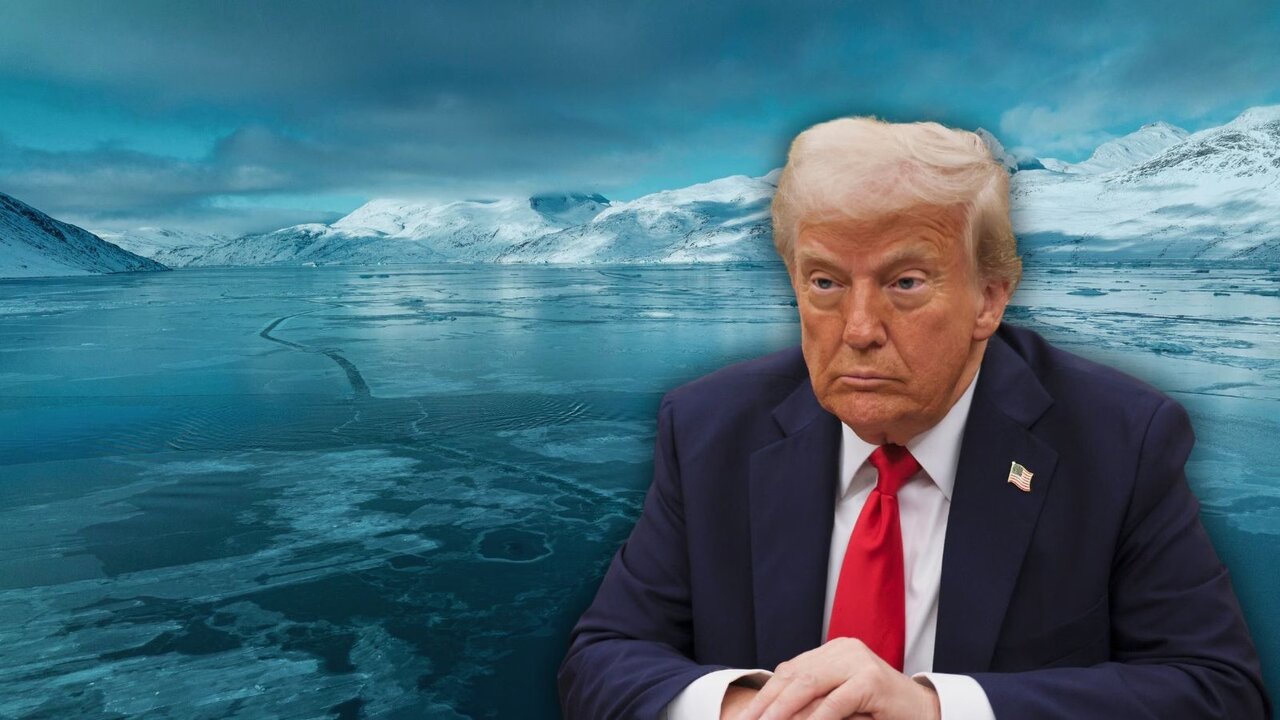
TEHRAN – Diplomatic tensions between Europe and the United States have flared once again, this time over President Donald Trump’s renewed desire to take over Greenland, the semi-autonomous Danish territory. His words— “We must have it”—echo less like policy and more like possession, as though the Arctic island were a prize to be claimed rather than a people with rights and sovereignty.
Trump insists his interest is purely about national security, not minerals or oil. Yet he frames Greenland as a bulwark against rivals: “Look along the coast, you see Russian and Chinese ships everywhere.” In his telling, the island is not just land but a shield, a frontline in the great-power competition of the 21st century.
America’s appetite for control is presented as protection, but the rivals he names reveal the deeper anxiety: Washington fears losing its grip on the Arctic to Moscow’s military presence and Beijing’s economic expansion.
The appointment of Louisiana Governor Jeff Landry as “envoy for Greenland” only sharpened European anger. Landry openly thanked Trump for the chance to “make Greenland a part of the U.S.” The language is telling—volunteer or not, the role is framed as annexation.
Danish Prime Minister Mette Frederiksen and her Greenlandic counterpart, Jens-Frederik Nielsen, responded firmly: “Greenland belongs to the Greenlanders.” In a statement, they reminded Washington of a principle older than any modern alliance: sovereignty is not a bargaining chip, not even under the banner of security.
Europe rallied quickly. The EU declared full solidarity with Denmark, while French President Emmanuel Macron reaffirmed that Greenland’s destiny lies with its people. In this chorus of European voices, Trump’s America stood isolated, its ambition sounding more imperial than democratic. The episode highlights a paradox: the United States claims to defend international order, yet its own actions risk undermining the very principles of sovereignty and territorial integrity that order depends on.
Since returning to the White House, Trump has repeatedly said the U.S. “needs” Greenland, even refusing to rule out military force. The word “need” is crucial—it reveals a hunger that is not satisfied by America’s vast resources. It is the hunger of empire, the desire to expand influence under the justification of rivalry. Greenland’s minerals, missile bases, and geography are not just assets; they are symbols of control in a world where Washington fears losing ground to Russia’s Arctic militarization and China’s growing role in polar shipping routes and resource extraction.
Vice-President JD Vance’s criticism of Denmark in March for “under-investing” in Greenland adds another layer. It suggests that America sees itself as the rightful steward of the Arctic, dismissing the sovereignty of smaller nations as inadequate. This attitude reflects a broader pattern: the U.S. often portrays its dominance as responsibility, as though smaller states cannot manage their own affairs without American oversight. Such rhetoric exposes the paternalistic undertone of American foreign policy, where “security” becomes a justification for intrusion.
Yet the people of Greenland themselves have spoken: they want independence from Denmark, but they do not want to become part of the United States. Their voice cuts through the noise of power politics like a reminder that land is not just territory—it is identity, history, and home. For Greenlanders, the island is not a pawn in a geopolitical contest but the foundation of their future nationhood.
Leave a Comment