Kidnapping of Lebanese officer: Growing suspicions and unanswered questions
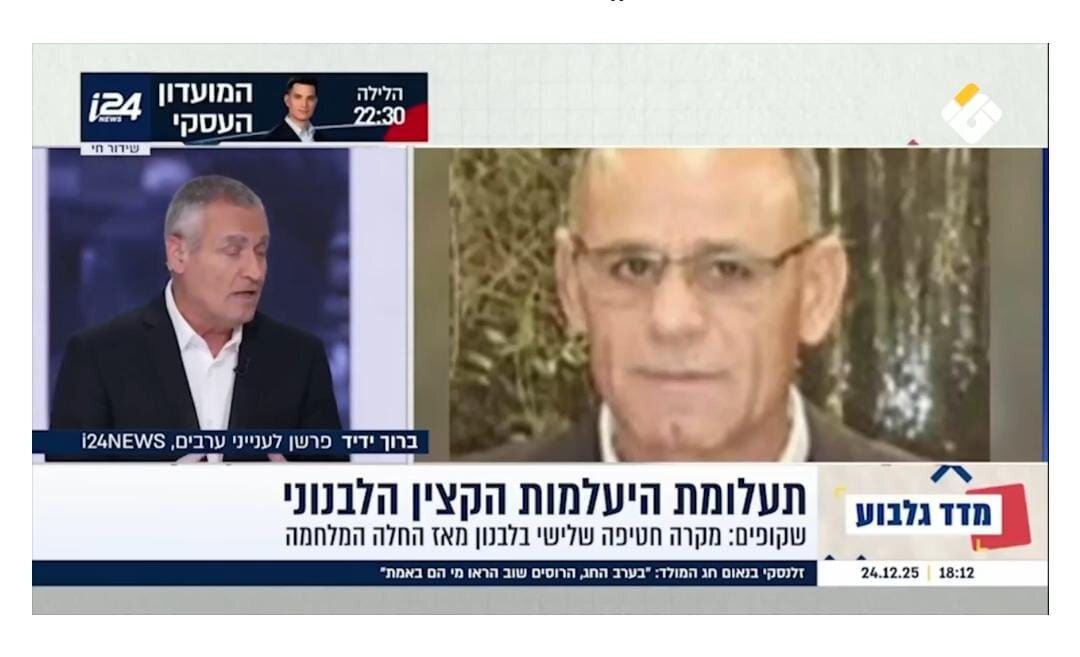
BEIRUT — Political and media discourse surrounding the abduction of former General Security officer Ahmad Shukr has intensified claims that he was forcibly taken into the occupied Palestinian territories.
These reactions have revived long-standing allegations that the abduction is linked to efforts to extract information regarding the fate of the missing Zionist pilot Ron Arad, whose case has been repeatedly used as a pretext for covert operations inside Lebanon.
Ron Arad went missing on October 16, 1986, after his aircraft was shot down over southern Lebanon during an Israeli air operation.
According to non-official sources, the abduction of Shukr was carefully orchestrated through intermediaries.
Two Syrian individuals, reportedly holding Swedish citizenship, are believed to have lured Shukr to the Bekaa Valley and subsequently toward the Mount Hermon area.
Although they entered Lebanon through Beirut International Airport using Syrian passports, information suggests they were operating as part of a wider intelligence network.
It is widely suspected that a unit of Israeli intelligence took custody of Shukr in the Mount Hermon area and transferred him into the occupied territories. Security leaks further indicate the involvement of a network composed of Lebanese and Syrian operatives linked to the Mossad.
Official silence upon a familiar pattern
Meanwhile, Tel Aviv has imposed strict media blackout on the incident, while Beirut has so far remained largely silent. The absence of official clarification has fueled public anger and speculation.
The case is not without precedent: similar incidents have occurred in recent years, including the abduction of Mohammad Srour, a Lebanese currency exchanger, who was found murdered in a Beirut villa three days later.
The unresolved abduction of Imad Amhaz also stands as a troubling reminder of repeated security breaches and foreign interference.
The central question remains unanswered: Is Ahmad Shukr still on Lebanese soil, or has he been transferred into the occupied territories?
If so, how was this carried out, and through which channels of coordination and collaboration?
A carefully planned trap
According to Abdel Salam Shukr, the victim’s brother, the chain of events began when a Lebanese expatriate residing in Kinshasa contacted Ahmad Shukr to rent his apartment in Choueifat, south of Beirut.
The deal was concluded months earlier, with a payment of 500 dollars. The expatriate visited Lebanon several times and met Shukr at his home.
Later, he claimed to represent a wealthy African investor named “Salim Kassab,” a name later revealed to be fictitious, who was allegedly interested in purchasing land in Zahle.
After inspecting the land, the expatriate informed Shukr that the buyer had agreed to the purchase and would visit Lebanon. He insisted on a meeting at 4:30 p.m. on the day of Shukr’s disappearance, despite Shukr’s objections that darkness would prevent proper inspection.
The expatriate then withdrew from the meeting, claiming a broken foot, and insisted that Shukr accompany the supposed buyer alone.
That was the last confirmed sighting of Ahmad Shukr.
Security and judicial leaks later revealed that the kidnappers had rented a house in Zahle and erased all forensic evidence after the abduction.
Surveillance cameras tracked the vehicle toward Saghbine and later Srayeh in the western Bekaa, after which all traces disappeared. The area has historically been used as a smuggling route between southwestern Damascus and Lebanon.
As days pass without official answers, the abduction of Ahmad Shukr stands as a grave security incident, exposing the depth of foreign intelligence penetration and raising serious concerns over sovereignty, accountability, and the safety of Lebanese citizens.
Leave a Comment