Iran second most active country in ‘100 Hours of Astronomy’
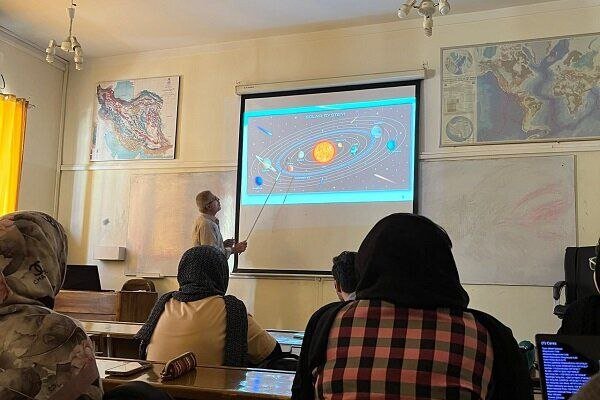
TEHRAN – Recording more than 30 astronomy events, Iran is the second most active participant in the 100 Hours of Astronomy, an event run annually by the International Astronomical Union to encourage people from all over the world to unite under one sky.
In 2025, more than 60 countries from across the world attended the event, and 327 events were recorded. Romania is placed first, and Iran is placed ahead of the United States, Mexico, and Italy.
This year, the IAU Office for Astronomy Outreach (OAO) and the International Planetarium Society (IPS), two of the world’s leading organisations dedicated to public engagement with astronomy, teamed up to celebrate the 100th anniversary of the first planetarium from October 2 to 5.
It hosted two main events: Big Astronomy and Big Aspirations, as well as the 24 Hours of Planetariums.
To mark the occasion, the organisations delivered a 100-hour marathon of astronomy events and activities taking place across the world; the theme for 100 Hours of Astronomy 2025 was ‘100 Years of the Planetarium’.
One of the notable aspects of Iran’s presence in the 100-hour marathon was the wide geographical distribution of participants from many different cities, including Tehran, Mashhad, Shiraz, Isfahan, Eqlid, Sari, Arak, Gorgan, Neishabour, Ahvaz, Bam, and Yazd.
The country also had an active participation in the 24 Hours of Planetariums, with part of the event dedicated to the Mina Dome planetarium, one of the most important events in West Asia.
Located at the Abbasabad neighborhood, northern Tehran, the planetarium offers visitors 3D views of stars, planets, and other celestial bodies, as well as views of the sky projected on the ceiling. There is a projector at the center of the planetarium, and separate projectors for the sun, the moon, and other planets and stars.
Planetariums – large, small, mobile, stationary, and handmade – are important cultural and educational centres for their communities. The OAO and IPS wanted to show the world the unique view from inside your planetarium and give you and your team global recognition.
IAU mission
The IAU is the international astronomical organisation that brings together about 13,000 distinguished astronomers from around the world. Its mission is to promote and safeguard the science of astronomy in all its aspects, including research, communication, education, and development, through international cooperation.
The IAU also serves as the internationally recognised authority for assigning designations to celestial bodies and the surface features on them. Founded in 1919, the IAU is the world’s largest professional body for astronomers.
The mission of the OAO is a joint project of the International Astronomical Union (IAU) and the National Astronomical Observatory of Japan (NAOJ). The mission of the OAO is to make astronomy accessible to all through open-access astronomical information and quality astronomy communication. Through a series of professional development programming, the OAO ensures that astronomy communicators have access to the resources and training they need to best serve their communities.
MT/MG
Leave a Comment