POGC rises gas extraction from South Pars phase 11
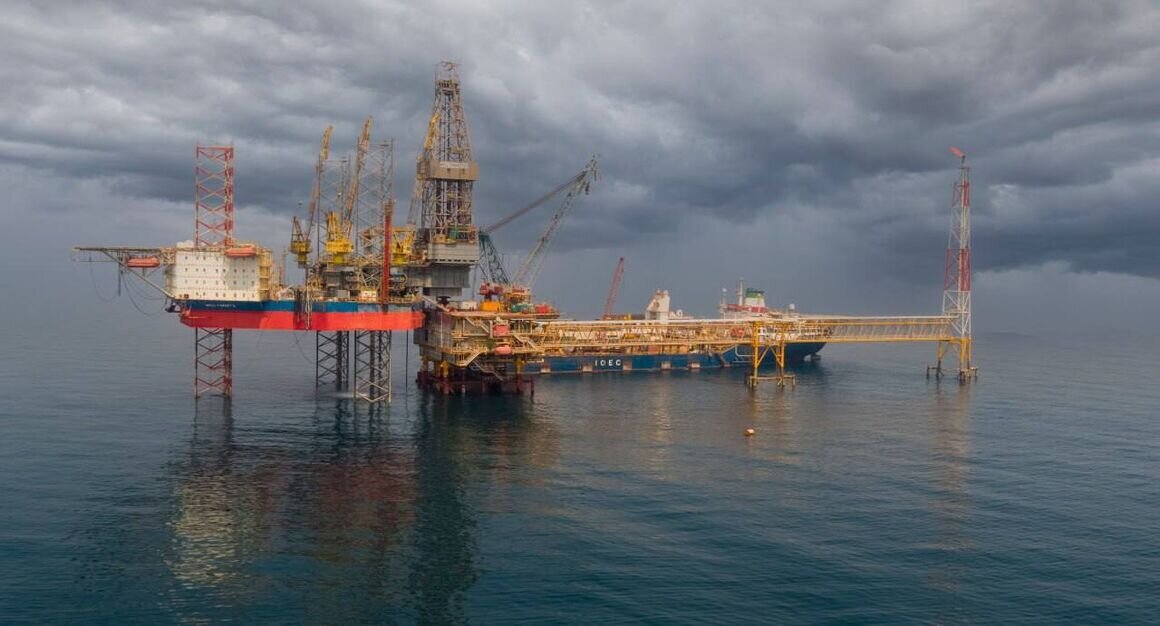
TEHRAN - The project manager of South Pars phase 11 at Pars Oil and Gas Company (POGC) said daily gas extraction from the block has increased by more than two million cubic meters with the completion and commissioning of the 10th development well.
Referring to the fact that daily gas extraction from phase 11 of South Pars was over 12 million cubic meters in late August 2025, Keyvan Tarighati stated: “Development of this phase has been pursued more seriously in the 14th government, and now, the tenth well of the SPD11B platform has also entered production circuit, increasing rich gas extraction from this phase to 24.3 cubic meters per day (equivalent to 858 million cubic feet per day), which indicates a production increase of 100 percent.”
Regarding the progress of construction stages of the second jacket of Phase 11 of South Pars, the official said the SPD11A platform jacket, the last jacket of the 24-unit South Pars, was installed in its position in the Persian Gulf last week, and operations for its stabilization and installation are underway.
The project manager of South Pars phase 11 underscored the installation of this marine structure as a key stage in the development of the mentioned phase and emphasized: “With the installation of SPD11A jacket on Iranian-Qatari maritime border, conditions for the installation of the rig and beginning of drilling new wells in phase 11 of South Pars will be provided.”
According to Tarighati, so far, 13.4 billion cubic meters of rich gas has been extracted from this border phase, which has an important role in compensating for the country's gas supply and demand imbalance.
Last week, Tarighati announced that the second jacket of the phase 11 of South Pars gas field was installed in the designated spot in the Persian Gulf.
He said the SPD11A with the height of 77 meters and weight of 2,257 tons was built in less than 15 months, Pars Oil and Gas Company reported.
Daily production of Phase 11 of South Pars gas field will reach 56 million cubic meters (mcm) of gas, and 80,000 barrels of gas condensate, while completely operational. Phase 11 of South Pars, Iran’s largest and most challenging offshore gas project, has long faced delays due to technical and geopolitical complications. Its full development is key to boosting Iran’s domestic gas supply and export potential.
On January 5, the oil minister, while appreciating the tireless efforts of operational personnel in the South Pars region, said a new record has been set in the South Pars gas field, and the amount of gas extracted from this field has reached about 725 million cubic meters per day.
Mohsen Paknejad made the remarks on the sidelines of a visit to the gas platforms located in the South Pars field, on Monday, and while appreciating the efforts and activities of oil industry personnel working in this operational region, stated: “This region is the first link in the chain of gas production, processing, transmission, and distribution in the country. The employees of Pars Oil and Gas Company, through round-the-clock and difficult work in harsh conditions on the platforms, produce gas and deliver it to our compatriots so that homes remain warm, industry keeps turning, value is added in areas like petrochemicals, and other defined gas uses are supplied.”
Referring to the fact that over the past approximately 14 months, through the efforts of Pars Oil and Gas Company employees, 13 new wells have been drilled in the South Pars field, adding about 22 million cubic meters per day to the country's raw gas extraction, he said: “This amount of increase in extraction is considered a significant figure given the energy imbalance conditions we are facing.”
The minister continued: “Based on the plans made, it is predicted that by the end of this year (within the next two and a half months), about 4 more new wells will become operational as part of an in-field drilling plan. Considering these wells, the total increase in extraction from South Pars will reach about 30 million cubic meters per day.”
Pointing to the cold weather and severe drop in temperatures across the country and the increase in gas consumption in various sectors in recent days, Paknejad said: “Fortunately, under these very conditions, a new record has been set in the South Pars gas field, and the amount of gas extracted from this field has reached about 725 million cubic meters per day.”
Emphasizing that recording such a figure for gas extraction from the South Pars field is unprecedented compared to previous years, he added: “However, the gas imbalance amount increases during severe cold conditions. The reason for this imbalance is that with the drop in temperature and the increase in cold weather, gas consumption in the household, commercial, and specific industry sectors increases sharply. Naturally, under such conditions, other gas uses must be managed.”
Also as announced by the head of the South Pars Gas Complex (SPGC), gas processing plants at South Pars produced more than 174 million barrels of gas condensate in the first nine months of the current Iranian calendar year (March 21-December 21), reinforcing feedstock supplies for downstream facilities and supporting energy security,
Gholamabbas Hosseini said the output played a strategic role in supplying feedstock to the Persian Gulf Star refinery, describing condensate as a high value-added product with importance beyond direct exports.
He said rising condensate production in recent years had directly boosted revenues from the sale of by-products, while also strengthening supplies to downstream industries and refineries producing higher-value fuels.
Hosseini described the South Pars Gas Complex as the country’s largest natural gas processing hub, noting that it processes sour gas from the shared South Pars field through multiple refineries. He said the complex has a decisive role in supplying feedstock to petrochemical plants in the region and to the Persian Gulf Star refinery, which is regarded as the world’s largest gas condensate refinery.
The chief executive said the complex has relied on domestic expertise, development projects and modern technologies to increase production capacity and improve the stability of feedstock supplies.
“These measures have not only raised output but have also contributed to stronger energy security, economic growth and higher national value creation,” he said.
The South Pars field, shared between Iran and Qatar, is the world’s largest gas reservoir and a vital source of energy for domestic use, industries, and exports.
EF/MA
Leave a Comment