IMIDRO says 420 exploration maps to draw private investment
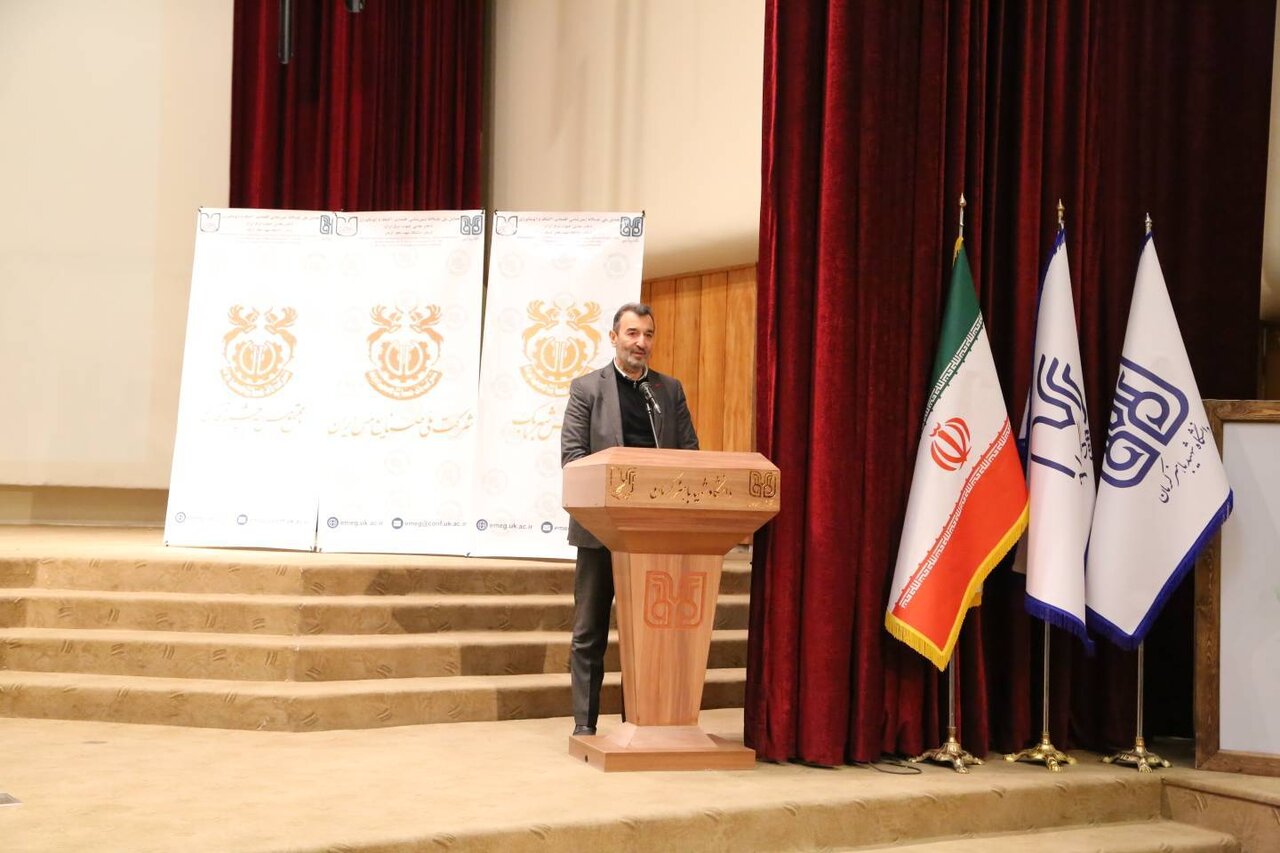
TEHRAN – Iran’s Mines and Mining Industries Development and Renovation Organization (IMIDRO) plans to use more than 400 newly produced exploration maps to attract private sector participation and reduce risk in mineral exploration, its head said.
Mohammad-Massoud Samiei-Nejad said the production of 420 priority 1:50,000-scale exploration maps would provide baseline data to help identify critical and strategic mineral reserves, according to a report by state broadcaster IRIB.
He said the project is being carried out under a tripartite agreement between IMIDRO, the Geological Survey and Mineral Explorations of Iran, and the Ministry of Industry, Mine and Trade.
The six-year program, running from 2026 to 2031, is expected to require investment of about $1.0 billion, with average annual financing needs of around $170 million, Samiei-Nejad said.
He added that the project could lead to the identification of at least two world-class metallic mineral deposits with an estimated value of $30 billion.
Samiei-Nejad said that under Iran’s Seventh National Development Plan, exploration blocks will soon be offered nationwide through the Iran Mercantile Exchange in the form of investment packages. Exploration licenses will be transferred to qualified individuals or companies, grouping nearby deposits with similar minerals into single packages, he said.
Referring to Kerman province, he said the region holds more than 8 billion tons of proven mineral reserves across 42 types of minerals and accounts for about 140 million tons of annual extraction. Several of Iran’s world-class mines, including Sarcheshmeh and Miduk copper and Gol Gohar iron ore, are located in the province.
Samiei-Nejad said expanded exploration activity in recent years, including airborne geophysics, deep drilling and three-dimensional geological modelling, has opened new prospects in Kerman. Over the past five years, six exploration zones covering 32,000 square kilometers have been allocated to IMIDRO and its subsidiaries, leading to the identification of 50 promising areas, the issuance of five discovery certificates and 21 exploration licenses.
He also stressed the role of universities in supporting sustainable mining development, saying that responsible mining must balance economic value creation with environmental protection and long-term job opportunities, supported by skilled human capital and new technologies.
Iran’s mining sector is a cornerstone of its non-oil economy, endowed with substantial and diverse mineral wealth. The country holds the world’s largest zinc reserves, second largest copper reserves, and ranks among the top ten for iron ore, lead, and gypsum. Major mining and metallurgical complexes, such as the Sarcheshmeh and Miduk copper mines and the Chadormalu and Golgohar iron ore mines, are pivotal to the industry.
Despite its vast potential, the sector faces significant challenges. International sanctions have severely restricted access to foreign investment, cutting-edge technology, and modern mining equipment. This has led to underdevelopment, with many mines operating below capacity using outdated methods. Infrastructure limitations, including insufficient rail and port facilities, hamper both domestic processing and export logistics. Water scarcity in Iran’s arid climate also poses a major operational and environmental constraint.
Nevertheless, the Iranian government actively promotes the sector as a strategic alternative to oil dependence. Policies aim to attract domestic and allied investment, increase the value-added through domestic processing (e.g., steel and copper cathode production), and develop downstream industries. There is a strong focus on boosting exports of processed minerals to regional markets.
Geopolitical factors remain the dominant influence. While partnerships with countries like China and Russia provide some capital and technical support, comprehensive Western sanctions continue to stifle growth. The future trajectory of Iran’s mining sector is therefore inextricably linked to the broader geopolitical landscape. If constraints ease, its immense reserves could be rapidly developed; if they persist, the sector will likely continue to operate well below its true potential, despite its foundational role in the national economy.
The Iranian Mines & Mining Industries Development & Renovation Organization (IMIDRO) is the paramount state-owned holding company and the central pillar of Iran's mining and metals sector. Established in 2004, its mission is to lead the strategic development, modernization, and integration of the country's vast mineral resources to reduce economic dependence on oil.
IMIDRO oversees a massive network of subsidiaries and affiliated companies across the entire value chain of key commodities. Its portfolio includes major national giants in steel (e.g., Mobarakeh Steel Company), aluminum (Iranian Aluminum Company), copper (National Iranian Copper Industries Company), and mineral exploration. It drives mega-projects aimed at increasing production capacity, promoting value-added processing (like turning ore into finished metal), and developing required infrastructure such as railroads and port facilities.
As the government's executive arm in mining policy, IMIDRO is tasked with attracting investment—primarily from domestic sources and strategic allies like China and Russia amid sanctions—and transferring technology. While it has recorded significant output growth, its performance and ambitions are heavily constrained by international sanctions, which limit access to advanced technology and foreign capital, impacting efficiency and expansion plans.
EF/MA
Leave a Comment