Intl. congress on vaccine, vaccination slated for April
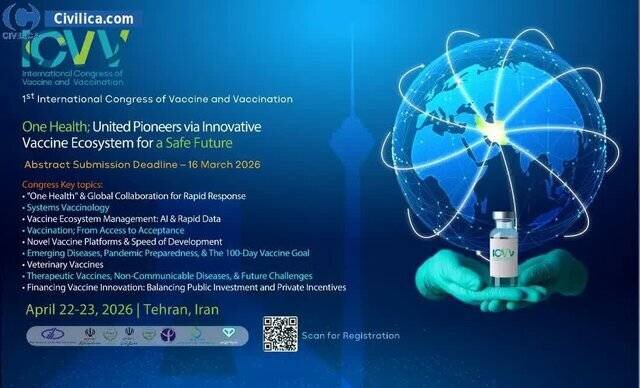
TEHRAN – Razi Vaccine and Serum Production Research Institute will hold the first international congress on vaccine and vaccination (ICVV) from April 22 to 23 in Tehran.
Themed ‘One Health, United Pioneers via Innovative Vaccine Ecosystem for a Safe Future’, the congress is organized to be conducted both in person and online, ISNA reported.
With a strong emphasis on the One Health approach and the integration of cutting-edge technologies — including artificial intelligence, systems vaccinology, and novel vaccine platforms- the congress aims to build a cohesive chain of research, development, manufacturing, financing, and public acceptance of vaccines.
In a region facing complex health challenges, ICVV aims to enhance scientific synergy, knowledge exchange, and the establishment of sustainable immunization infrastructure. The ultimate goal is to shape a dynamic, self-reliant vaccine ecosystem capable of responding rapidly and effectively to emerging diseases and future pandemics.
Bringing together scientists, manufacturers, investors, and policymakers, the initiative intends to create a strategic-scientific platform and promote a regional and global vaccine network with the help of domestic and international specialists.
The main topics of the congress will concentrate on One Health and Global Collaboration for Rapid Response, Systems Vaccinology, Vaccine Ecosystem Management: AI and Rapid Data, Vaccination: From Access to Acceptance, Novel Vaccine Platforms and Speed Development, Emerging Diseases and the 100-Day Vaccine Goal.
Veterinary Vaccines, Therapeutic Vaccines and Future Challenges, Financing Vaccine Innovation, Advanced Immunology and Immune Responses, Collaboration and Vaccine Diplomacy are among the other main topics of the congress.
On the sidelines of the event, educational workshops and an exhibition of a fan market are scheduled to be held. The exhibition will serve as a platform to exchange knowledge and technology, and showcase the services and products of technology markets.
Strengthening immunization program
Supported by the World Health Organization (WHO) and Global Alliance for Vaccines and Immunization (GAVI Alliance), Kerman University of Medical Sciences played host to a 3-day regional workshop on vaccination and vaccine-preventable diseases.
Held from October 10 and 12, the event gathered Expanded Programme on Immunization (EPI) officers and managers from 34 medical universities, the majority from eastern and south-eastern Iran, to bolster national immunization capacities, focusing on planning, surveillance, and tackling vaccine hesitancy.
The workshop received technical support from the WHO Country Office in the Islamic Republic of Iran and financial backing from Gavi, the Vaccine Alliance. The training focused on strengthening immunization planning, providing updates to national guidelines, enhancing cold chain management, improving surveillance of adverse events following immunization, and fostering effective community engagement.
National immunization program
The supplementary phase of the national immunization campaign for polio eradication, using domestically produced vaccines, will be carried out from February 14 to 16, targeting some 700,000 children under the age of five.
The first phase of the national immunization campaign was carried out from January 18 to 20 in high-risk areas of Sistan-Baluchestan, Hormozgan, South Khorasan, Bushehr, Yazd, Kerman, and Khuzestan provinces, Mehr news agency reported.
The campaign will cover 350,000 Iranian and foreign national children in the northern parts of the country in the spring, using a domestically produced vaccine.
Over the past Iranian year (March 2024 – March 2025), thanks to implementing a nationwide vaccination program, the prevalence of hepatitis B declined from 2.5 percent to approximately one percent in the country, an official with the health ministry said.
Hepatitis B is a viral infection that attacks the liver and can cause both acute and chronic disease.
The acute disease can be treated without the need for medications. However, chronic infection usually puts people at high risk of death from cirrhosis and liver cancer.
In January 2024, a national vaccination plan aiming to combat rotavirus and pneumococcal, which most notably cause diarrhea and pneumonia, respectively, was said to be added to the country’s immunization program.
Rotavirus can cause severe watery diarrhea, vomiting, fever, and abdominal pain. Children who get rotavirus disease can become dehydrated and may need to be hospitalized.
MT/MG
Leave a Comment