The boomerang of division: Israel's fractured leadership and Gaza's unbroken will
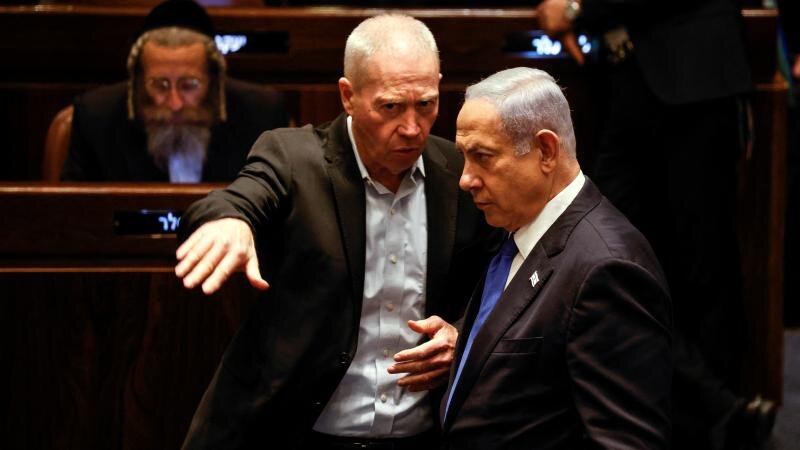
TEHRAN – The Hamas attack on October 7, 2023 exposed serious failures in Israel’s security system and laid bare deep divisions within the Israeli political and military leadership.
Recent statements by former defense minister Yoav Gallant and opposition leader Yair Lapid reveal an establishment fractured by internal conflict, competing narratives, and long-standing policy failures. Rather than presenting a coherent response to the crisis, Israel’s leaders have turned on one another, highlighting a system struggling to account for its own actions.
Gallant’s public attack on Prime Minister Benjamin Netanyahu is striking in both tone and significance. When a former defense minister describes a sitting prime minister as a “liar,” it signals a profound breakdown within the system’s leadership. Gallant accuses Netanyahu of deliberately shaping a misleading account of October 7 to avoid responsibility for what he calls a major failure. According to Gallant, while Israeli soldiers and security officials were engaged in fighting, Netanyahu was working politically to undermine those same institutions by turning government ministers and public opinion against them. The charge suggests that internal power struggles took precedence over accountability at a critical moment.
Gallant also challenges Netanyahu’s explanations for key military decisions made before and during the Gaza war. He rejects claims that operational delays or battlefield outcomes were caused by fear within the army or by external pressure, arguing instead that Netanyahu consistently claimed credit for successes while shifting blame for failures onto others. This depiction points to a leadership style focused on self-preservation rather than a serious reckoning with the political and strategic decisions that preceded Israel’s worst security breakdown in decades.
That such criticism comes from a senior figure formerly aligned with Netanyahu underscores the depth of division within Israel’s ruling circles.
Lapid’s comments add a broader political dimension to this crisis. While Gallant concentrates on Netanyahu’s conduct after October 7, Lapid draws attention to policies that shaped the context in which the attack occurred. He argues that Netanyahu ignored repeated intelligence warnings in the months leading up to the attack and later attempted to distance himself from responsibility. More importantly, Lapid accuses Netanyahu of pursuing a deliberate strategy aimed at weakening the Palestinian Authority by allowing Hamas to grow stronger in Gaza.
According to Lapid, this approach involved permitting large flows of Qatari money into Gaza despite warnings about how the funds were being used.
If Lapid’s account is accurate, October 7 was not a sudden failure or intelligence mistake—it was the predictable result of a political strategy in which Israel deliberately fueled divisions among Palestinians for its own benefit, while ignoring the underlying conditions and grievances that drive resistance.
Lapid argues that Netanyahu’s efforts to shift blame onto security officials and political rivals are a way to cover up this deliberate policy failure and evade accountability for Israel’s actions.
Israel’s war on Gaza following the Hamas attack has further highlighted the limits of this approach. Israel has destroyed much of Gaza and killed nearly 72,000 people, yet it has not achieved a clear political resolution. Gaza’s civilian population has endured immense loss and devastation, but it has not been erased or silenced. Rather than restoring stability, the war has intensified international criticism and deepened Israel’s internal political crisis. Within Israel, senior figures continue to accuse one another of deception, manipulation, and reckless decision-making, reflecting a leadership consumed by internal disputes.
Taken together, the statements by Gallant and Lapid expose an Israeli establishment in open disarray. The image of unity that Israeli leaders often seek to project during wartime has given way to public conflict over responsibility, truth, and long-term strategy. October 7 revealed not only the collapse of Israel’s security system but also the failure of a political model built on deliberately dividing Palestinians, ignoring their rights, and pursuing short-term advantage at the expense of human life.
Leave a Comment