Trump, Greenland, and the fracturing of globalization
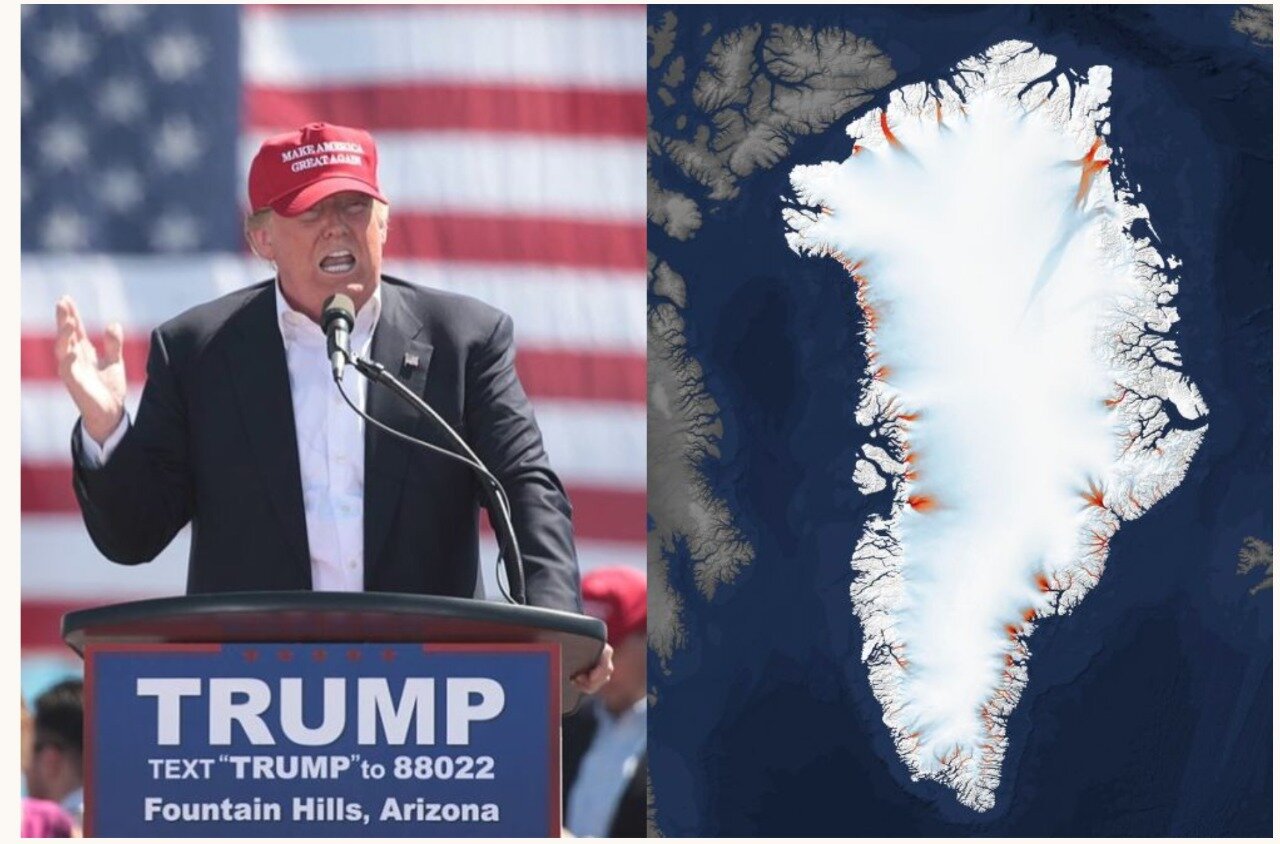
TEHRAN – Donald Trump’s repeated talks about taking control of Greenland were widely mocked at first.
Yet behind the spectacle lies a more troubling reality. His approach reflects a worldview where power matters more than rules, economics becomes a tool of pressure, and territory is something to be taken rather than negotiated.
This way of thinking reveals both Trump’s political instincts and the deeper crisis facing globalization today.
For decades, globalization was built on a simple promise. Open markets, free trade, and economic integration would reduce conflict and spread prosperity.
From the 1980s onward, new technology, cheaper transport, and faster communication allowed companies to operate across borders with ease. Governments reduced regulation, multinational corporations expanded, and finance grew faster than real production. Economic power slowly shifted away from states and public oversight.
Over time, the weaknesses of this system became clear. The 2008 financial crisis exposed how fragile and unequal the global economy had become. The COVID-19 pandemic showed how dangerous overreliance on long supply chains could be. Energy and food shocks after the war in Ukraine proved that markets do not operate independently from politics.
Instead of stability, globalization created vulnerability, dependency, and social anger.
Trump rose directly out of this failure. But rather than offering serious reform, the U.S. President responded with blunt nationalism and zero-sum thinking.
His trade wars, attacks on allies and adversaries, alongside the disregard for international rules, did not fix globalization’s problems. They made them worse.
The U.S. President’s interest in Greenland, or the Gaza Strip, for that matter, followed the same logic. Instead of diplomacy or cooperation, he treated the territories like real estate deals, as if international politics were about ownership and dominance.
Greenland does have strategic importance. Its location in the Arctic matters for military positioning, future shipping routes, and global competition. But Trump never framed the issue responsibly or strategically. He relied on threats and provocation, signaling that even allies could be pressured or ignored. This approach weakens trust and accelerates global fragmentation.
Despite frequent claims that globalization is ending, global trade remains strong and reached record levels by 2025. What has changed is not the volume of trade, but its direction.
Countries now trade more with political allies and manage risk more carefully, especially in sensitive sectors such as energy, technology, and raw materials.
Europe reduced its dependence on Russian energy. Russia redirected exports toward Asia. Supply chains did not collapse; they were reorganized.
China has adapted to this new phase of globalization with notable consistency and long-term planning. It entered globalization as a state-led development project and continues to emphasize industrial policy, infrastructure investment, and technological upgrading.
Rather than retreating from global markets, China has worked to keep trade flowing, expand connectivity, and stabilize supply chains, even as geopolitical tensions rise.
The contrast with the United States is striking. Under Trump, Washington relies heavily on tariffs and confrontation to reverse globalization. While the trade deficit with China declined, overall U.S. trade deficits remained high. The result was not economic balance, but a redirection of trade to other countries.
China, meanwhile, continued to integrate, adapt, and invest for the long term.
The semiconductor industry reflects this divide. While global production has become more fragmented, China has focused on building resilient supply chains through sustained investment, education, and cooperation, seeking gradual progress rather than sudden disruption.
Trump’s Greenland rhetoric fits a broader pattern of short-term thinking and disregard for international norms. History shows that such approaches often backfire. Treating land only as a strategic asset ignores long-term political and moral costs.
Globalization has not died, but it is breaking apart. The real danger lies not in economic change itself, but in leaders who reduce global politics to threats, deals, and domination, undermining the rules and cooperation needed to manage an increasingly divided world.
Leave a Comment