Pezeshkian announces $2.5b allocation for transport corridor development
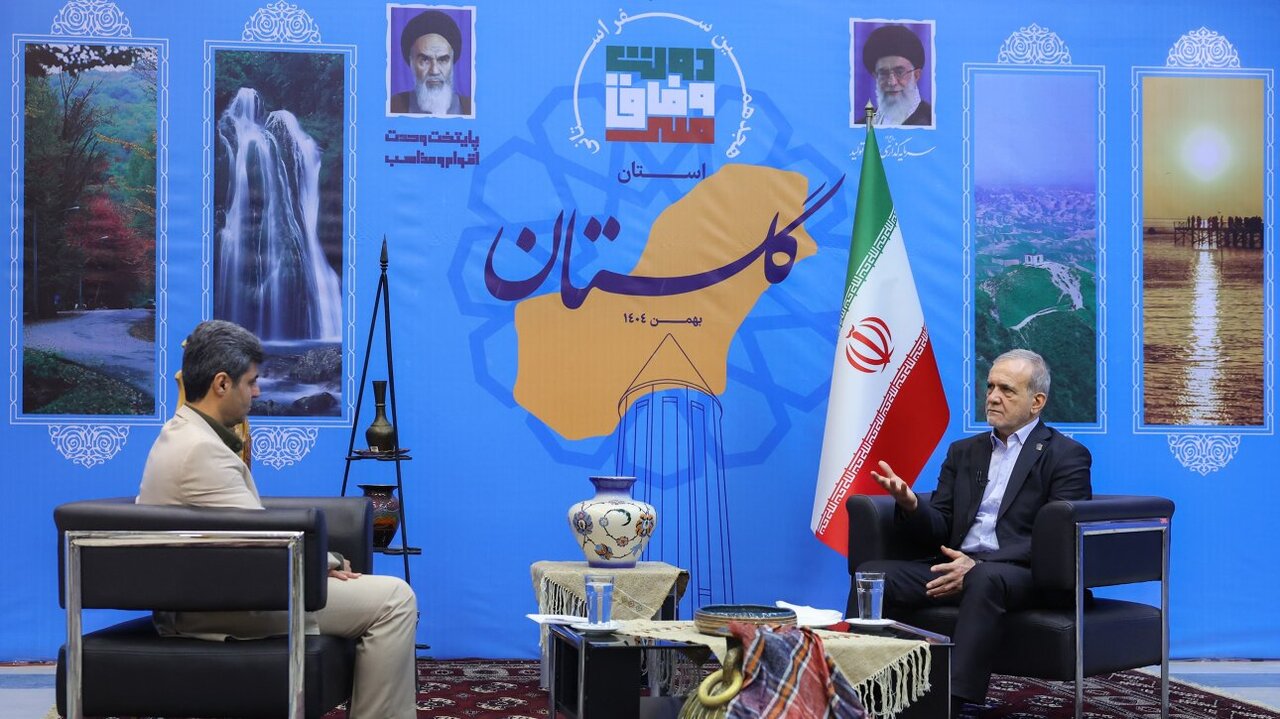
TEHRAN – President Masoud Pezeshkian has announced an unprecedented $2.5 billion allocation for the development of Iran’s transport corridors, describing the sector as a top government priority.
According to Tasnim News Agency, Pezeshkian made the remarks during a meeting with investors and economic operators in Golestan province.
He said the newly allocated $2.5 billion marks the first time such a significant sum has been dedicated specifically to corridor development.
The funding comes in addition to roughly $10 billion that, under authorization from Iran’s Supreme Leader, is to be financed through a percentage of oil sales to complete roads and national transit corridors, he added.
The president stressed that corridor expansion remains a strategic priority, noting that securing financial resources is the first step.
Alongside government funding, he said efforts are underway to attract active private-sector participation.
Pezeshkian added that the Ministry of Transport and Urban Development plans to convene a meeting with private, public and municipal investors to accelerate the development of public transport networks and the completion of corridor infrastructure.
He also underscored the need to revise or eliminate regulations that hinder infrastructure projects, stating that any laws impeding progress should be reviewed and, if necessary, removed.
Iran proposes rail link to China via Afghanistan to streamline transit
Earlier this week, Iranian Transport Minister Farzaneh Sadegh proposed a rail connection to China through Afghanistan in a move that could cut cargo transport time by up to 50 percent and enable direct rail movement from China to Europe.
The proposed Herat–Mazar-e-Sharif–Wakhan railway corridor would connect China to Europe and West Asia via Afghanistan, Iran and Turkey, strengthening regional and global trade routes, according to IRNA.
The project had also been discussed in January during a meeting between the technical deputy and acting head of Afghanistan’s Ministry of Public Works and the head of the Islamic Republic of Iran Railways.
Rail officials say closer freight connectivity with China has become essential, noting that more than 63 trains have traveled from China to Iran and the European Union since the start of the current Iranian year, compared with just seven trains over the same period last year.
Agreements among six countries along the China–Europe corridor to establish unified tariffs are expected to activate the southern branch of the East–West transit corridor via Iran. Officials estimate train traffic on the route could reach 300 trains annually once the arrangements are fully implemented.
Shahriar Naghizadeh, director-general of foreign commercial affairs at Iran’s railways, said the proposal involves using standard-gauge track (1,435 mm) through Afghanistan to avoid technical bottlenecks at China’s borders with Kazakhstan and Turkmenistan.
Under the plan, trains would be able to travel directly from China to Europe without changing bogies or transferring cargo between broad- and standard-gauge wagons.
Naghizadeh said the idea has been welcomed by the parties involved and feasibility and investment studies are underway.
The project includes constructing 64 kilometers of railway to Herat and extending the line to Mazar-i-Sharif, eventually linking through the Wakhan corridor to China’s Xinjiang region. Officials acknowledged that the terrain along the route is challenging, with both Iranian and Afghan companies expressing readiness to participate in construction.
EF/MA
Leave a Comment