COMSTECH meeting: Iran named ‘top vaccine producer in Islamic countries’
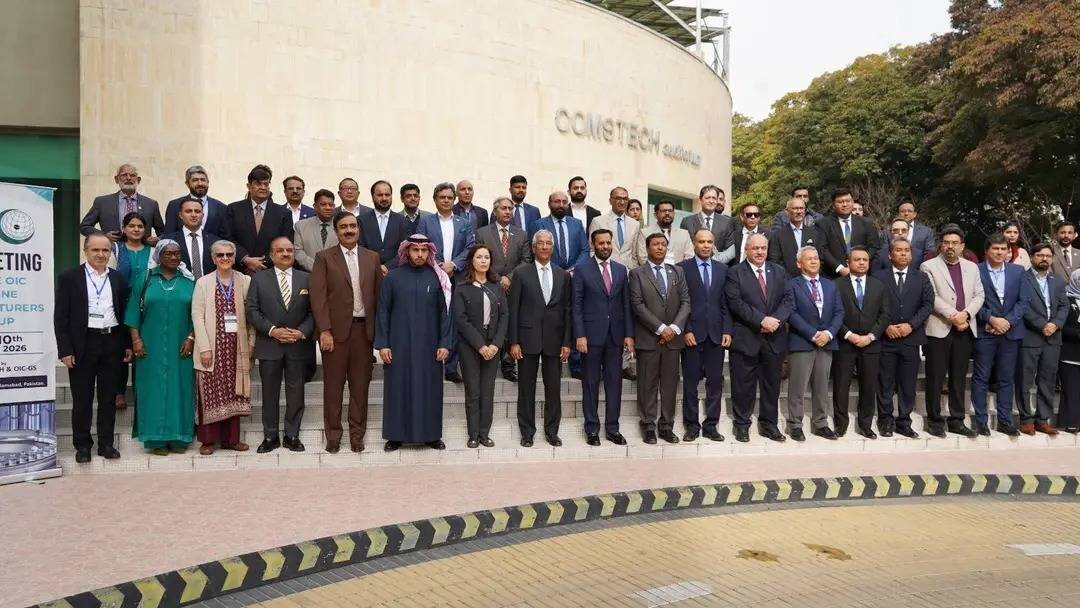
TEHRAN – Iran has been named as one of the top three vaccine manufacturers in the Islamic world by the Ministerial Standing Committee on Scientific and Technological Cooperation (COMSTECH).
The two other main vaccine producers are Senegal and Indonesia, IRNA reported.
The announcement was made in the inaugural session of the 4th Meeting of the Organisation of Islamic Cooperation (OIC) Vaccine Manufacturers Group (VMG), held from February 9 to 10 at the OIC-COMSTECH Secretariat in Islamabad, Pakistan.
The event brought together representatives from major vaccine manufacturers in OIC Member States, including Malaysia, Iran, Indonesia, Saudi Arabia, and Pakistan, as well as representatives from relevant OIC and other international institutions, including the Statistical, Economic and Social Research and Training Centre for Islamic Countries (SESRIC), the Standards and Metrology Institute for Islamic Countries (SMIIC), the Islamic Development Bank (IsDB), the World Health Organization (WHO), and Global Alliance for Vaccines and Immunization (GAVI).
The meeting aimed at promoting vaccine self-reliance, strengthening health security across the Islamic world, and developing a roadmap to foster vaccine availability, affordability, quality, and regional cooperation.
Key discussions of the meeting focused on the Managing the Islamic Countries VMG, financing mechanisms, vaccine equity and affordability, pandemic preparedness, regional stockpiles, emergency protocol deployment, and the development of short-term, mid-term, and long-term operational plans with the aim of achieving vaccine self-reliance in Islamic countries were among the main discussed issues.
Addressing the meeting on the first day, the representative of the Pasteur Institute of Iran elaborated on the activities and achievements of the Institute, voicing the Institute’s readiness to cooperate with the member states of the OIC in manufacturing and transferring vaccine technology and other biological products.
The coordinator general of COMSTECH, Muhammad Iqbal Choudhary, stated that the meeting “reflects the strong commitment of OIC member states to advancing collective health security.” He emphasized that the COVID-19 pandemic and subsequent global supply disruptions clearly demonstrated that vaccine self-reliance is no longer an option but a strategic necessity, particularly for OIC countries facing high disease burdens and rapidly growing populations.
Highlighting the evolution of the OIC Vaccine Manufacturers Group since its establishment in 2014, Choudhary noted that the Group has laid strong foundations through cooperation agreements, joint training programmes, and the establishment of the OIC Centre of Excellence on Vaccines and Biotechnology Products in Indonesia.
Joint training programs
In October 2023, the Pasteur Institute of Iran and COMSTECH signed a five-year Memorandum of Understanding (MOU), indicating a sustained commitment to collaborative health security across Islamic nations.
The five-year MOU commits both parties to collaborate on developing and implementing joint training programs and strengthening health systems, particularly in Islamic countries. The inaugural joint training course, titled “Assessment and Management of Infectious Disease Outbreaks,” was held in December 2023 in Karachi and Islamabad, Pakistan, featuring specialists from the Pasteur Institute of Iran.
The second joint program under a five-year MOU was held from October 21 to November 1, 2025.
The Pasteur Institute of Iran held the week-long international training course to enhance the pandemic preparedness capacity in addressing future health threats.
Over 30 health experts from 11 countries, namely Benin, Uganda, Somalia, Senegal, Singapore, Sudan, Egypt, Ethiopia, Afghanistan, Cameroon, and Pakistan, participated in the course titled ‘Investigating Infectious Disease Outbreaks with a Focus on Crimean-Congo Hemorrhagic Fever’, as a part of a comprehensive course on ‘Virology and Future Pandemic Preparedness’, Arboviruses and Crimean-Congo Hemorrhagic Fever, Biosafety and Risk Assessment, Outbreak Planning and Early Warning Systems, Descriptive and Analytical Studies in Epidemiology, and International Health Regulations (IHR).
The program blended theoretical sessions with practical workshops and exercises, fostering active engagement and yielding highly positive feedback from participants.
MT/MG
Leave a Comment