‘Iran–Russia Joint Economic Committee meeting marks turning point in bilateral co-op’
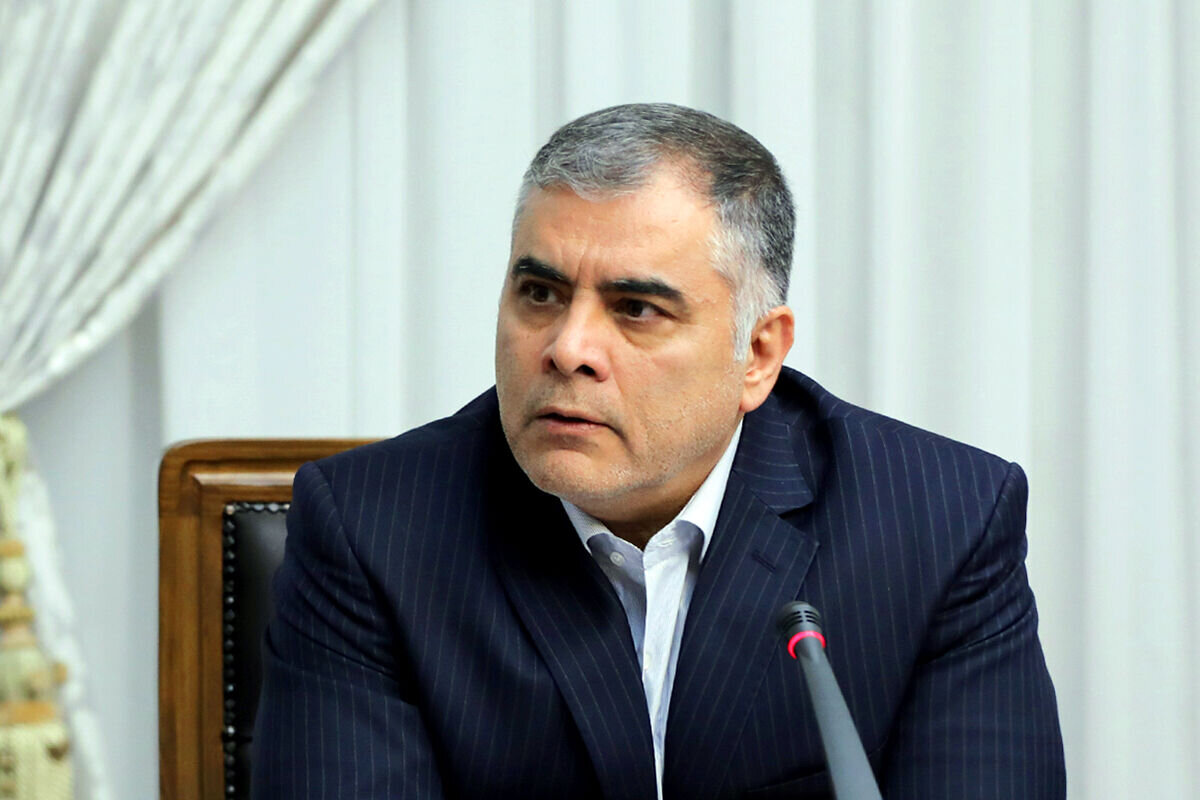
TEHRAN – Iran’s Oil Minister Mohsen Paknejad has described the 19th meeting of the Iran–Russia Joint Economic Committee as a pivotal opportunity to deepen strategic ties between Tehran and Moscow and open a new chapter in bilateral economic relations.
Paknejad, who heads the Iranian side of the committee, said the session, scheduled for February 16–18, will provide a platform to advance cooperation across a broad range of sectors.
He noted that a preparatory coordination meeting was held earlier with deputy ministers and representatives of relevant executive bodies to review the latest status of joint projects, assess progress on previous agreements, and finalize priorities for the upcoming talks.
He stressed the importance of unified coordination among Iranian institutions to accelerate the implementation of priority projects and ensure tangible outcomes from the commission’s work.
According to the minister, expert-level discussions on February 16 and 17 will focus on priority projects and agreements in trade, energy, transport, financial and banking cooperation, peaceful nuclear energy, healthcare and other economic fields.
The finalized cooperation documents are expected to be signed on the final day of the meeting.
Paknejad also pointed to evolving regional and international conditions, emphasizing that stronger economic collaboration between Iran and Russia can enhance the economic resilience of both countries and contribute to shaping a framework of cooperation based on shared interests.
He expressed optimism that sustained coordination among executive agencies and the efforts of the commission’s secretariat would lead to the signing of significant agreements and the launch of a new phase in Tehran–Moscow economic relations.
Back in November, an industrial cooperation memorandum of understanding (MOU) was signed between Iran’s Alborz Province and Russia to expand exports, promote technology transfer, and apply modern innovations such as artificial intelligence (AI) in industrial production.
Reza Rezaei, head of the Alborz House of Industry, Mine and Trade, announced the agreement during a ceremony honoring the province’s top producers and exporters, held at the Iran Chamber of Commerce.
He said the partnership aims to enhance coordination among industrial and economic institutions and support export-oriented production amid current economic challenges.
Rezaei noted that despite its small size, Alborz hosts many of Iran’s major industrial units and has significant economic potential.
“We are working to present a successful model of smart industrial development using new technologies, particularly artificial intelligence,” he said.
The MOU, signed under the title NCC, seeks to facilitate exports, transfer technical know-how, and establish a platform for technological cooperation between the two countries.
Rezaei emphasized the need to shift Iran’s education system from theory-based to skill-driven approaches to prepare a new generation of AI-capable specialists for the future of industry.
He said the Alborz House of Industry, operating without state funding, has expanded to 21 industrial associations and plans to reach more than 32. The organization currently works with 20 specialized consultants across various sectors to support manufacturers.
Parham Rezaei, head of the Alborz Chamber of Commerce, said the province’s exports averaged about $1.0 billion annually over the past two years. He highlighted ongoing cooperation between the chamber and the House of Industry to avoid overlap in programs and jointly promote industrial development.
He added that a joint economic development roadmap has been prepared through more than 15 expert sessions, while efforts are underway to attract investment in renewable energy projects that could boost the province’s electricity generation capacity to 300 megawatts by year-end.
On October 20, the head of the Russia–Iran Business Council said that over 80 percent of trade between Iran and Russia is now conducted in their national currencies, the rial and ruble, marking a major step toward financial independence and reduced reliance on third-party currencies.
Speaking at the 22nd meeting of the International Council for Cooperation among Caspian Chamber of Commerce members, Leonid Lozhechko said Iran and Russia are taking new steps to deepen bilateral economic ties by easing trade regulations, developing infrastructure, and expanding collaboration in technology, agriculture, and the International North–South Transport Corridor (INSTC).
Lozhechko noted that the council is pursuing a strategic plan to enhance cooperation in advanced technologies, telecommunications, medicine, and particularly cybersecurity. He said about 60 percent of bilateral trade is related to agricultural products, with Russia exporting grains, wood, oilseeds, chemicals, aluminum, coal, and steel to Iran, while Iran supplies spare parts, energy products, ceramics, cement, and agricultural goods to Russia.
He stressed that one of the council’s priorities is simplifying regulations under the Eurasian Economic Union framework to unlock the full potential of trade between the two countries.
Lozhechko added that representatives from Russia’s ministries of industry, economy, and agriculture, as well as banks from both nations, participated in the event.
“We are determined to remove bureaucratic barriers so that trade between Iran and Russia can reach its true potential,” he said.
Dmitry Kurochkin, vice president of the Chamber of Commerce and Industry of the Russian Federation, highlighted the Caspian Sea’s strategic importance in the emerging global economic order. He said the Caspian region’s rich energy resources, transit routes, and geo-economic position could transform it into a major global development hub.
He emphasized the INSTC’s potential to turn the Caspian region into a multimodal transit corridor linking global transport routes and boosting exchanges among Iran, Russia, Azerbaijan, Kazakhstan, and Turkmenistan.
Kurochkin also pointed to growing Russian business interest in Iran’s market, citing Tehran’s upcoming free trade agreement with the Eurasian Economic Union and its membership in BRICS as opportunities to expand private sector cooperation.
He announced plans for joint investment projects through 2030 under the Commonwealth of Independent States (CIS) development framework, prioritizing agriculture, advanced technologies, textiles, and tourism.
Kurochkin said economic interactions among Caspian states have grown by 80 percent in the past two years and called for greater coordination in customs, logistics, and infrastructure to make the Caspian a central driver of sustainable growth and technological cooperation across Eurasia.
In early October, an official with Trade Promotion Organization (TPO) of Iran said that the share of industrial goods of Iran's exports to Russia has increased significantly over the past three years, and Iran's exports to this destination have almost doubled.
Akbar Godari, the head of TPO's Central Asia, Caucasus, and Russia Office reported a significant growth in trade exchanges between Iran and Russia, stating: "Given the current trend and predicted trade plans, it is expected that Iran's exports to Russia will reach approximately $1.4 billion by the end of the current Iranian calendar year 1404 (March 20, 2026).”
“This is while at the end of the year 1403 (March 2025), our country's exports to Russia were about $1.1 billion”, the official added.
He further explained that according to statistics, the majority of imports from Russia consist of grains and oilseeds, which make up over 70 percent, with the remainder being production line machinery.
In contrast, Iran's exports to Russia include 45 percent agricultural products, 37 percent industrial goods, 10 percent petrochemical and polymer products, and approximately 7 to 8 percent minerals.
Referring to the change in the composition of Iran's exports in recent years, he said: "In the years 1399 and 1400 (2020-2022), the volume of Iran's exports to Russia was about $500 million, over 90 percent of which consisted of fruits and vegetables. But today, while maintaining agricultural exports, the share of industrial goods has increased significantly, and Iran's exports to Russia have nearly doubled over the past three years."
EF/MA
Leave a Comment