All foreign nationals in Iran mandated to have health insurance
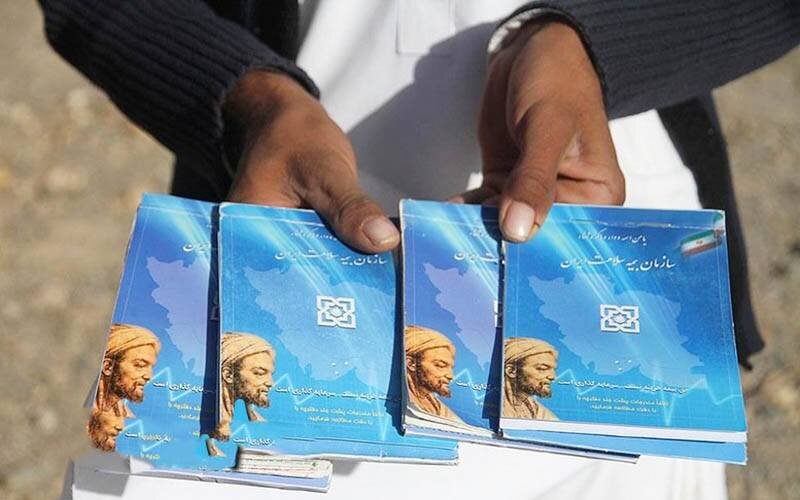
TEHRAN – All resident and non-resident foreign nationals with legal stay in Iran are required to have basic health insurance coverage following a new enactment by the Cabinet of Ministers.
Dated December 7, 2025, the enactment obliges the Ministry of Interior to ensure the insurance coverage of the foreign national applicants when issuing or extending residence, the United Nations High Commissioner for Refugees (UNHCR) reported in a press release on February 16.
It also stipulated that non-resident foreign nationals with legal stay in the country could benefit from insurance by paying the health insurance premium fee, and in the absence of insurance, all health services provided will cost them as per health tourism fees, or at least as per private sector fees.
On December 24, the Employment Deputy of the Ministry of Cooperatives, Labour and Social Welfare (MCLSW), reported the issuance of 13,000 visas out of 23,000 applications for the newly introduced work visas for labour-intensive jobs. Previously, the head of the National Organization for Migration, Nader Yar-Ahmadi, announced that only the head of households may obtain this visa, which is valid for nine months, followed by a mandatory three-month stay outside the country.
Following his recent visit to the Dogharon border crossing, the Deputy Governor of Khorasan Razavi for Security and Law Enforcement reported that biometric registration of foreign nationals has officially started at Dogharon, enabling authorities to better monitor entries and exits based on fingerprints, iris scans, and facial data rather than documents alone.
He noted that linking the biometric system to foreign nationals’ databases now allows identification of individuals’ previous residency and judicial records in Iran and announced that the same biometric registration system will soon be expanded to Mashhad Shahid Hashemi Nejad Airport to enhance oversight of foreign nationals’ residence, movement, accommodation, and employment in the province.
In December 2025, Iran implemented the first biometric system check for identity verification of foreign nationals, especially Afghan refugees, at the Dogharon border terminal in the city of Taibad, northeastern Khorasan Razavi province.
The system will soon be launched at the country’s other border terminals to monitor the entrance and exit of all foreign nationals, the official added.
Iran at the forefront of providing support to refugees
Over the past four decades, Iran has been one of the top countries hosting the largest number of refugees and migrants, despite many challenges facing the country.
The majority of these refugees are from Afghanistan who have fled from their home country due to wars, insecurity, poverty, and crises.
In 2023, the global number of international migrants was approximately 304 million, with 83 million of them living in internal displacement.
According to the UNHCR, Iran is host to some 773,000 refugees holding Amayesh cards, and over 2.7 million in a refugee-like situation. The total number of refugees has turned Iran into the second-largest host of refugees. Hosting more than 3.5 million refugees, Iran is an important part of this global picture and one of the key players in managing the migration crisis.
Surprisingly, field reports and unofficial statistics claim that seven million Afghans are residing in the country, four million of whom are undocumented.
International institutions such as the International Organization for Migration (IOM) have always lauded Iran for the provision of different kinds of services, including health and education, to the refugees. Afghan children, along with Iranian students, are studying in the same schools without paying extra tuition, while in other countries, refugees are facing serious limitations in benefiting from treatment and education services.
Dhananjaya Bhattarai, the head of the Office of the United Nations High Commissioner for Refugees in Holy Mashhad, has commended Iran’s generosity in hosting refugees and treating them with dignity.
Most of the Afghan refugees in Iran are living in villages and cities, and they are in constant interaction with host communities.
Iran, in cooperation with international organizations, has tried to help refugees access livelihood opportunities, vocational training, and collaborations with nongovernmental organizations; this approach has transformed migrants from a passive population into an active part of society.
However, Iran is facing severe challenges as the international community has provided less than a third of the funding needed to address the humanitarian needs of refugees.
MT/MG
Leave a Comment