Winners of 27th International Storytelling Festival honored in Isfahan
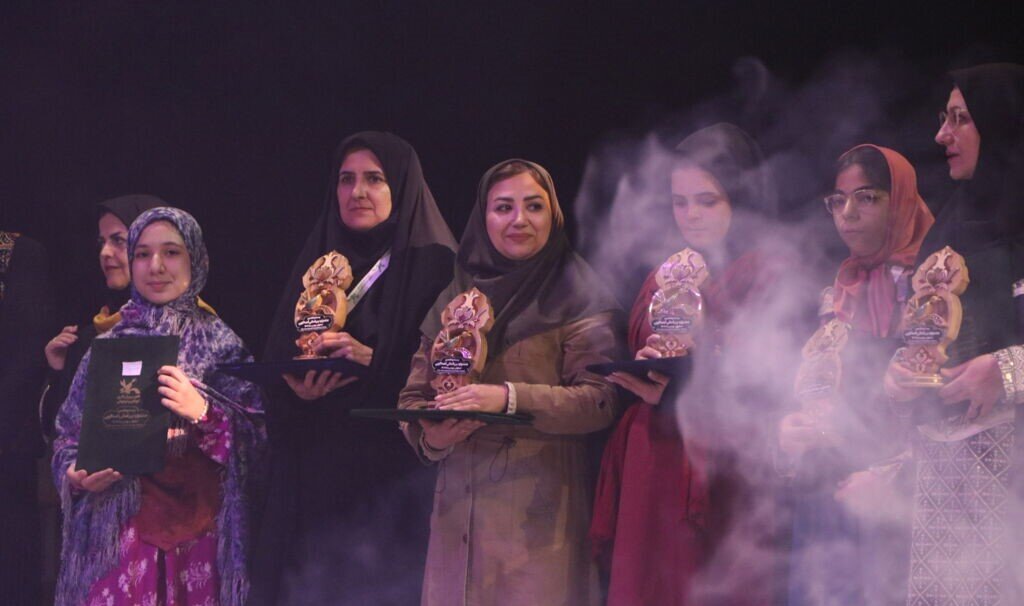
TEHRAN- The 27th International Storytelling Festival concluded on Monday, during a ceremony held in the central Iranian city of Isfahan, where the winners of this year’s edition were announced.
A total of 61 selected storytellers competed across nine categories, including “Classic,” “With Tools,” “Sacrifice and Heroes,” “Religious,” “Sign Language,” “Poetic,” “New Stories,” “Ritual-Traditional,” and “Previous Year’s Selected,” according to the Public Relations and International Affairs Department of the Institute for Intellectual Development of Children and Young Adults-Kanoon.
Based on the jury’s decision, Forouzan Hosseini from Kermanshah won the statuette in the “Religious” category for her story “Goodbye Naneh Rasouleh.” Sogol Baqeri from Alborz was named winner in the “New Stories” section for “Bon Appétit Naneh,” while Sogand Mirzai, also from Kermanshah, received the award in the “Sacrifice and Resistance” category for her story “Zhivar.”
In the “Ritual-Traditional” category, Ali Mehdi from Khuzestan was honored and Mojgan Kadkhodai from Isfahan secured the statuette in the “Classic” section.
Other laureates included Leila Ebrahimi from Qazvin, who won in the “Storytelling Promoters” category, Parnia Rezai from Yazd in the “Poetic” section, and Masoumeh Pour Emam Ali from Tehran in the “Sign Language” category.
In the non-attendance sections, Mohammad Sepahvand from Lorestan received the award for “90-Second Story,” and Zahra Ettehadi from Yazd was named winner in the “Podcast” category.
Speaking at the ceremony, Hamed Alamati, director of the Iran's Institute for Intellectual Development of Children and Young Adults (IIDCYA), underscored the foundational role of storytelling in shaping children’s spiritual and intellectual horizons.
“Story and storytelling are not decorative tools in faith-based education,” he said. “They are the fundamental media for the formation of meaning in a child. Without dialogue, a story is incomplete; without conflict, it is not educational; and without the possibility of choice, faith does not take shape.”
Referring to Kanoon’s three decades of focus on storytelling, he described the festival as the fruit of a visionary decision taken years ago to revive this profound cultural tradition. He also recalled the emphasis placed by the Leader of the Islamic Revolution Ayatollah Seyyed Ali Khamenei on storytelling as a means of planting the seeds of faith in children’s hearts.
Allamati defined faith-based education as a process that transforms a child’s innate God-seeking nature into a conscious, stable identity aligned with truth, through strengthening cognition, deepening emotional experience, and practicing righteous action.
“If we revive storytelling, we will have laid the foundation for faith education in the country,” he stressed.
Moreover, in a video message, Education Minister Alireza Kazemi described Iran’s story as “the best story that will be narrated in the centuries to come” and emphasized the need to weave storytelling into the fabric of schools and students’ lives.
He highlighted the Quranic tradition of conveying guidance through stories and described the companionship of story and storyteller as inseparable.
Kazemi also praised the festival as a cultural event that keeps alive the innocent days of childhood and thanked Kanoon for sustaining this authentic movement.
The closing ceremony also included the screening of video clips featuring Quranic storyteller Mohsen Qaraati, a tribute to the Kanoon library, a performance of the story of Prophet Yunus and the whale, a clip honoring writer Houshang Moradi Kermani, footage of the Leader’s storytelling during a book-reading session, and a narrative by Ayma Zeinali, daughter of a martyr of the recent 12-day war.
SAB/
Leave a Comment