TPO head visits Tajikistan to expand industrial, commercial ties
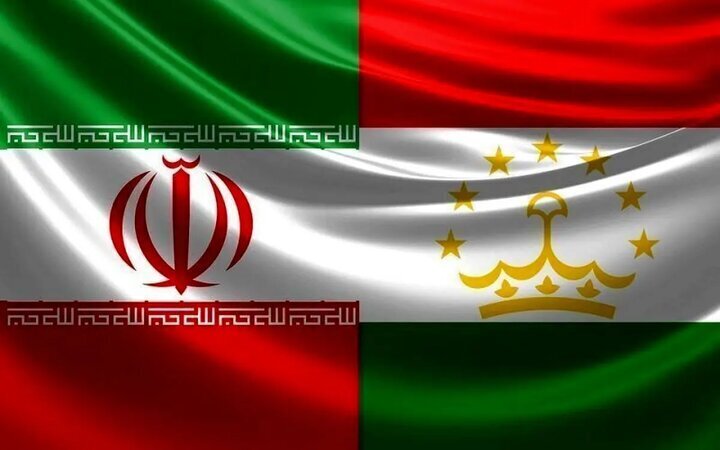
TEHRAN – The head of Iran’s Trade Promotion Organization (TPO) traveled to Tajikistan alongside the industry minister to discuss expanding industrial, mining and trade cooperation between the two countries, officials said.
Mohammad Ali Dehghan Dehnavi accompanied Industry, Mining and Trade Minister Seyed Mohammad Atabak on an official visit to Dushanbe at the invitation of Tajikistan’s Minister of Industry and New Technologies Sherali Kabir.
During the visit, Atabak is scheduled to meet several Tajik economic ministers and tour industrial facilities and production centers in the country.
The TPO said key agenda items for Dehghan Dehnavi include advancing bilateral trade cooperation in pharmaceuticals, medical equipment and construction materials, as well as discussions on a potential preferential trade agreement.
Talks are also expected to cover joint industrial and mining projects, with the Tajik side set to present further details and introduce relevant representatives.
Bilateral trade between Iran and Tajikistan is currently estimated at about $500 million, with officials projecting it could reach $1 billion through strengthened economic cooperation.
An Iranian trade delegation is accompanying the minister to promote export capabilities and expand commercial ties.
In mid-January, the Tajik Foreign Ministry announced that the country and the Islamic Republic of Iran will lift the visa regime for each other's international truck drivers from the beginning of March this year.
According to IRNA, a senior official from Tajik Foreign Ministry announced this news to media, stating that the decision was based on a mutual agreement between the governments of the two countries. Under this decision, they can stay in each other countries visa-free for up to 30 days.
According to the official, international truck drivers with Tajik and Iranian passports can now enter the two countries’ territories visa-free through border crossings.
"This decision facilitates international transport, trade and economic cooperation, and increases profitability of logistics between the two countries,” the Tajik Foreign Ministry stated.
The visa waiver through land borders between Tajikistan and Iran was discussed during a meeting in April 2025 between Tajik President Emomali Rahmon and Iranian Minister of Interior Eskandar Momeni.
At the time, Iranian media quoted Eskandar Momeni as: "It has been decided in the first stage to lift visas for land travel to create convenient travel conditions for citizens of the two countries."
Previously, in 2025, Tajikistan and Iran fully lifted the visa regime for air to all cities of both countries.
Accordingly, citizens of the two countries can travel to each other's by air for up to 30 days without any restrictions in a 90-day period.
Also, back in December,Tajikistan called for expanding cooperation with Iran in civil aviation, praising the technical expertise and professional approach of Iranian aviation officials following a joint safety oversight mission.
The head of Tajikistan’s Civil Aviation Authority commended Iran’s Civil Aviation Organization (CAO) team, describing its technical capacity and level of cooperation as exceptional, and urged continued and wider collaboration across multiple areas of civil aviation.
The remarks followed a visit by Iranian aviation experts to Tajikistan under a bilateral memorandum of understanding, aimed at strengthening international cooperation on aviation safety oversight.
During the mission, the Iranian team conducted a comprehensive internal audit of Tajikistan’s aviation safety oversight system across eight core areas: legislation, organizational structure and management, personnel licensing, flight operations, airworthiness, aircraft accident and incident investigation, air navigation services, and aerodromes and ground facilities.
The assessment was designed to identify strengths, weaknesses and regulatory gaps, and to help address shortcomings in structures, regulations and supervisory processes.
In addition to evaluating current conditions, the mission included technical consultations, knowledge transfer and recommendations for corrective actions, with the aim of boosting Tajikistan’s oversight capacity and preparing it for a formal audit by the International Civil Aviation Organization (ICAO) in 2026.
On the sidelines of the program, Iran’s director general for safety and quality assurance held talks with the head of Tajikistan’s aviation authority, with both sides discussing ways to expand bilateral and regional cooperation on aviation safety and implement the existing cooperation agreement.
In mid-October, 2025, Iran and Tajikistan agreed to address outstanding banking issues and establish a joint investment task force to enhance cooperation in areas such as energy, infrastructure, and agriculture, marking another step toward deepening their economic and financial relations.
Iran’s Minister of Economic Affairs and Finance Seyed Ali Madanizadeh met with Sultan Rahimzoda, head of Tajikistan’s State Committee on Investment and State Property Management, to discuss practical measures for expanding bilateral collaboration.
During the meeting, Madanizadeh—who also chairs Iran’s State Banks Assembly—highlighted the need to resolve pending banking and financial coordination issues between the two countries. Both sides agreed to accelerate efforts to finalize banking arrangements that would facilitate trade and investment flows.
The Iranian minister emphasized the investment potential in technical and engineering services, mining, infrastructure, agriculture, and knowledge-based industries, calling the Dushanbe International Investment Forum a vital platform for promoting mutual understanding and private-sector engagement.
He noted that three key economic agreements between the two countries—on investment promotion and protection, avoidance of double taxation, and customs cooperation—are now in force, providing a legal foundation for expanding commercial ties.
Madanizadeh also announced the signing of a memorandum of understanding to form the Iran–Tajikistan Joint Investment Working Group, which has already held three sessions, the most recent on the sidelines of the 17th Economic Cooperation Summit in Shiraz.
He further underscored the readiness of Iran’s private sector to exchange specialized business delegations and enhance knowledge of the Tajik market, adding that recent progress in visa-free travel has already boosted cultural and medical tourism between the two nations.
The Iranian delegation’s trip to Dushanbe at that time and participation in the international investment forum underscored a strategic shift toward operational economic diplomacy, building on decades of cultural, linguistic, and historical ties.
A key focus of the talks was developing banking cooperation to remove long-standing financial barriers. Given the central role of banking systems in trade facilitation and capital transfer, resolving these issues could unlock new pathways for joint investment and empower private-sector initiatives.
The implementation of the three foundational economic agreements—on investment protection, double taxation, and customs—provides a framework of mutual trust for businesses and investors. The establishment of the joint investment task force signals a move from political understanding to structured, results-oriented cooperation.
Collaboration in technical and engineering services, mining, infrastructure, agriculture, and knowledge-based industries has emerged as a key priority. These sectors, rich in development potential, can contribute to technology transfer, job creation, and sustainable growth in both countries. The Dushanbe forum served as a platform to identify shared capacities and connect Iranian and Tajik entrepreneurs.
The Iranian private sector is expected to play an increasingly vital role in this process. By forming expert delegations and strengthening trade intelligence, Iranian firms can establish joint ventures and seize opportunities in Tajikistan’s growing market.
The visa-free travel agreement between Iran and Tajikistan has significantly expanded cultural and medical tourism, while also facilitating smoother business interactions. Analysts note that the deep cultural and civilizational ties between Tehran and Dushanbe have evolved into a powerful engine for economic cooperation, positioning Iran as a reliable partner in Tajikistan’s path toward sustainable regional development.
EF/MA
Leave a Comment