Sanctions forge new path: Iran, Russia pivot to strategic energy alliance
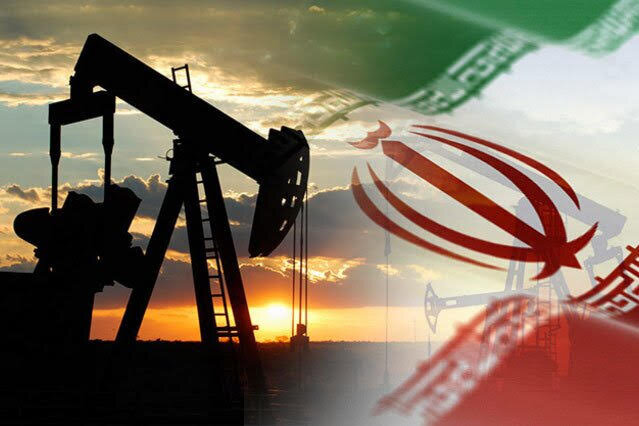
TEHRAN- The Vice Chairman of the Iranian Parliament's Energy Committee, pointing to the development of oil fields and technology transfer between Iran and Russia, stated: "Investment by Russian companies in Iran's upstream projects, especially in gas and oil fields, in addition to providing financing, makes it possible to benefit from technical experience under sanctions."
According to a report by the Islamic Republic of Iran Broadcasting (IRIB) News Agency, Farhad Shahraki, referring to the holding of the 19th Joint Iran-Russia Economic Committee Meeting in Tehran, said: "The holding of this meeting should be analyzed within the framework of the geo-energy realignment in the Eurasia region; a realignment shaped under the influence of three simultaneous variables: the intensification of Western sanctions against both countries, the gradual transition of the global energy system from a Western-centered unipolarity to an Asia-centered multipolarity, and the necessity to diversify export routes and create financial mechanisms independent of the dollar."
Stating that in such circumstances, the large presence of a high-ranking Russian delegation in Tehran is not just a diplomatic event but a sign of Tehran-Moscow relations entering a phase of structural synergy in the energy sector, he reminded: "The two countries, as major hydrocarbon powers in the world, hold a significant share of the world's oil and gas reserves. This enormous capacity, if managed intelligently, can lead to a strategic division of labor and complementary market management instead of destructive competition in limited markets."
The Vice Chairman of the Energy Committee, referring to the development of oil fields and technology transfer between Iran and Russia, emphasized: "Investment by Russian companies in Iran's upstream projects, particularly in gas and oil fields, in addition to providing financing, makes it possible to benefit from technical expertise under sanctions. These collaborations can accelerate areas such as boosting pressure in gas fields, increasing the oil recovery factor, and developing joint fields."
Shahraki stated that Iran's geographical position in connecting the Caspian Sea to the Persian Gulf is an unparalleled advantage for swapping Russian oil and gas to southern markets, adding: "Full activation of this capacity, while reducing transportation costs for Russia, would strengthen Iran's sustainable transit revenue and regional role-playing."
Emphasizing that plans for transferring gas from Russia to Iran and vice versa, or using Iran as a regional distribution hub, could, if realized, change the energy balance in West Asia and reduce dependence on Western routes, he said: "Furthermore, given banking restrictions, the use of national currencies, energy bartering for goods and technical-engineering services, and the creation of independent financial channels are key pillars for the sustainability of these cooperation."
The Vice Chairman of the Energy Committee pointed to the significance of the large Russian presence in Tehran and the geopolitical message of this presence, stating: "In a situation where both countries are under extensive sanctions, the broad presence of Russian officials and economic actors in Tehran carries important messages, one of which is the ineffectiveness of the policy of isolating Iran. High-level interactions show that sanctions have not prevented the formation of new cooperation blocs."
Shahraki considered Tehran-Moscow cooperation as part of the larger trend of economic integration along the Eurasia axis and said: "Iran, as a stable partner in the region's energy chain, with its transit position, access to open waters, and refining and petrochemical capacities, is an advantage that Russia needs under sanctions. Furthermore, strategic cooperation will be sustainable only when it goes beyond the level of ad-hoc projects and leads to the creation of common infrastructure, industrial linkages, and long-term financial networks."
He enumerated fundamental principles for the success of cooperation between the two countries, including balance in contracts and safeguarding long-term national interests, diversifying foreign partners to prevent unipolar dependence, focusing on technology transfer and localization of technical know-how, and aligning cooperation with upstream documents such as the Seventh Development Plan.
The Vice Chairman of the Energy Committee stated: "If these meetings lead to executive contracts, clear timelines, and operational financial models, one can expect Iran's role in the regional energy market to strengthen, indirect export and swap capacities to increase, investment in the upstream sector and energy infrastructure to accelerate, and energy interactions to become a driver for the country's industrial and petrochemical development."
In conclusion, Shahraki emphasized: "The 19th Iran-Russia Joint Economic Committee Meeting can be seen as a step towards a new architecture of energy cooperation in Eurasia; an architecture that, if managed professionally, transparently, and based on national interests, can transform sanctions from a threat into a geo-energy opportunity and consolidate Iran's position in the new regional energy order."
As stated by Iranian Oil Minister Mohsen Paknejad, what was ultimately agreed upon in the 19th meeting of Iran-Russia Joint Economic Committee represents the achievement of moving from understanding to the implementation phase.
The minister made the remarks in a joint press conference with Sergey Tsivilyov, the energy minister of Russia, in Tehran on February 17, at the conclusion of the mentioned committee meeting, following the signing of new memorandums of understanding. They detailed the latest understandings and economic collaborations between Tehran and Moscow for the media.
Iran and Russia signed a cooperation document and four memorandums of understanding at the nineteenth session of their Joint Economic Committee in Tehran, underscoring efforts to deepen strategic ties across energy, infrastructure, standards and trade.
The agreements were finalized after two days of expert-level negotiations in Tehran, chaired by Iran’s Oil Minister Mohsen Paknejad and Russia’s Energy Minister Sergey Tsivilyov. Officials said the session focused on advancing previously negotiated initiatives from the stage of understanding to implementation.
Two memorandums were signed between Iran’s National Standards Organization and the Russian side, one covered research cooperation with Iran’s Petroleum Industry Research Center, and another involved Iran’s Ministry of Cooperatives, Labor and Social Welfare. A separate memorandum established a joint training calendar for standards experts from both countries.
Paknejad said the signed documents provided a framework for sustained follow-up, adding that the secretariat of the joint committee would coordinate closely with Russian counterparts to ensure execution.
Tsivilyov said a comprehensive strategic partnership agreement signed by the presidents of the two countries in October 2025 had elevated bilateral relations to a higher level of engagement.
He said the nineteenth session was concluding its deliberations and preparations were under way to hold the twentieth meeting in Russia at the highest possible level.
He added that over the past eleven months, implementation of joint projects had increased thirteen-fold compared with the previous year, reflecting closer coordination among working groups.
Paknejad described the current international environment as sensitive, saying closer economic coordination between Tehran and Moscow carried broader significance.
According to the two sides, energy cooperation remains central to the partnership between the two countries.
Paknejad said that under four contracts with Russian companies, seven Iranian oil fields are being jointly developed, with some projects already reaching the production phase.
He described the outcome as evidence that investments were delivering tangible results.
Tsivilyov also confirmed continued collaboration in peaceful nuclear energy, including construction of Units 2 and 3 at the Bushehr Nuclear Power Plant. A joint working group is studying the potential development of additional units, with conclusions expected within three months.
Despite record domestic output, Iran is reviewing the possibility of importing Russian gas to address supply imbalances.
Paknejad said daily production from the South Pars field had reached 730 million cubic meters, marking a new high. However, he said seasonal and structural imbalances in the gas market persist.
“Despite these records, the gas imbalance still exists,” he said, adding that Tehran is examining and pursuing gas imports from Russia to secure domestic needs.
He said discussions on Russian gas exports to Iran were largely complete, with only a small number of clauses remaining before finalization.
Beyond hydrocarbons, transport and agriculture featured prominently in the talks.
Tsivilyov said documentation for the Rasht–Astara railway project was being finalized for signing during a railway industry event in Saint Petersburg in April. Implementation would begin immediately after signing.
The railway link is expected to facilitate agricultural exports and imports, including large-scale Russian wheat shipments to Iran, under a dedicated food security cooperation framework.
During the two countries’ nineteenth joint economic committee meeting, efforts to streamline trade through technical alignment were also emphasized.
Farzaneh Ansari, head of Iran’s National Standards Organization, called for harmonizing national standards lists, particularly in trade-related sectors, to accelerate exchanges and reduce technical barriers.
She urged deeper cooperation in international and regional technical committees and expanded collaboration in metrology and accreditation, including inter-laboratory comparisons in fields such as mass, temperature and pressure measurement.
Anton Shalaev, head of Russia’s Federal Agency on Technical Regulation and Metrology, said Moscow was prepared to share developed standards with Iran and to draft a new roadmap for cooperation in standardization in the coming years.
Officials from both sides described the nineteenth session as part of a long-term institutional process aimed at consolidating economic ties.
The upcoming twentieth meeting, to be held in Russia, is expected to further expand joint projects and deepen strategic coordination across energy and trade sectors.
Meanwhile, during a meeting between Qadir Qiafeh, deputy head of the Iran Chamber of Commerce, Industries, Mines and Agriculture (ICCIMA), and Leonid Lozhechko, chairman of the Russian-Iranian Business Council at the Chamber of Commerce and Industry of the Russian Federation, in Tehran on Monday, the two sides called for the removal of customs restrictions and faster trade procedures, setting a $10 billion target for bilateral trade over the next three years.
Qiafeh said Russia represents a large market and Iran has significant export capacity, but bilateral trade has not matched the economic weight of the two countries since the collapse of the Soviet Union.
He said trade relations have improved in recent years and that the Eurasian free trade agreement resulted in about $4 billion in goods exchange in the first nine months of the Iranian year 1404 (March-December, 2025). However, he added that current trade volumes remain well below potential estimates of $10 billion to $30 billion.
He cited implementation challenges under the Eurasian agreement, including application of preferential tariffs, limited familiarity among businesses with tariff schedules and delays in information exchange. Customs procedures and slow responses by relevant agencies, particularly for perishable goods, also pose problems, he said.
Logistical constraints, including limited regular shipping services and underutilization of the International North–South Transit Corridor (INSTC), have increased transport costs and delivery times, Qiafeh said, adding that full completion of the corridor would expand transit capacity and reduce shipping time for both Iranian and Russian exports.
He also pointed to financial constraints, noting that both countries face limited access to international financial systems and that settlements in national currencies remain incomplete. Exchange rate volatility in both markets has raised costs for traders, he said.
Talks to link Iran’s Shetab banking network with Russia’s Mir payment system have been under discussion for more than six years and have been piloted, but full-scale implementation has yet to materialize, Qiafeh said.
Lozhechko said 89 percent of bilateral trade is conducted under direct contracts in national currencies, but a significant share of transactions still passes through third countries, increasing costs.
He said Russia is seeking to reduce the role of intermediaries and expand direct financial channels, including through the opening of a Russian bank branch in Iran. VTB Bank has allocated $2 billion to provide financial services to Iranian traders, he added.
In the transport sector, Lozhechko said 28 vessels have been added since last year to facilitate cargo shipments across the Caspian Sea, with plans to add 30 more by 2035. Some lower-capacity vessels have been replaced with ships capable of carrying up to 600 forty-foot containers.
He also outlined rail plans via the western Astara route to deliver cargo to Moscow within five days, as well as eastern routes coordinated with Kazakhstan and Turkmenistan to move goods to Iran’s Incheh Borun border. Agreements have also been signed with logistics operators in the United Arab Emirates, Iran and Russia to move containers from Bandar Abbas to Moscow within two weeks.
Both sides said customs procedures remain a major obstacle, especially for food products. Goods transiting through Azerbaijan can face multiple border checks, while errors in valuation forms can cause additional delays and affect product quality. Russian officials said training seminars for Iranian traders are planned to address documentation issues.
Qiafeh said chambers of commerce in both countries should play a more active role in facilitating information flows, joint investment and technology transfer in sectors including oil, gas, petrochemicals, mining and logistics.
He said achieving $10 billion in bilateral trade within three years is attainable with stronger private sector support and more effective implementation of existing agreements.
MA
Leave a Comment