Israeli leadership: The cycle of corruption that drives aggression
TEHRAN – Power under pressure often reveals its survival instincts. In the Israeli regime’s case, political crisis and regional violence have become increasingly intertwined.
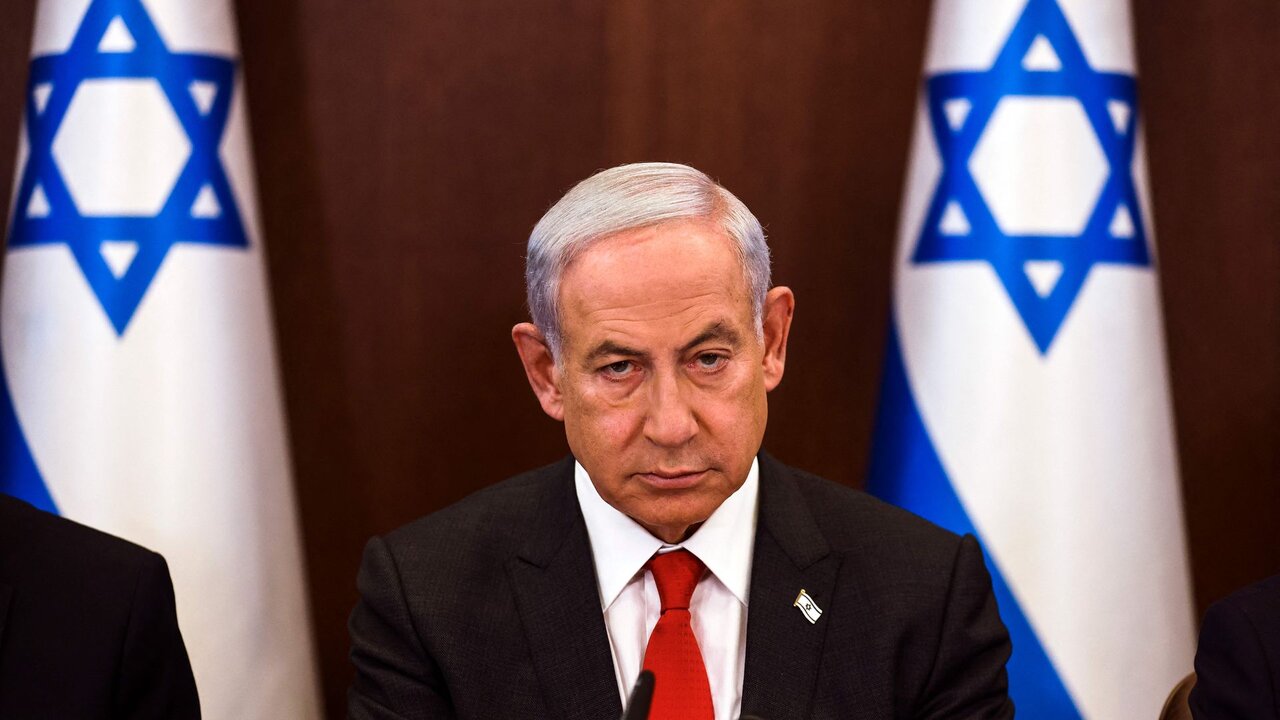
Benjamin Netanyahu faces multiple corruption charges and an International Criminal Court arrest warrant for war crimes, yet continues to escalate military aggression across the region.
When the legal noose tightens at home, military aggression abroad escalates. This strategy of using war to distract global opinion and evade justice has become a defining feature of the occupation regime’s political culture.
From the indiscriminate attacks in Gaza and the West Bank to the war in Lebanon, the bombing of Syria, and a 12-day war with Iran, Netanyahu has repeatedly overseen major military escalations precisely when his corruption trials have intensified.
The genocidal war on Gaza, which has since expanded into regional aggression, has effectively frozen his legal proceedings and silenced domestic opposition. Critics argue this is no coincidence, pointing to a long-standing tradition among leaders of the occupation regime of using aggression as a political shield.
A former regime defense minister, Moshe Ya’alon, recently accused Netanyahu’s government of “subordinating institutions and security to political survival” and labeled it “a government of lies and treason.”
This pattern is deeply embedded in the regime’s history. In 1981, Prime Minister Menachem Begin ordered the bombing of Iraq’s Osirak nuclear reactor while facing intense domestic criticism. In 2000 and 2001, former Prime Minister Ariel Sharon escalated violence in Gaza and the West Bank, launching lethal force against civilians. In 2006, former Prime Minister Ehud Olmert waged war on Lebanon, lasting 33 days. Olmert later escalated military operations in Gaza while under investigation for corruption charges that eventually sent him to prison.
All the occupation regime’s prime ministers since 1996 have been investigated for corruption, including Ehud Barak, Ariel Sharon and Ehud Olmert.
Netanyahu himself faces multiple corruption charges, exceeding 15 counts of bribery, fraud, and breach of trust. He is also wanted by the ICC for war crimes. Each time his testimony has loomed, military aggression has risen. This is most notable with the Gaza genocide. The timing has consistently served to protect him from legal accountability.
The founders of the Zionist regime were themselves corrupt first-generation immigrants from Europe, undermining claims of indigenous connection to the land.
President Chaim Weizmann was born in Belarus. Prime Minister David Ben-Gurion in Poland. Prime Minister Golda Meir in Kyiv. Prime Minister Yitzhak Shamir and Prime Minister Menachem Begin in Poland. President Shimon Peres in Poland. Netanyahu’s father was Polish and his mother Lithuanian. Prime Minister Ariel Sharon’s family came from Belarus.
Beyond tactical escalations, the occupying regime has seen multiple senior officials convicted of serious crimes, proving corruption is systemic. Former President Moshe Katsav served prison time for rape and sexual harassment. Former Prime Minister Ehud Olmert was imprisoned for corruption. Former Minister Gonen Segev was convicted of drug trafficking. Former Minister Aryeh Deri was convicted of bribery and tax offenses.
Central to understanding the occupation regime is recognizing that Zionism is a political ideology, not a religious expression of Judaism. Judaism is a faith with thousands of years of history, while Zionism emerged in 19th-century Europe as a colonial-settler movement.
For the Zionist regime, aggression serves a dual purpose: it expands control over occupied Arab land while protecting corrupt leaders from accountability.
The bloodshed in Gaza, the West Bank, Lebanon, and Syria is not a byproduct of war, it is a political tool wielded by leaders facing justice at home. Each escalation shifts media coverage, unifies the public behind the leadership, and delays legal proceedings.
More concerning for the Arab world is the regime’s vision for a “Greater Israel”.
Until this cycle is broken, the region will continue to experience instability whenever Israeli regime leaders find themselves in trouble. The occupation regime has made clear that it will sacrifice Palestinian as well as regional lives to protect its corrupt leadership from accountability.
Leave a Comment