Mounting strategic tensions: The escalating military buildup along Lebanon’s eastern frontier
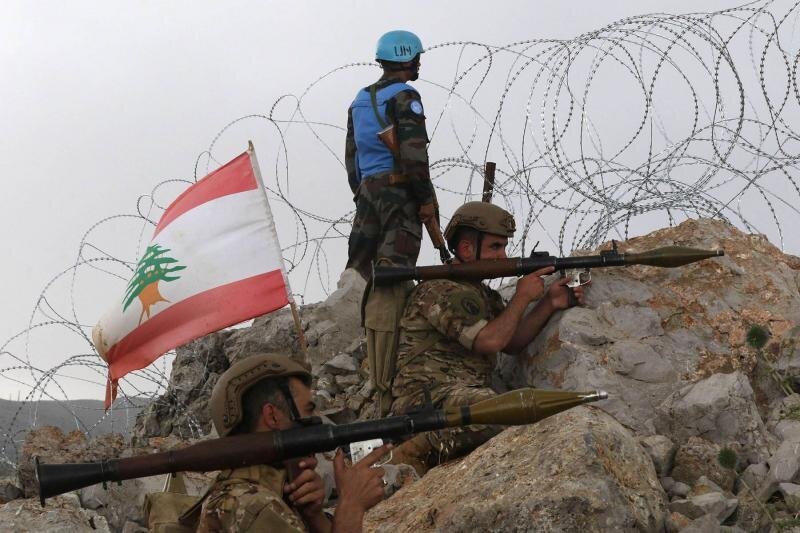
SOUTH LEBANON — It is no coincidence that Lebanese anxieties have intensified amid growing reports of military preparations along the Syrian-Lebanese border.
Over the past three weeks, unusual military mobilizations have been observed, particularly along the eastern frontier.
These suspicious movements coincide with escalating regional tensions, notably the possibility of confrontation between Washington and Tehran, placing Lebanon under compounded pressure.
The current scene presents a dual threat: on one side, the persistent risk of aggression from the Israeli occupation forces; on the other, rising security tensions that may originate from within Syria itself.
Reportedly, the transfer of foreign terrorists to Syria’s western countryside near Homs, with new military positions established opposite Lebanese territory.
According to informed sources, these deployments are non-routine, involving extremists reportedly relocated from Idlib to villages in western Homs before being stationed near the border.
While the build-up appears military in nature, observers warn of potential parallel security operations. Syrian figures are said to have recently rented homes in border villages while maintaining contacts inside Lebanon, raising fears of coordinated infiltration or destabilization attempts under the cover of military manoeuvres.
Recent statements by the Interior Ministry of Damascus’ de facto government alleged the arrest of a “terrorist cell” linked to Hezbollah in connection with attacks near Damascus’ Mezzeh district and its military airport.
The ministry claimed that weapons, drones, and rocket platforms traced back to Hezbollah had been seized. However, Lebanese security sources dispute these claims, asserting that the accused individuals were previously affiliated with extremist organizations such as Jabhat al-Nusra and ISIL.
The discrepancy has fuelled speculation that internal rivalries within Syria’s current leadership are being masked by external accusations.
Critically, the repeated emphasis on terms such as “terrorist cell” and “foreign-backed militias” may signal more than a domestic security issue.
Since Syria’s de facto authorities announced alignment with the so–called international coalition against terrorism, labelling Hezbollah in such terms could lay rhetorical groundwork for future actions framed as part of a broader “counterterrorism” effort.
Despite speculation about a possible Syrian role in an aggression against Lebanon—or even participation in a broader regional escalation—military realities suggest limitations.
The forces affiliated with the de facto leadership, often associated with Hayat Tahrir al-Sham, lack the heavy weaponry, air support, and logistical infrastructure required for a large-scale offensive.
Estimates further suggest that they number roughly one-fifth of the former Syrian army’s strength.
Many recruits have undergone only brief training, and significant shortages persist in artillery, armored units, and air capabilities, noting that Turkish support remains limited to lightly armored vehicles, while Russia has yet to fully resume logistical assistance.
Moreover, tribal mobilizations that proved decisive in eastern Syria may not translate into sustained offensive operations against Lebanon, particularly given economic grievances in Syria’s east following the dismantling of informal oil operations that once sustained local communities.
International and Arab calculations
International dynamics further complicate the picture. Although U.S. President Donald Trump has recently expressed support for Syria’s new authorities, Western legislative bodies have increasingly scrutinized developments in Syria following violent incidents in coastal and southern regions.
Discussions of potential sanctions in European and American forums suggest that an overt Syrian military move against Lebanon would face significant diplomatic resistance.
Regionally, key Arab actors appear cautious; Abdel Fattah el-Sisi and Mohammed bin Salman recently discussed Lebanon in Jeddah, reflecting diverging but engaged approaches to the Lebanese file.
Cairo, in particular, has emphasized strengthening the Lebanese state and armed forces as the sole legitimate security authority, while linking such efforts to full implementation of United Nations Security Council Resolution 1701.
Preparations for an international conference in Paris to support the Lebanese Armed Forces underscore a broader strategy: reinforce state institutions to consolidate control over national territory, particularly south of the Litani River.
Egyptian officials have framed this not merely as financial assistance but allegedly as part of a structured path toward consolidating state sovereignty and reducing parallel armed structures.
On the ground, the Lebanese Armed Forces continue to fortify positions along both the eastern and southern fronts.
Recent incidents, including reported fire from the Israeli side during the establishment of a new monitoring point near Marjayoun, highlight the volatility of Lebanon’s security environment.
Hence, while large-scale military escalation from Syria appears unlikely in the near term, the risks of localized security breaches, infiltration by extremist networks, or political exploitation of regional tensions remain significant.
Lebanon’s greatest vulnerability may not be invasion, but complacency—underestimating the interplay between regional rivalries, internal Syrian instability, and international manoeuvring.
In this delicate moment, safeguarding Lebanon requires vigilance, institutional cohesion, and resistance to narrow political calculations that could invite external entanglement. The border may be geographically fixed, but the pressures surrounding it are fluid—and potentially transformative for Lebanon’s fragile equilibrium.
Leave a Comment