From “life or death over Yemen” to the Iran question: When American threats fail to deliver
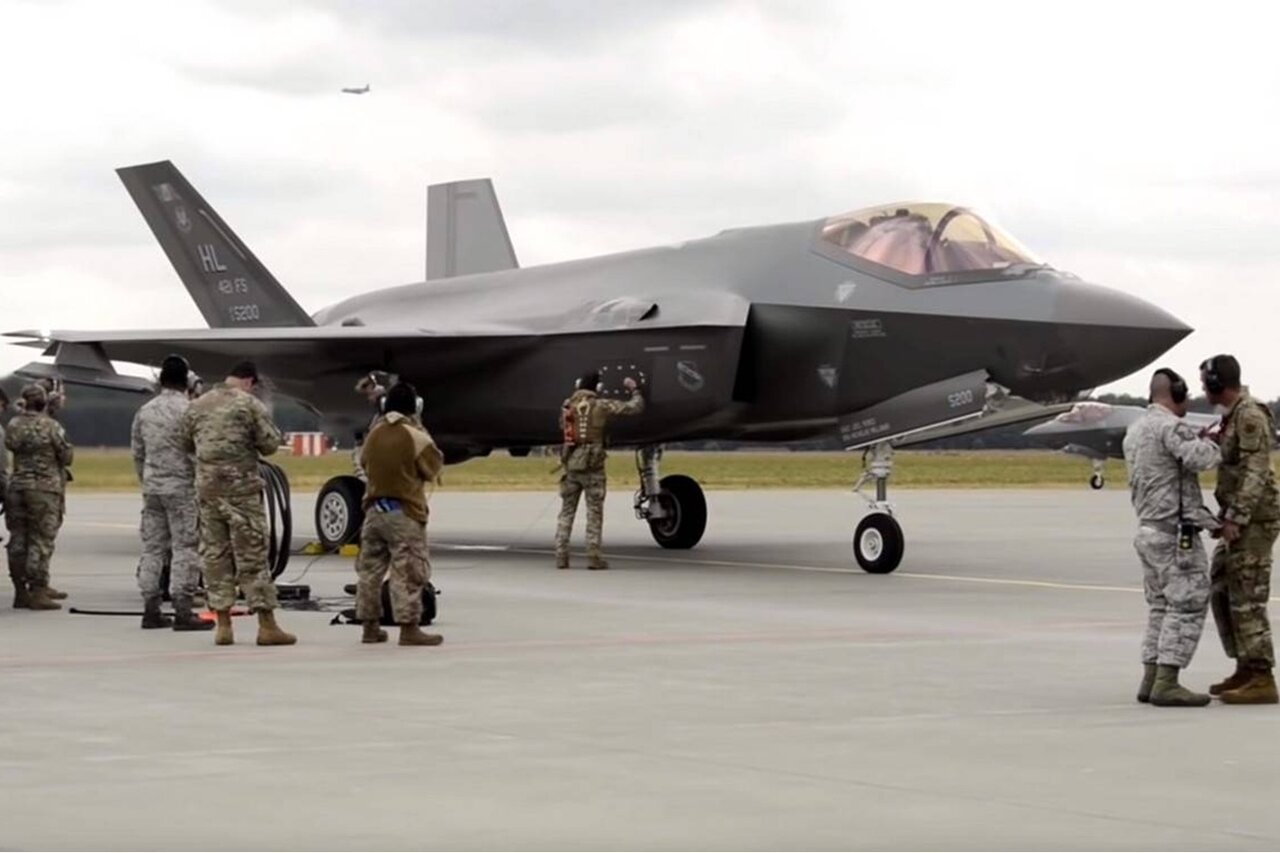
SOUTH LEBANON — The dramatic account published in the American Air & Space Forces Magazine about two F-16 pilots narrowly escaping surface-to-air missiles over Yemen was intended as a story of heroism.
Instead, it inadvertently exposed a deeper strategic reality: the limits of American air power when confronted with determined, adaptive, and locally embedded resistance forces.
Operation “Rough Rider,” a 52-day air campaign overseen by United States Central Command and unusually delegated to Joint Special Operations Command, was designed to break Yemeni missile and air defence capabilities.
It involved B-2 bombers, aircraft carriers like the USS Harry S. Truman, MQ-9 drones, and elite “Wild Weasel” F-16 squadrons specialized in suppressing enemy air defences.
Yet despite this overwhelming technological superiority, the operation revealed a sobering truth: Yemen’s air defences were neither blind nor broken.
According to the pilots’ own testimonies, Yemeni forces executed what they described as a “SAMbush” — waiting until American aircraft were exiting Yemeni airspace before activating radars and launching surface-to-air missiles.
The result was seconds separating advanced U.S. fighter jets from destruction. More striking was the admission by U.S. officials that Washington never fully understood the integrated nature of Yemen’s air defence network.
Combining radar-guided systems with visual observers and electro-optical tracking, Yemeni forces created a hybrid model that neutralized key advantages of stealth and electronic warfare.
This is not the profile of a force collapsing under pressure. It is the profile of an adversary learning, adapting, and surviving under bombardment.
American mainstream media, including The New York Times, previously reported that Yemeni air defences nearly struck multiple U.S. F-16 and F-35 aircraft.
More revealing still were acknowledgments that seven MQ-9 drones were shot down in the first month alone. The campaign reportedly drained advanced munitions stockpiles and raised concerns inside the Pentagon about readiness for a potential confrontation with China.
After roughly two months, Washington halted operations without achieving decisive results — no air superiority, no dismantled defence grid, no political capitulation from Sana’a.
Even internal U.S. debates reflected frustration. Then-President Donald Trump reportedly demanded rapid results, only to be confronted with military stalemate and mounting costs.
Discussions of declaring symbolic victory contrasted sharply with the continued launch of missiles and drones from Yemen.
If such an extensive campaign — involving stealth bombers, carrier strike groups, and advanced suppression tactics — failed to impose dominance over Yemen: what realistic expectations can be projected onto a far more capable and regionally entrenched power like Iran?
Iran possesses layered air defences, advanced missile capabilities, strategic depth, and a far larger industrial base than Yemen.
Iran has decades of experience countering sanctions, cyber operations, covert action, and asymmetric warfare.
More importantly, Iran is not isolated geographically like Yemen. Any large-scale confrontation would risk regional escalation involving multiple fronts across West Asia.
The logistical and political cost would dwarf the Yemeni campaign!
American deterrence often relies on psychological projection — the assumption that overwhelming firepower will compel rapid submission. Yet Yemen demonstrated that technological superiority does not automatically translate into strategic success.
Air hostilities can punish, degrade, and disrupt — but they do not necessarily break ideological resolve or decentralized military networks.
From Iraq to Afghanistan, and from Lebanon to Yemen, a consistent pattern emerges: initial shock-and-awe operations give way to prolonged engagements with diminishing returns.
Tactical bravery does not equate to strategic victory. The Yemen experience should serve as a cautionary tale.
When even a relatively modest actor withstands sustained air assault and adapts effectively, the assumption that threats alone can bend stronger regional powers becomes questionable.
If the empire of paedophiles and cannibals could not secure uncontested skies over Yemen after weeks of concentrated strikes, the prospect of coercing Iran through intimidation appears even more uncertain.
History suggests that wars are not won by headlines of narrow escapes, but by sustainable strategic outcomes.
In Yemen, the outcome was not decisive dominance — it was a costly stalemate. And that reality inevitably reshapes the credibility of future American uncalculated threats!
Leave a Comment