Proxy theater in the Persian Gulf: Israel scripts, UAE performs
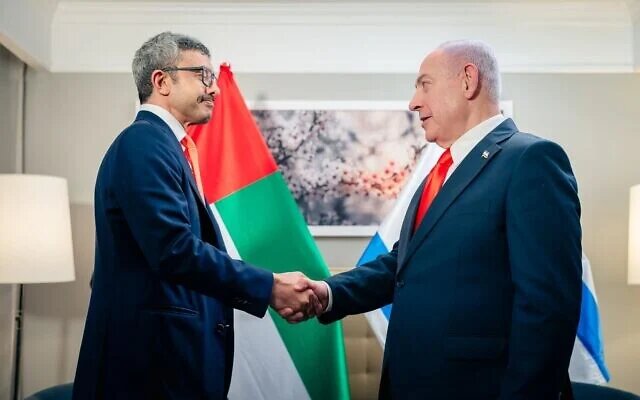
TEHRAN – Israel’s war on Gaza has been marked by mass civilian deaths, starvation tactics, and the destruction of homes, hospitals, and refugee camps. At a time when international courts and human rights groups are demanding accountability, the United Arab Emirates has not stepped back. It has stepped in.
By secretly committing $2.3 billion to Israel’s largest private arms manufacturer, Elbit Systems, Abu Dhabi has positioned itself not as a bystander to the Gaza catastrophe but as a financial enabler of the military-industrial ecosystem sustaining it. This deal, revealed by Intelligence Online, is the second-largest arms contract in Israeli history. The buyer was deliberately kept secret when Elbit announced the deal last November, shielding the UAE from immediate backlash as images of Gaza’s devastation filled global screens.
By investing billions into Elbit, the UAE is helping stabilize and expand the very industrial base that makes Israel’s campaign of mass destruction possible.
Israeli military companies have operated openly in the UAE since normalization under the Abraham Accords in 2020. Elbit Systems and Israel Aerospace Industries maintain offices in Abu Dhabi. Emirati defense giant Edge has continued to sign agreements with Israeli firms even as the genocide in Gaza shocked the world. This is not passive normalization. It is a wartime partnership.
Breaking the Arab consensus
The UAE’s behavior has not gone unnoticed in the region. Rather than reflecting an Arab consensus against Israel’s assault on Gaza, Abu Dhabi has actively undermined it. As Saudi analyst Abdulaziz Alghashian told Middle East Eye: “[The UAE] are preparing themselves to be the disruptor of the Arab consensus. That is the main utility of the UAE for the US and Israel.” While Arab publics overwhelmingly oppose Israel’s war on Gaza, the UAE has functioned as Israel’s diplomatic and economic pressure valve—absorbing backlash while allowing Tel Aviv to claim regional engagement.
This role extends beyond Gaza. The UAE has repeatedly been accused of supporting armed actors implicated in mass atrocities, most notably Sudan’s Rapid Support Forces (RSF), which have been linked to ethnic cleansing and crimes against humanity. Though Abu Dhabi denies direct involvement, weapons transfers, financial networks, and logistical pathways have consistently pointed back to the Emirates. The same pattern has appeared in Libya and Yemen, where Emirati-backed militias have deepened conflict instead of resolving it.
The Elbit deal reflects this logic: militarized influence, strategic denial, and insulation from accountability. Abu Dhabi presents itself as a modernizing hub of tolerance, yet its foreign policy reveals a darker truth—an eagerness to bankroll repression abroad while silencing dissent at home.
A surrogate voice for Israel
After Israel’s failed 12-day military confrontation with Iran in June, Tel Aviv emerged unable to impose deterrence through force. Iran’s core capabilities remained intact, escalation was contained, and Israel’s limits were exposed. What followed was a shift—from direct aggression to indirect pressure. In this context, the UAE’s renewed claims over Iran’s three Persian Gulf islands—Abu Musa, Greater Tunb, and Lesser Tunb—take on strategic significance. These claims resurfaced not organically, but in alignment with Israeli messaging aimed at opening new fronts of diplomatic and legal pressure against Tehran.
Israel lacks legitimacy in the Persian Gulf. The UAE fills that gap. By echoing Israeli narratives on Iran while deepening military-industrial cooperation, Abu Dhabi has increasingly acted as Israel’s surrogate voice in the Persian Gulf—amplifying its priorities where Tel Aviv cannot speak directly. This role has grown more pronounced as Israel’s military credibility has eroded and its diplomatic isolation has deepened.
The UAE’s actions amount to a strategic choice. By financing Israel’s arms industry during a genocidal war, undermining Arab opposition to mass killing in Gaza, and advancing Israeli-aligned pressure campaigns against Iran, Abu Dhabi has aligned itself with repression over restraint. This is not normalization. It is participation in war crimes. And history will record it accordingly.
Leave a Comment