Ilam scholar mentions ancient cities, monuments eligible for UNESCO registration
By Katayoon Dashti
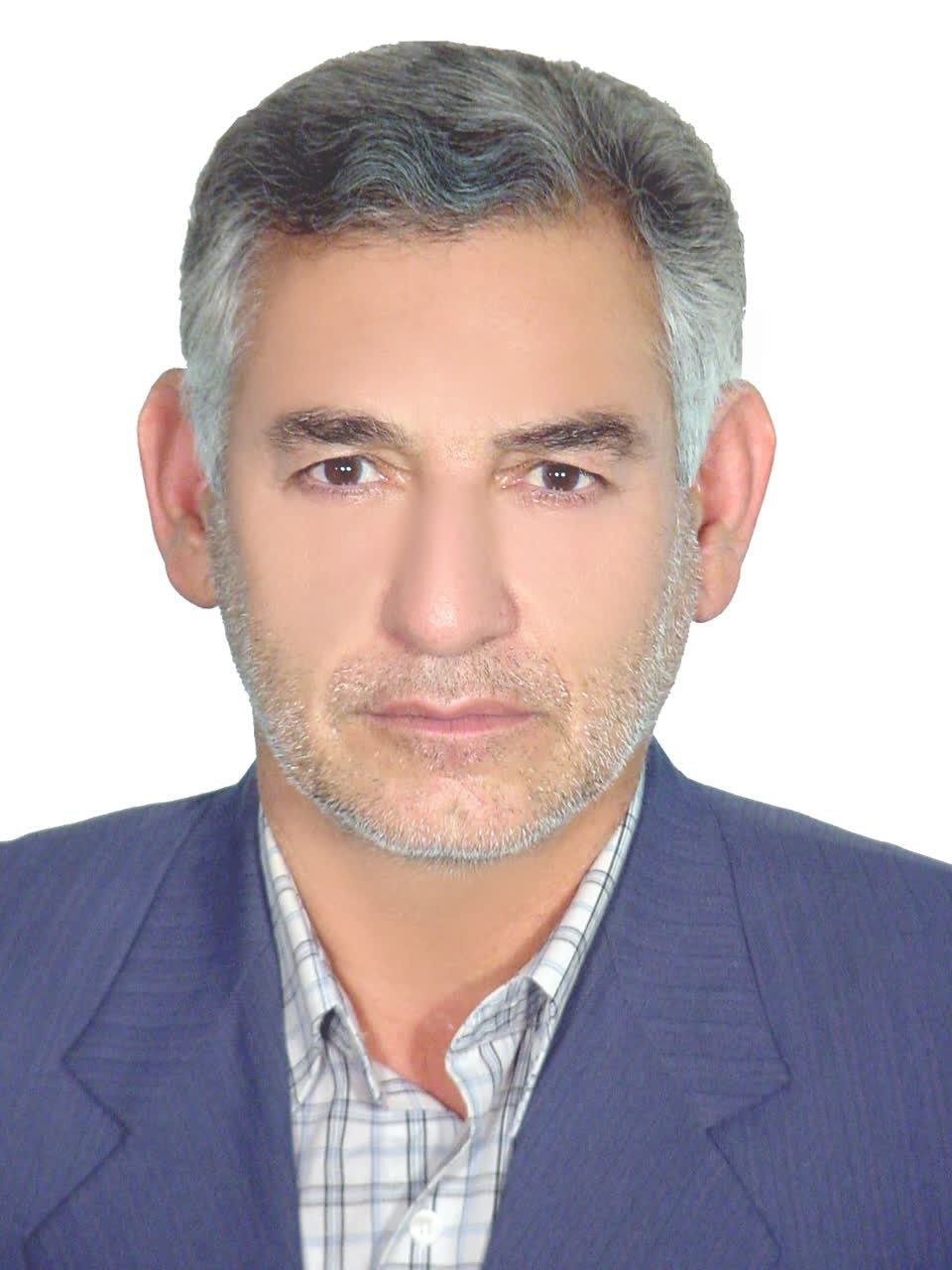
Habibollah Mahmoudian, PhD, is a specialist in prehistoric archaeology and a faculty member of the Islamic Azad University, Ilam Province. He has also published over 100 books as well as 200 articles in domestic and international publications. In an interview with the Tehran Times, Mahmoudian elaborated on his achievements, the western province’s history, tourism, ancient cities, and monuments that are eligible for registration on the UNESCO World Heritage List.
Please introduce yourself and your scientific, research, and archaeological achievements.
You will be successful in every field that you pursue with interest. I have been studying and researching for the past 55 years.
Archaeology gets the information according to the scientific findings and gives it to the historian. Historian writes them in history.
I have got PhD in prehistoric archaeology from Yerevan State University in Armenia.
I have published 106 volumes of books in the fields of history and culture, and civilizational development of Iran, particularly the Zagros region. Also, my articles (over 200) have been published in national and international publications.
It has been a movement for introducing Iranian civilization and culture to introduce Iran on an international level.
As an archaeologist, which of your achievements regarding Ilam civilization has affected you?
Today, the world is alive with identity. Every country seeks its own identity. We have these identity values for ourselves. My studies regard the western region of Iran, which is a linking bridge between the East and the West. Ilam is considered a linking bridge between the East and the West. It means that the Royal Road, Silk Road, and Khavaran Road were the linking routes between the East and West. In the northern part, Caspian Lake had limited the land route. And in the southern part, the Persian Gulf and the Oman Sea used to limit the land route.
We have numerous monuments and relics in the form of archaeological sites in the western region of Iran. Close to 2,000 archaeological sites have been identified, which have been the cradle of ancient civilizations. Seeds of wheat, barley, lentil, and mung bean, and other agricultural seeds have been planted and domesticated in this area since 11,000 years ago which is the start of agriculture. Sites in the area of the Seymareh River towards Karkheh and Dehloran region were used for the domestication of the seeds 10,000 years ago. We have also domesticated the animals. Humans used to live in caves or rock shelters. Gradually, humans migrated from mountains and caves to the plains. There were preliminary villages and sedentarism, and efforts to find food. Early settlers domesticated the wild goats of the Zagros mountains, such as the ibex.
Iranian and foreign archaeologists put in a lot of effort and made a lot of findings.
Please explain the history of the presence of archaeologists in Ilam and archaeological excavations in this region.
We have witnessed an era of development and more mobility of archaeologists in the western region in the 1960s. We have the Ilam region, which is a part of the Elamite civilization. Unfortunately, we have fewer studies on the Elamite civilization, which has 50 centuries of civilization. Our country should give more maneuver on the Elamite civilization, which is an extensive civilization in the south and southwestern part of Iran, and not just be an introduction.
Foreign archaeological delegations, whether French delegations or from Chicago University have conducted archaeological projects and gained good information on the Elamite civilization and other regional civilizations.
It is an appropriate era in terms of metal melting. They have identified relics from the Bronze Age and Iron Age in ancient graveyards. They have achieved to melt copper and tin, mix them, and gain bronze. I have written a book regarding the golden era of the Bronze Age in the west of Iran.
We have 100 sites pertaining to the Bronze Age in Ilam, the west of Zagros, and Ilam province.
The major hub of excavation operations was in Ilam. Formerly, Ilam was part of Lorestan. Currently, it has been separated.
In the 1960s, there were illegal excavations in Ilam. 900 ancient sites of Ilam province have been registered on the National Heritage List. This shows the restless efforts of the archaeologists.
Please explain about the Seymareh river and the archeological sites surrounding it.
Seymareh River in Ilam, west of the country, is the keyword for the civilizational achievements of the ancient era. The Seymareh River is the longest river in Iran. The main source of the Seymareh River is the Gamasyab River in Nahavand County. The water of the Qarasu River is added to the Seymareh and flows south of Iraq. Since it is a permanent river and has numerous branches, we are witnesses to many human settlements and the formation of ancient civilizations on its banks.
We have relics with a history of 50,000 years in the Holeylan region. We have human settlements in the regional caves dating back to 50,000 years ago.
Foreign archaeological delegations and the domestic archaeological team, after the 1979 Islamic Revolution, have conducted satisfactory archaeological excavations.
The archeologists found good achievements regarding the history of 10,000 years ago. We have the plain settlement era and domestication of agricultural seeds and animals within the Holeylan region. We have good sites in Ilam province that reach Badreh and Darrehshahr. We have even relics from the Islamic era in this region. We have layers from the Bronze and Iron ages, but an important issue regarding the findings at this site is archaeological discoveries from ancient Iran.
We also have relics of Ancient Iran. Elamite civilization had two capital cities, including Susa and Madakto.
We have two ancient cities of Elam and Seymareh (current Darrehshahr) near the river of Seymareh. Both cities have eligible conditions to be registered on the UNESCO World Heritage List.
If we go south of Ilam province, we have about 200 ancient sites, which are a major hub of the World’s prehistoric era. It seems that they have favorable conditions for inclusion in the World Heritage List.
How is the condition of water resources, rivers, and aqueducts in Ilam?
Good works have been done in the west of Iran, particularly Ilam province and its neighboring provinces, after the victory of the Islamic Revolution. In the past, we had human settlements on the banks of rivers across the Ilam region.
Ilam province has good water management, given the conducted efforts and the constructed dams. Seymareh Dam is an important dam for supplying the water of Ilam province both for agriculture and drinking purposes.
In the past, people used to turn to the aqueducts. We have numerous qanats (aqueducts).
We have a major aqueduct in the Mehran region. We have over 100 aqueducts in Ilam province. Water resources have had a role in Ilam civilization. Thanks to the conducted efforts, Ilam inhabitants have access to sufficient water.
There are numerous dams, one dam which is located in the Mehran region collect the stormwaters.
Please explain about Mehran border point and traveling of pilgrims to Iraq during Arbaeen time.
Every year, thousands of pilgrims cross the Mehran border point to travel to Iraq for Arbaeen rituals.
We have a road known as Khavaran road, which was launched in the Third Century AH. This road connected the Khorasan region to the Mediterranean Sea. I wish we were also reviving the pilgrimage road of Khavaran, which can be considered an important economic and cultural route.
We are witnesses to the huge presence and travel of pilgrims from the Mehran border crossing to the holy religious sites in Iraq, like Karbala. It is considered one of the most crowded civilizational routes during Arbaeen time. Fortunately, facilities have been prepared for the pilgrims in Mehran Plain.
Please explain about Zagros and people living there, their handicrafts and cuisines.
Ilam is part of Zagros. Zagros is a part of the green crescent or fertile crescent. The green crescent starts near the Mediterranean Sea and extends north to Iraq, Azerbaijan, and Kurdistan, and continues northwest to southeast towards the Zagros mountains and reaches the Hormuz Strait. The humidity of the Mediterranean Sea and Black Sea, and even the Atlantic Ocean, reaches this region, and it has good precipitation.
Enough precipitation, forest cover, and sufficient food have created proper conditions for human settlements in the Ilam region. We have ancient castles, ancient caravanserais, and ancient hills.
Zagros people had a special language known as Zagros, which is the language of the Ilam dwellers. It has numerous dialects. Zagro Ilami is the mother of the languages of the Zagros dwellers.
Ilam province is rich in terms of handicrafts. I have written a book regarding the atlas of handicrafts and traditional crafts of Ilam province, which contains about 30 handicraft items from the past to the present. The tribes have Siah Chador (black tents). The items inside the black tent include jajim, which is made from wool or goat hair. They also have beautiful kilims.
In the past, every region had its own foods. They used Tarkhineh (a dried food ingredient, based on a fermented mixture of grain and yoghurt or fermented milk, found in the cuisines of Ilam people) in winter. Our country is a four-season land. They used to dry okra and tomatoes in summer and prepare cuisines. Kermanshahi oil is considered Ilam oil.
Please explain about Yalda Night rituals.
Yalda is a special celebrity for Iranians during the change of season. Mehregan, Nowruz, and Chaharshanbeh Souri have been inspired by nature, sun, moon, and stars. I have also written a book regarding Yalda. Since people are in the winter season, they care about light.
As of Yalda Night, the days are getting longer and the nights are getting shorter.
The time of day increases, and it promises illumination and light. People have been celebrating the festivals since ancient times. If we return to the past gatherings, such as Yalda Night, it will boost the family and unity between people.
KD
Leave a Comment