‘Regulation for us, freedom for thee’
How the West weaponizes social media
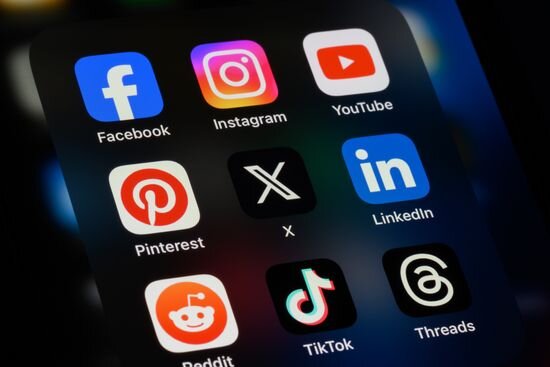
Even as a new wave of restrictive regulations on children’s digital access sweeps across Europe and the United States, these very governments—employing a completely different media policy—have simultaneously opened a vast arena of unrestricted social media and satellite broadcasting towards Iran. This meaningful contradiction raises serious questions about soft warfare and cultural engineering.
In the spring and summer of 2025, numerous reports from Western capitals conveyed a shared message: "The digital space has become dangerous for children." Switzerland officially began reviewing the possibility of banning or restricting social media use for minors. In the United Kingdom, according to the BBC and The Guardian, the government proposed banning social media use for teenagers under 16, "in the Australian style." France spoke of plans to prohibit social media access for those under 15, while in the United States, states like Florida and Utah passed stricter age-access laws.
Within the European Union, the concept of a “digital age threshold” has become a key political term. In official documents related to the Digital Services Act and the Digital Markets Act, the European Commission has repeatedly emphasized the need to protect children from addictive algorithms. According to Politico Europe, several European countries are pursuing age-verification mechanisms that would effectively limit children’s unrestricted access to platforms like Instagram, TikTok, and Snapchat.
In the United States, the issue is even more explicit. Reports by Reuters and The New York Times show American lawmakers accusing social media platforms of exacerbating a “teen mental health crisis.” Senators from both parties have supported proposals such as the Kids Off Social Media Act, which aims to ban or severely restrict children’s presence on these social platforms.
The shared message across all these documents is clear: an unregulated digital space poses a danger to children and adolescents. However, this picture has another side—one rarely visible in mainstream media.
These same countries adopt a completely opposite approach in their external media policies. Persian-language satellite networks, funded by large governmental or quasi-governmental budgets, operate from Europe and the United States. Reports from Ofcom in the UK and publicly available financial documents concerning some Persian-language outlets reveal that these media produce and broadcast content—without any age restrictions—that directly or indirectly promotes a particular lifestyle.
While television networks within Europe are required to adhere to strict age-rating systems, these very types of content are delivered via satellite, free and unfiltered, to Iranian families. This contradiction is not accidental.
Each of these networks maintains accounts on social media, where it appears no limits exist whatsoever. A controversial post that would be immediately deleted if written in English and addressed to youth in the West would, in most cases, remain online permanently if intended for children and teenagers in places like Iran. For instance, one social media account, belonging to a regular guest on Persian-speaking satellite networks, teaches teenagers how to use knives and homemade explosives when participating in protests. Meanwhile, over the past two years, European governments have sometimes arrested individuals that merely criticized the Israeli regime on social media and asked that children in Gaza don’t get brutally killed.
Soft war through entertainment
The concept of “soft war” has long been present in political and media discourse, and Western documents implicitly confirm its existence. Reports by the RAND Corporation and analyses published in Foreign Affairs repeatedly highlight the role of media and social networks in “shaping attitudes within target societies.”
Within this framework, the family, women, and lifestyle become central points of focus. The content promoted by many Persian-language satellite channels and social media platforms is precisely what Western societies themselves have deemed “harmful” for their own children and adolescents—ranging from the normalization of unstable family relationships to the weakening of motherhood and the redefinition of female identity outside indigenous cultural contexts.
Interestingly, Western governments justify their domestic restrictions using the language of “children’s rights.” UNICEF, in its official statements, warns that children must be protected from the harms of the online environment. Yet, this concern suddenly fades when it comes to other countries.
If an unregulated digital space is dangerous for a Swiss or French child, why is it considered harmless for an Iranian child? If TikTok’s algorithms threaten the mental health of American teenagers, why are those same algorithms allowed to operate in Iran without restriction? That’s because social media is also a weapon for West’s political goals.
Reports by NATO’s Strategic Communications Centre of Excellence explicitly refer to “information and media” as instruments of power. In this view, media is not merely a means of informing; it is a tool for shaping values.
Persian-language satellite networks and social media platforms are part of this equation. Content presented in the name of entertainment, freedom, or modern lifestyle ultimately leads to a gradual redefinition of culture and identity—a slow, erosive, and silent process.
For instance, numerous Western internal reports identify the family as a red line; the OECD, in its social reports, emphasizes the family's crucial role in societal stability. Yet, in the content exported to Iran, the family is often portrayed as an outdated, restrictive, or obstructive institution.
In these narratives, Iranian women are not depicted as the core of the family, but rather as individuals encouraged to break away from traditions. This is precisely where soft war moves beyond mere politics and penetrates the depths of everyday life.
Another notable fact when it comes to social media is the silence of international institutions in the face of this duality. The very organizations that issue statements about Iran’s filtering or regulation remain silent regarding the unrestricted export of unregulated content to Iran. This silence, in itself, sends a message.
Ultimately, when Europe and the United States build walls to protect their own children while opening gates for others, this situation cannot be dismissed as mere inconsistency. It represents a deliberate policy—one that turns media into a tool of influence and treats culture as the primary field of competition.
Iran, with its distinct family structure and cultural identity, stands at the center of this field. Understanding this reality is the first step toward a conscious response—one rooted not in passivity, but in a clear-eyed comprehension of the global media game.
Leave a Comment