Iran in the orbit of emerging global institutions
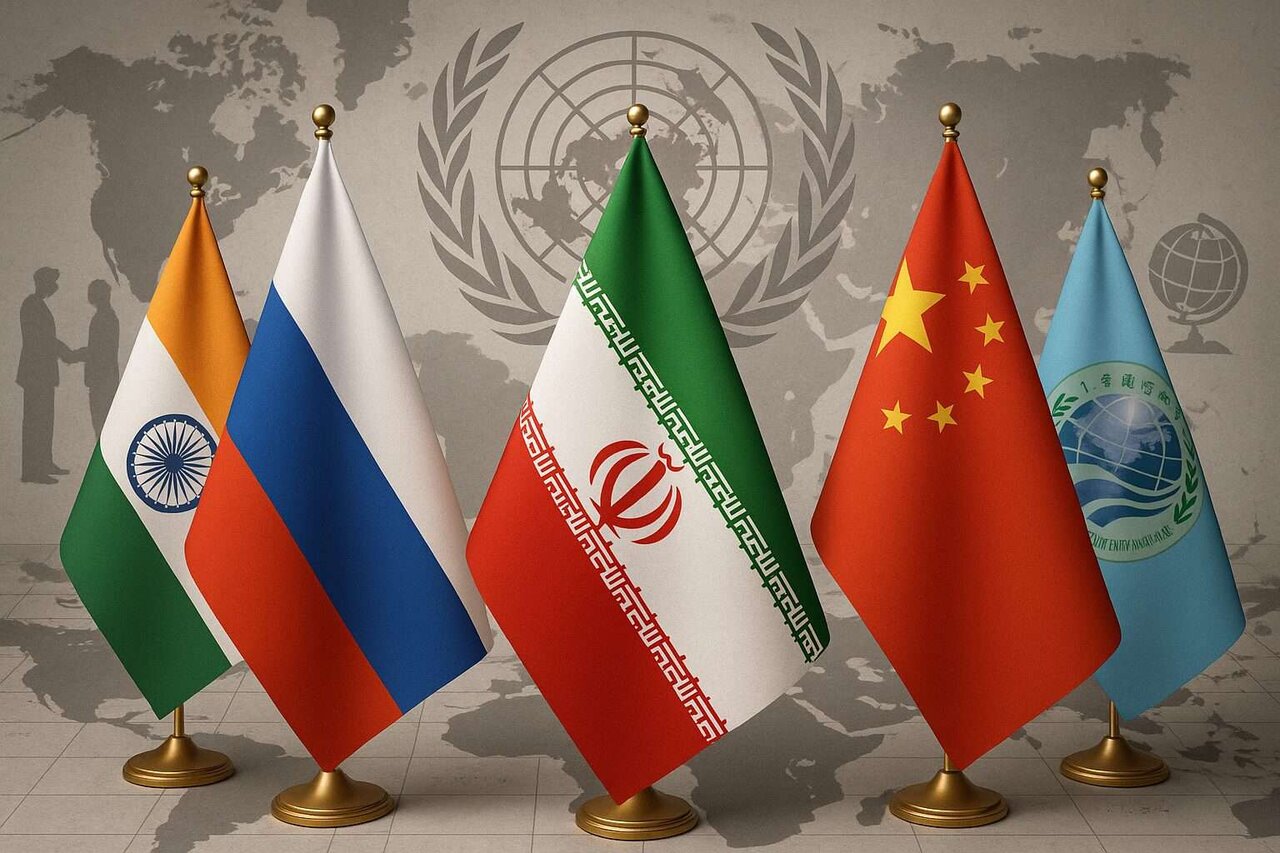
Iran’s growing engagement with organizations such as the Shanghai Cooperation Organization, BRICS, and the Eurasian Economic Union reflects a gradual recalibration of its foreign policy.
This approach seeks to mitigate external pressure, expand economic horizons, and position Tehran as a relevant actor in a global order increasingly shaped outside the West.
In the summer of 2025, during the BRICS foreign ministers’ meeting in Brazil, Iran’s presence was more than ceremonial. It marked the first time Tehran participated as a full member following its official accession, signaling a clear intention to move beyond symbolic alignment and toward tangible cooperation. Iranian representatives emphasized priorities such as financial coordination, infrastructure investment, and South–South trade, themes that resonate with many BRICS members seeking alternatives to Western-dominated systems.
At the same time, parallel diplomatic activity unfolded within the framework of the Shanghai Cooperation Organization. Meetings focusing on trade facilitation, customs coordination, and transit corridors underscored Iran’s effort to translate political membership into practical economic outcomes. These discussions remain relevant, with follow-up negotiations ongoing and their potential impact expected to materialize over the coming year.
Shanghai Cooperation Organization beyond security
Originally conceived as a security-focused body addressing extremism and regional stability, the Shanghai Cooperation Organization has undergone a notable transformation. Economic cooperation, connectivity, and energy collaboration now occupy a central place on its agenda. For Iran, this evolution presents strategic opportunities rooted in geography as much as diplomacy.
Situated at the intersection of Central Asia, the Caucasus, the Persian Gulf, and South Asia, Iran holds a natural advantage as a transit hub. Iranian officials have repeatedly highlighted the integration of the International North–South Transport Corridor with SCO-related infrastructure projects as a priority. Such integration could reduce transport costs, shorten delivery times, and strengthen Iran’s role in regional supply chains.
Trade data from recent years indicate a steady increase in Iran’s commercial exchanges with SCO members, particularly China, Russia, and Central Asian states. While challenges related to sanctions and financial transfers persist, the SCO framework has increasingly functioned as a platform for pragmatic cooperation, allowing members to explore non-traditional payment mechanisms and localized financial arrangements.
BRICS and the search for financial alternatives
BRICS represents one of the most visible efforts by emerging economies to reshape global economic governance. Its expansion to include West Asian actors has enhanced its geopolitical relevance, and Iran’s accession fits within this broader pattern. For Tehran, BRICS membership is not merely about prestige; it is closely tied to long-standing ambitions to reduce vulnerability to Western financial leverage.
One focal point is the New Development Bank, which was created to finance infrastructure and development projects in member states. Iranian policymakers view access to this institution as a potential channel for funding large-scale projects in energy, transport, and industry. However, turning this vision into reality requires overcoming technical barriers, aligning regulatory standards, and navigating political sensitivities among members.
Another area of interest is the gradual shift toward the use of local currencies in trade settlements. Several BRICS countries have already experimented with such mechanisms, and Iran has signaled its readiness to participate. While this approach does not eliminate exposure to global financial risks, it represents a step toward diversification and greater autonomy in international trade.
Eurasian Economic Union and regional trade logic
Compared to BRICS and the SCO, the Eurasian Economic Union often receives less media attention, yet its economic implications for Iran are arguably more immediate. The free trade agreement between Iran and the Union, scheduled for full implementation in the current year, is designed to significantly reduce tariffs on hundreds of goods across sectors ranging from agriculture to manufacturing.
For Iran’s economy, which increasingly prioritizes regional markets due to logistical efficiency and lower transaction costs, Eurasia offers a practical pathway for export growth. Countries such as Russia, Kazakhstan, and Armenia have emerged as important trade partners, with Iranian non-oil exports showing measurable growth in recent customs statistics.
Equally important is the gradual engagement of Iran’s private sector. Business associations and export-oriented firms have begun to adapt to Eurasian market standards, signaling a shift from state-centered trade toward broader commercial participation. This trend, if sustained, could help anchor Iran’s regional economic integration beyond governmental agreements.
The connecting threads
Across all three frameworks—Shanghai, BRICS, and Eurasia—two recurring themes stand out: infrastructure and energy. Iran’s extensive energy reserves and its location along key transit routes place it in a potentially advantageous position. Joint projects in oil, gas, electricity exchange, and renewable energy have featured prominently in bilateral and multilateral discussions.
Infrastructure development, particularly in railways, ports, and logistics hubs, is closely linked to these ambitions. Investments in ports along the Persian Gulf and rail connections to Central Asia and the Caucasus are intended to complement broader regional initiatives. While financing and implementation remain challenging, these projects reflect a long-term strategy to embed Iran within regional economic networks.
Despite the opportunities associated with regional institutions, Iran’s engagement is constrained by structural and operational challenges. Weaknesses in banking infrastructure, limited access to international financial systems, and regulatory inconsistencies continue to hamper trade expansion. Experts frequently point to the need for institutional coordination and policy coherence to maximize the benefits of multilateral membership.
Moreover, internal dynamics within these organizations can complicate decision-making. Competing national interests, geopolitical rivalries, and differing levels of economic development among members often slow progress. Iran must therefore balance ambition with realism, recognizing that multilateral platforms are arenas of negotiation rather than guaranteed solutions.
A recurring theme in assessments of Iran’s regional strategy is the link between domestic reform and external success. Membership in international organizations alone cannot generate economic gains without parallel improvements at home. Enhancing transparency, streamlining customs procedures, and improving the overall business environment are widely seen as prerequisites for effective regional integration.
Policymakers have acknowledged this connection, emphasizing that foreign policy initiatives must be supported by internal adjustments. The extent to which these reforms materialize will largely determine whether Iran’s multilateral engagements produce lasting economic dividends or remain underutilized.
Taken together, Iran’s active participation in emerging global and regional institutions points to a broader strategic recalibration. Rather than relying on a narrow set of partners, Tehran is seeking to diversify its external relationships and reduce exposure to unilateral pressure. This approach aligns with the gradual emergence of a multipolar international system, where power and influence are more widely distributed.
While the ultimate outcome of this strategy remains uncertain, it offers Iran an opportunity to redefine its role beyond traditional binaries. If managed with consistency, pragmatism, and domestic support, engagement with organizations such as the SCO, BRICS, and the Eurasian Economic Union could help anchor Iran within the evolving architecture of global cooperation—an architecture still in flux, but increasingly shaped by actors outside the established Western core.
Leave a Comment