Iran’s Eurasian turn
What Araghchi’s visits to Belarus and Russia reveal about a sanctions-shaped world
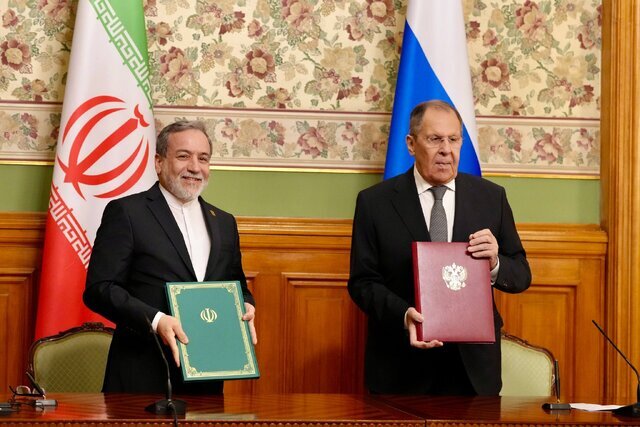
The recent visit of Iranian Foreign Minister Abbas Araghchi to Belarus and Russia should not be read as a routine round of diplomatic engagements or as a symbolic reaffirmation of existing alliances. It reflects a more deliberate recalibration of Iran’s foreign policy within an evolving Eurasian environment shaped by sanctions fatigue, shifting power centers, and the gradual erosion of Western leverage as the primary organizing force of international politics.
The choice of Minsk as the first stop is itself revealing. Belarus occupies a distinctive position within the post-Soviet space as a state that has experienced sustained Western pressure while remaining institutionally anchored to Russia. For Tehran, engagement with Belarus is not primarily about bilateral trade volumes or immediate economic gains. It is about institutional alignment among sanctioned states seeking to normalize cooperation outside Western approval mechanisms. The agreements signed during the visit emphasizing opposition to unilateral coercive measures and the defense of international legal norms against extraterritorial sanctions fit squarely within this logic. They mirror similar language Iran has advanced in forums such as the United Nations and the Shanghai Cooperation Organization (SCO) and echo Belarusian positions articulated in response to European Union sanctions. The visit reinforced a shared narrative that frames sanctions not as tools of law enforcement but as instruments of political coercion that undermine the credibility of the international system itself.
Araghchi’s meetings in Minsk also highlighted a subtler dimension of Iran’s Eurasian strategy. Tehran increasingly views smaller sanctioned or semi-isolated states as diplomatic force multipliers rather than peripheral actors. Belarus does not alter the global balance of power on its own, but it provides Iran with an additional node in a growing network of states that reject Western conditionality as the organizing principle of international engagement. This network is not ideological in the traditional sense. It is pragmatic, shaped by common exposure to pressure and a shared interest in reducing vulnerability to Western financial and regulatory systems. In this context, Belarus functions as a bridge between Iran and the deeper institutional structures of the Eurasian space where Russia remains the central anchor.
The second leg of the trip to Moscow carried greater strategic weight. Iran–Russia relations have moved beyond episodic cooperation toward a more structured partnership shaped by overlapping geopolitical constraints. Both countries operate under extensive Western sanctions, both face persistent efforts to limit their regional influence, and both increasingly see global politics as entering a post-unipolar phase. Araghchi’s consultations with Russian officials were described around long-term coordination rather than tactical alignment. References to a multi-year cooperation roadmap and the expansion of political and economic mechanisms insulated from Western oversight point to an emerging effort to institutionalize resilience rather than merely manage crises.
This institutional emphasis matters. In earlier phases of Iran–Russia relations, cooperation often intensified in response to external shocks such as conflicts in Syria or escalations with the United States. What distinguishes the current phase is the attempt to normalize strategic coordination as a baseline rather than an exception. The discussions in Moscow reflected an understanding that sanctions are no longer temporary disruptions but durable features of the international environment. As such, policy planning now centers on adaptation rather than relief. This shift aligns with broader Russian efforts to reorient economic and political linkages toward Asia and the Global South following the breakdown of relations with Europe after the Ukraine war as reflected in official Russian statements and policy documents published by the Russian Foreign Ministry and state media outlets such as Tass.
Iran’s engagement with Russia also carries implications beyond bilateral ties. Tehran increasingly situates its relationship with Moscow within a wider Eurasian architecture that includes organizations such as the SCO and emerging platforms linked to BRICS expansion. These frameworks are not alternatives to the existing international order in a formal sense, but they function as parallel spaces where Western leverage is diluted. Iran’s full membership in the SCO and its growing engagement with BRICS-related initiatives signal a strategic bet on institutional diversification rather than alignment with a single patron. Russia, facing similar incentives, has actively encouraged this integration, viewing Iran as a stabilizing partner in a broader non-Western coalition.
The timing of Araghchi’s visit is also significant. It comes amid heightened global debate over the limits of sanctions as a policy tool. Western efforts to isolate Russia have produced mixed results, accelerating trade redirection and financial experimentation rather than political capitulation. Iran’s own experience over decades of sanctions has followed a similar trajectory. Both cases illustrate how sustained coercive pressure often incentivizes institutional adaptation rather than compliance. By coordinating more closely, Tehran and Moscow are attempting to consolidate these adaptive mechanisms into a more coherent framework rather than leaving them fragmented and reactive. This includes exploring alternatives to dollar-dominated payment systems, expanding bilateral trade in national currencies, and coordinating positions in international legal forums where sanctions are increasingly contested as violations of sovereign equality.
Belarus plays a complementary role in this configuration. While lacking Russia’s geopolitical reach, it offers a testing ground for cooperation among sanctioned economies within Europe’s immediate periphery. Its participation reinforces the notion that resistance to Western coercion is not confined to distant regions but extends into the European continent itself. For Iran, this reinforces a narrative that the divide in global politics is no longer geographic but structural, separating states that accept unilateral enforcement from those that seek to renegotiate the rules of engagement.
Critically, this diplomatic trajectory does not signal the formation of a rigid anti-Western bloc. Neither Iran nor Russia appears interested in ideological confrontation for its own sake. Instead, their coordination reflects a shared assessment that the existing international order no longer offers predictable benefits to states positioned outside Western strategic priorities. Engagement with Eurasian partners is thus seen as risk management rather than defiance. It is an attempt to reduce exposure to policy shocks generated in Washington or Brussels rather than to replace one hegemonic center with another.
This view helps explain the language used throughout Araghchi’s visit. Official statements emphasized international law, multilateralism, and sovereignty rather than overtly confrontational rhetoric. These themes are designed to resonate beyond the immediate circle of sanctioned states. They appeal to a broader audience in the Global South where skepticism toward unilateral sanctions is widespread even among countries that maintain cooperative relations with the West. By embedding its diplomacy within this discourse, Iran seeks to position itself not as an outlier but as a participant in a wider reassessment of how power is exercised in the international system.
From a longer-term perspective, the visit underscores a gradual but meaningful shift in Iran’s strategic orientation. Rather than prioritizing episodic negotiations aimed at sanctions relief, Tehran appears increasingly focused on building durable partnerships that reduce the centrality of Western approval altogether. This does not preclude future engagement with Europe or the United States, but it changes the terms on which such engagement occurs. Leverage is no longer expected to come from integration into Western-led systems but from the ability to operate outside them with relative stability.
The consolidation of ties among Iran, Russia, and Belarus illustrates how pressure-based strategies have accelerated the search for alternative modes of cooperation. It highlights the emergence of a political environment where alignment is increasingly transactional, adaptive, and networked rather than hierarchical. In this environment, influence is exercised through connectivity and institutional overlap rather than dominance.
Ultimately, the visit should be read as part of a broader transition in global politics. As the effectiveness of coercive instruments declines, states under pressure are learning to convert constraint into coordination. Iran’s diplomacy toward Belarus and Russia reflects this learning process. It is less about signaling defiance than about embedding resilience into foreign policy. Whether this approach succeeds in reshaping the balance of power remains an open question. What is clear is that the assumptions that once governed sanctions, isolation, and compliance are steadily eroding. Araghchi’s Eurasian tour is one more indication that the architecture of international relations is being renegotiated not through grand declarations but through sustained, methodical realignment.
Leave a Comment