Manufacturing chaos: How Western and Israeli actors seek to hijack Iran's peaceful protests
TEHRAN – Protests are a natural and fundamental part of any society whose citizens care about their future and believe they can influence it. They are not a sign of systemic failure, but an indicator of civic health and the practice of free speech, assembly, and association. For Western states, their media, and their politicians, all of this holds true—except when the protests occur in Iran.
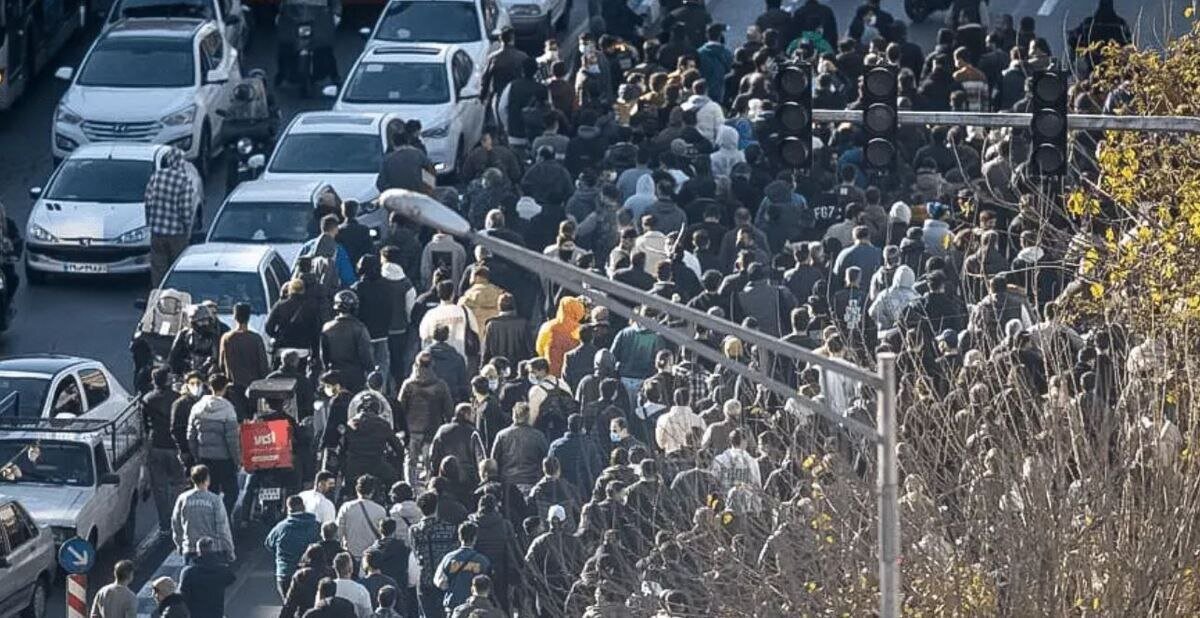
The unprecedented volatility in the currency market and the rapid devaluation of the Iranian Rial in recent weeks compelled business owners (known as bazaaris) to shutter their shops, go on strike, and gather in several of Tehran’s central squares on Monday to voice their discontent. Reports from Tehran Times journalists on the scene, along with footage shared by participants, indicate the protests—which began Sunday, peaked Monday, and continued minimally into Tuesday—remained largely peaceful.
Demonstrators largely refrained from vandalizing public property, kept pathways open for vehicles, and directed their slogans toward improved economic management. Anti-riot forces monitored the gatherings and seldom intervened. None of what has emerged from Iran over these past few days would be unfamiliar in the regular weekly protests seen across European capitals or American cities.
Yet this manner of protest does not sit well with the West or with the region’s rabid dog, Israel. At least two circulated videos show unidentified individuals urging bazaaris to vandalize property and block streets. In one, a young woman addresses a crowd of men—Iran’s bazaars are predominantly male—then flees after the business owners refuse to escalate into violence. She retreats after one protester challenges her: “Who even are you?”
Another incident in Tehran’s Hassan Abad Square showed a man dragging a large municipal trash bin—one of thousands placed throughout the city—and attempting to set it ablaze. Bystanders urged him to stop before security forces arrested him. A Tehran Times journalist present noted that none of the bazaaris recognized the man after inquiries were made following his detention.
Simultaneously, an online influence campaign has emerged, editing videos and dubbing them with fabricated audio to falsely suggest protesters are demanding the return of the deposed Shah’s son. One widely circulated image, purported to symbolize the protests—depicting a solitary man seated on asphalt facing rows of security forces on motorcycles—was later exposed as AI-generated.
Israel, in fact, has openly admitted to deploying agents on the ground in an attempt to steer these peaceful demonstrations toward chaos. Mossad’s Persian-language social media account posted on Monday: “Let's hit the streets together. The time is now. We stand with you. Not just in spirit or in words. We'll be there on the ground with you.”
Blunter still were remarks from a reporter with Israel’s Channel 13, revealing the regime’s intent to capitalize on the situation: “Israel should organize and steer the protests in Iran; we must support and back the protesters, and then wage the full-scale war we were hoping for and waiting for!”
An anchor at Iran International—which shamelessly endorsed Israel’s 12-day military aggression against Iran in June—suggested that broadening the protests could facilitate another Israeli attack. The outlet, headquartered in London and Washington and funded by Israel, openly encourages Iranians to regard Israel as their ultimate savior: “Expanding street protests will pave the way for military action and solidify a wartime stance against Iran; we must make these protests spread; Israel is prepared to support the protests.”
Among political figures, Israel’s former Prime Minister Naftali Bennett recorded a “special message to the people of Iran,” declaring his regime’s readiness to help Iranians achieve “freedom.”
U.S. President Donald Trump also weighed in while hosting Israeli Prime Minister Benjamin Netanyahu, warning that Iran must acquiesce to his demands to avoid further “turmoil.” Neither Trump, nor any of the politicians or media outlets professing “support” for Iranians, acknowledged that the core cause of Iran’s economic distress is the “maximum pressure” sanctions Trump imposed in 2018—sanctions that have only tightened since.
Iranian authorities have acknowledged the protests and stated they are taking new measures to stabilize the Rial, whose repeated decline fuels inflation. President Masoud Pezeshkian addressed demonstrators in a post on X and again during a Tuesday cabinet meeting. Parliament Speaker Mohammad Baqer Qalibaf likewise described the protests as legitimate during a parliamentary session, but cautioned participants to remain vigilant against enemy attempts to exploit them.
Ultimately, these events reveal a clear double standard: peaceful assembly is praised as democratic expression in one context yet is relentfully scrutinized and exploited when it occurs within a nation opposed by Western and Israeli interests. While internal grievances are addressed through official channels and public discourse in Iran, external actors actively work to distort, escalate, and weaponize civil discontent—not in solidarity with the Iranian people, but in pursuit of their own geopolitical objectives. The true measure of these protests, therefore, lies not in the sensationalized narratives promoted from abroad, but in the legitimate, orderly, and reform-oriented spirit with which they were conducted by the Iranian people themselves.
Leave a Comment