The architecture of a legacy
Qassem Soleimani and the reconfiguration of power in West Asia
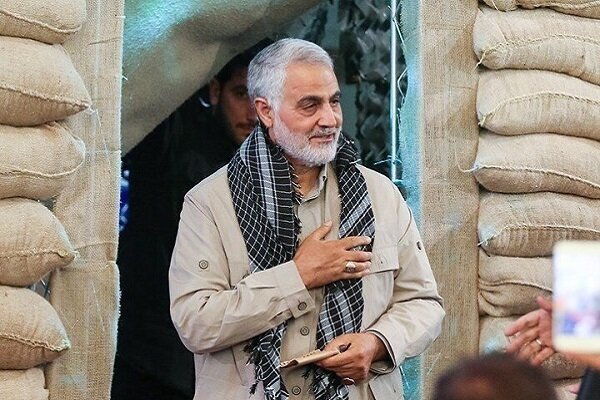
MADRID – As a new anniversary of the martyrdom of General Qassem Soleimani is marked, his figure emerges not as a closed chapter, but as an interpretive key for understanding the geopolitical transformations of West Asia over the past two decades.
His legacy, far from being confined to the military realm, embodies a complex strategy in which hard power and relational power were interwoven to durably alter the regional balance. Assessing his trajectory requires moving beyond reductive narratives and examining a paradigm of influence that challenged prevailing hegemonic models.
General Soleimani was, above all, a strategic architect. His strength lay not solely in operational tactics, but in a deep understanding of the societies in which he intervened. In an environment fragmented by external invasions, induced sectarian polarization, and the rise of nihilistic terrorism, his method rested on a central principle: the construction of social capital. Trust, etemad, a concept deeply rooted in Iranian political culture and in the region’s communal practices, became his primary instrument. He did not arrive in Iraq, Syria, or Lebanon merely as an emissary of a state endowed with military resources, but as a facilitator who listened, forged local alliances, and reinforced indigenous capacities. This approach allowed him to operate beyond a coercive register.
The effectiveness of this model was laid bare with the emergence of Daesh and the subsequent fight against the terror outfit. While international powers prioritized an air campaign accompanied by strategic rhetoric, the coordinated response led by the Quds Force relied on the mobilization of popular forces, intensive use of local intelligence, and the creation of a shared purpose that transcended sectarian identities. His austere and approachable image, engaging with fighters on the front lines or with community leaders in peripheral villages, projected a political authenticity difficult for conventional forces to replicate, often perceived as distant or captured by external interests. This was not soft power in the Western sense, based on cultural or institutional export, but a form of legitimacy-based power built through presence, reciprocity, and shared risk.
This approach was closely tied to a broader discursive framework of the Islamic Republic, which conceives the ummah as a space of political solidarity in the face of external aggression. From its revolutionary origins, this discourse rejected the Sunni–Shia divide as an instrument of colonial domination. General Soleimani translated that principle into practice. His cooperation with actors of diverse confessional composition in Iraq, or with the Syrian state, sought to articulate a common front against terrorism and interference. The narrative was not the export of a “sectarian revolution”, but the defense of sovereignty and stability against destabilizing forces. In this sense, his figure crystallized a form of Islamic internationalism with its own rules and a logic distinct from that of the liberal order.
The relational dimension of his power was also evident in his standing within Iranian society. His popularity cut across ideological divides that rarely converge. For broad sectors, he embodied deeply rooted cultural values such as courage, modesty, and devotion to duty. His humble origins in Kerman and his institutional ascent resonated with the narrative of resilience that the Iranians promotes in the face of external pressure and sanctions. Beyond political affiliation, he was perceived as a guarantor of national security in an unstable regional environment, a perception that intensified during the ISIS threat, when fear of regional disintegration generated a broad-based defensive consensus.
His assassination in January 2020 did not eradicate that influence. It transformed it. From operational commander, he became a structural symbol. The mass mourning that followed, difficult to explain solely as official mobilization, reflected his deep entrenchment in the collective imagination. For actors aligned with the Axis of Resistance, he was consolidated as a permanent reference point. For his adversaries, his death confirmed the centrality of the model he represented: an asymmetric, decentralized network of power resistant to conventional containment tools.
From the standpoint of Iranian strategy, his career validated a doctrine of defense that combines internal containment with peripheral projection. Unable to compete symmetrically with Western-armed powers, Tehran opted to expand its strategic depth by creating deterrent capacities in its immediate environment. General Soleimani was the principal executor of that doctrine. He transformed the threat of encirclement into an architecture of influence that substantially raised the cost of any direct confrontation with Iran.
General Soleimani understood that in the hybrid conflicts of the twenty-first century, power depends less on territorial control than on the ability to shape actors, loyalties, and narratives. His arsenal included not only military force, but also personal mediation, accompaniment in mourning, and the guarantee of support at critical moments.
Since his assassination, the region has endured a succession of extreme pressures. Yet rather than fragmenting, the ecosystem he helped articulate has become more coherent under strain. Gaza represents not merely an isolated humanitarian catastrophe, but the starkest expression of a shared operational principle: the conversion of extreme suffering into a source of political legitimacy. What from the outside is interpreted as disintegrative crises functions internally as a process of identity consolidation.
Despite economic siege, psychological warfare, and targeted attacks, the discourse that binds these actors has proven to be more than rhetorical. It operates as a functional system. Its resilience lies in a paradox: it is not a rigid ideology, but an adaptable framework for action. It converts external coercion into internal cohesion and material deprivation into symbolic affirmation. In Lebanon, pressure has reinforced the role of Resistance as a central element of the social contract. In Iraq, attempts at fragmentation have strengthened a constellation of actors capable of coordinated veto power. In the Red Sea, Western naval pressure has not neutralized the challenge, but amplified its reach, demonstrating that the obstruction of certain trade is a universally intelligible strategic language.
This reveals the nature of the unifying principle. It is not based on loyalty to an individual, nor even to a specific state, but on adherence to a shared logic. Resistance understood as ontology—as a primary way of existing and acting in a regional system that denies agency. That logic is activated, and reinforced, under maximum pressure, because pressure itself is its raw material. Blockades, bombardments, sanctions, and delegitimization campaigns become inputs that the system metabolizes to produce operational cohesion and renewed legitimacy.
Difficulties, therefore, are not anomalies that erode the structure, but the very conditions for which it was designed. The strength of this network lies not in rigidity, but in adaptability. Its unity is not sentimental or organic, but operational. It asserts itself in moments of trial. Each attempt to isolate one of its nodes confirms the connectivity of the whole. The death of the architect did not dismantle the project; it detached it from its biographical form and turned it into a permanent condition of the political landscape. What endures is not a personal shadow, but a field of forces, a web of relationships and principles that grows stronger through opposition and has made chronic adversity its natural habitat and ultimate source of power.
Qassem Soleimani should be analysed as the most fully realized exponent of a particular revolutionary realism: a realism that combined a cold reading of power dynamics with sustained ideological commitment, and that understood that in the age of information and asymmetric warfare, the struggle for regional legitimacy is as decisive as the battle for territory. His anniversary is not merely a commemoration. It is a reminder that the order in West Asia is now written from multiple centres of gravity, and that he was one of its most influential architects.
Leave a Comment