Iran, the collapse of Western strategy - where empires lose the plot
The enduring logic of civilizations vis-à-vis brute Western arrogance
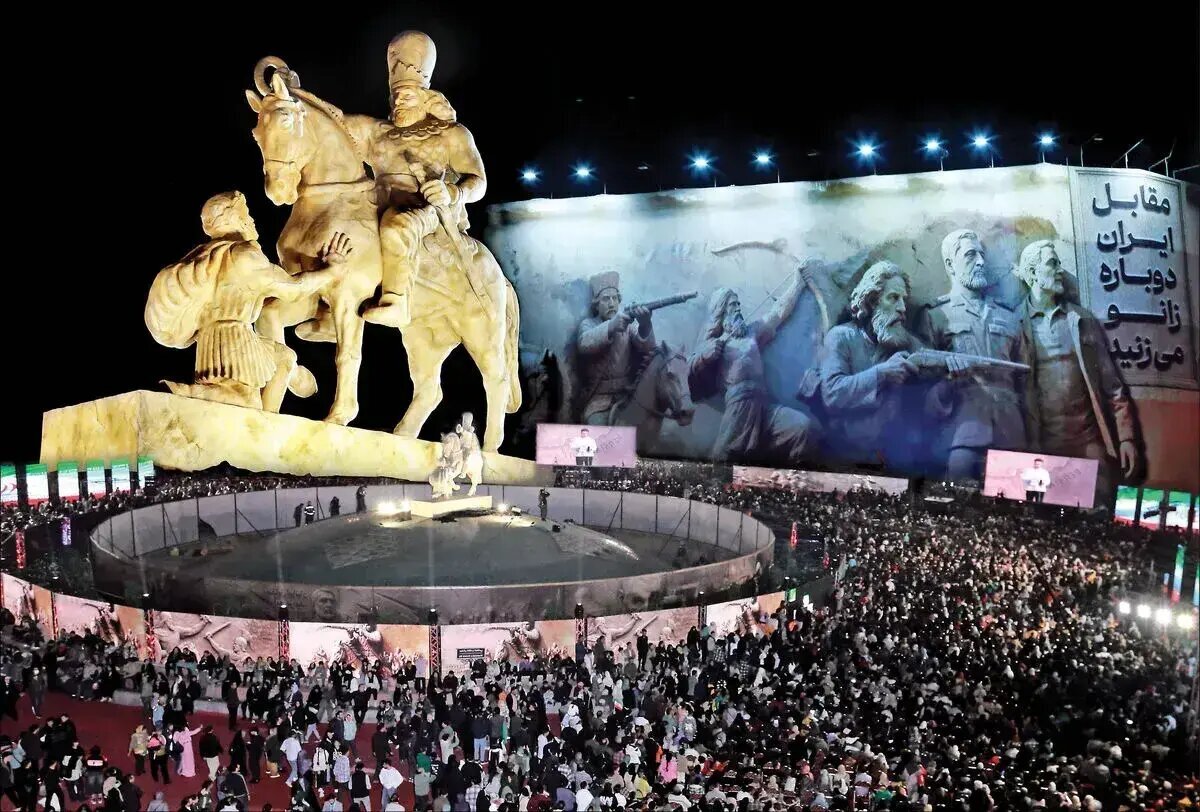
GOA- Traditional Western approaches (like regime change or containment) towards Iran are failing due to Iran's deep historical roots, revolutionary ideology, and resilience, leading to a shift in global power, where the "West" loses legitimacy as multipolar dynamics emerge, and Iran's strategic endurance, though marked by internal fragility and regional conflict, challenges the old international order. It suggests Western strategies often misjudge Iran's ideological drivers and deep cultural identity, leading to prolonged conflict rather than collapse, as seen in the shifting global landscape favoring non-Western actors.
The failure of the latest US–Israel strategy against Iran is not tactical; it is civilizational and intellectual. What has collapsed is not merely a plan, but a worldview — one that still imagines history as a playground for Western coercion, espionage, sanctions, and regime engineering. Ayatollah Ali Khamenei did not merely “outmaneuver” Washington and Tel Aviv. He exposed, once again, the bankruptcy of imperial imagination in an era where power no longer obeys Western scripts.
For decades, the United States and Israel have relied on a predictable arsenal: covert destabilization, intelligence theatrics, economic strangulation, and psychological warfare marketed as “deterrence.” The Mossad, long mythologised as an omnipotent force, has now been revealed as overextended, compromised, and strategically misreading the Iranian state and society. Washington, meanwhile, has degenerated from strategic calculation to reactionary improvisation — a superpower lurching from sanctions to threats without political vision. The brain that once produced containment theory now produces bluster and brown logic: crude, exhausted, and incoherent.
Iran did not survive because it is perfect. It survived because it is rooted.
Iran beyond siege: A revolutionary state with internal capacity for renewal
Western policies, particularly toward Iran, are seen as ineffective because they underestimate the strength of the Islamic Revolution's ideology and Iran's deep civilizational identity, failing to achieve regime collapse or lasting stability. Iran's resilience stems from its ancient Persian roots and the enduring power of its revolutionary narrative, which resonates beyond its borders, challenging Western hegemony and fostering a broader Global South resistance.
Western commentary persistently caricatures Iran as frozen in 1979 — a theocracy incapable of reform, creativity, or social transformation. This is deliberate ignorance. Iran’s political system, forged through anti-imperial struggle, has always contained tensions, debates, and adaptive mechanisms. Ayatollah Khamenei himself has repeatedly rejected the notion that the Islamic Revolution is a static dogma. In a widely cited address to Iranian youth, he emphasized that “the Islamic Republic is not opposed to progress, innovation, or justice; it is opposed to domination, exploitation, and imposed models.”
The era of uncontested Western dominance is ending, replaced by a multipolar system where nations like Iran, China, and Russia leverage global awareness and their own historical narratives to resist perceived Western injustices and exert influence.
While facing internal fragility, economic pressure, and regional setbacks (like diminished proxy influence), Iran adapts through strategic recalibration, balancing ideology with pragmatic survival, sometimes relying on great power patrons (China/Russia) or asymmetric tactics like supporting proxies.
Instead of outright collapse (as in Iraq/Libya), Iran represents a shift towards prolonged conflict and "functional exhaustion," where regimes remain in power but are weakened, a scenario potentially more stable than forced regime change.
The central idea is that Western strategic thinking often prioritizes short-term political goals or military solutions, failing to grasp Iran's deep historical and ideological foundations, which allow it to survive and even thrive (in terms of regional influence) amidst external pressures, signaling a broader decline in Western legitimacy and the rise of alternative civilizational models. That distinction matters.
Iran’s future does not lie in mimicking Western bourgeois democracy — a system that has hollowed itself out through corporate capture, militarism, and racial hierarchy. Nor does it lie in neoliberal “reform” dictated by IMF manuals. Iran’s potential strength lies in expanding the social economy within the ethical framework of the Revolution: cooperatives, public ownership, welfare mechanisms, and redistribution anchored in Islamic notions of justice (adl), dignity (karamat), and resistance (muqawama).
This is not romanticism. It is political realism. Even critics of the Iranian state concede that Western sanctions radicalised Iran’s self-reliance, producing indigenous scientific, military, and industrial capacities. Empires punish resistance; resistance, over time, produces autonomy.
Colonial thuggery without moral cover
Israel’s role in this failed adventure deserves not diplomatic language, but moral clarity. The Israeli state no longer even pretends to operate within international law. Its actions — from Gaza to Syria to covert operations against Iran — are not “security policy” but colonial violence unrestrained by accountability. That such a state lectures others on democracy is an obscenity history will not forgive.
The United States, as Israel’s guarantor, has forfeited any claim to ethical leadership. Its Iran policy has been defined by collective punishment, open contempt for international agreements, and the cynical weaponization of human rights discourse. One recalls Frantz Fanon’s searing observation in The Wretched of the Earth: “Colonialism is not a thinking machine, nor a body endowed with reasoning faculties. It is violence in its natural state.” Nothing better describes the Washington–Tel Aviv axis today.
Europe’s silence: Complicity as policy
If American aggression is loud, European complicity is quiet — and therefore more insidious. The European Union, which once postured as a defender of multilateralism, has responded to escalating aggression and illegality with strategic silence. Its failure to defend the Iran nuclear agreement it signed, its refusal to challenge Israeli lawlessness, and its cowardice in the face of US pressure confirm what the Global South already knows: Europe’s moral language collapses the moment its interests are threatened.
Silence, in such moments, is not neutrality. It is collaboration. In this context, one wonders where Europe will muster up the stamina and content to challenge Trump’s weird but real threat to Greenland.
Europe took a racist-imperialist view, pretending that Europe also has its upheavals. Almost half of the people of African descent in the EU face racism and discrimination in their daily life. Racist harassment and ethnic profiling are also common, especially for young people, finds a new survey from the EU Agency for Fundamental Rights (FRA). FRA calls on EU countries to take urgent steps to tackle racial discrimination and harassment to ensure everybody is treated equally and with dignity. How can one expect to see Europe comprehend Iran as a civilization when, on its own, it lacks the essence of social and political refinement? Renaissance thinkers labelled earlier times "Dark Ages," as a narrative of European inferiority. Technology and material wealth obtained through plunder, loot, and wealth in the colonial era among European countries gave Europe a façade of civilization. The hard truth is that European growth emanated from means that were devoid of ethics. So, they’d rather see Iran dissolve into pandemonium – yet another European pipe-dream.
If Europe had just a modicum of political principles, it would have adopted an ethical and just stance towards the attempted Zionist-US stance to destabilize and unravel Iran.
Civilizations do not end — empires do
Arnold Toynbee warned that civilizations are not murdered; they commit suicide through moral exhaustion and arrogance. The West today displays both. It believes it can sanction civilizations into submission, bomb resistance into compliance, and erase history through propaganda. Yet Iran’s endurance demonstrates a deeper truth: civilizations anchored in memory, sacrifice, and collective identity do not dissolve under pressure.
Edward Said, writing against Orientalist arrogance, reminded us that the East was never a passive history waiting to be written by the West. Iran’s resistance — flawed, contested, but real — belongs to that long continuum of peoples who refuse to be swallowed by racist-colonial pretenders masquerading as universal arbiters.
The empire has no clothes — and no ideas
What is most striking today is not Western cruelty — that is familiar — but Western intellectual emptiness. There is no strategy beyond punishment, no politics beyond threats, no future vision beyond domination. This is not strength. It is decay.
Iran will bounce back — not because it is immune to crisis, but because it retains something the West has lost: a sense of historical purpose beyond profit and plunder. The Islamic Revolution, if it deepens its commitment to social justice and popular welfare, can still evolve without surrendering to Western bourgeois templates that are themselves collapsing.
The curtains do not fall on civilizations. They fall on empires — especially those who believe they are eternal. History, as always, is watching. Historical patterns, triumphs, and mistakes remain relevant, acting as a "wise old mentor" or a record that documents the rise, maturation, and death of societies. Key aspects of this relationship include:
History shows that civilizations often go through distinct stages—birth, growth, maturity, and death. Some models suggest a six-stage pattern: pioneers, conquest, commerce, affluence, intellect, and finally decadence. It offers constant lessons and learnings because it acts as a mirror reflecting a society's culture, traditions, and values, providing a sense of identity and grounding. Even if a civilization falters, its legacy often shapes the next, as seen in how the Renaissance sought to recapture Greek and Roman ideals.
History is then a steward, preserving the stories of the common people, not just rulers, and ensuring that diverse experiences are remembered. The memory is deeply engrained.
Leave a Comment