Trump’s ‘support for Iranians’ masks economic warfare and narrative manipulation: Senior analyst
Elija J. Magnier argues US strategy weaponizes dissent while sanctions intensify civilian hardship
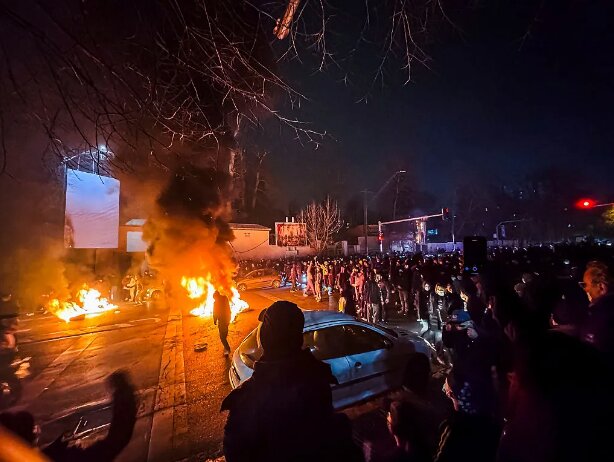
TEHRAN- In an interview with the Tehran Times, veteran war correspondent and geopolitical analyst Elijah J. Magnier delivers a rigorous and unflinching analysis of U.S. and Israeli pressure tactics against Iran, situating them within a long-standing architecture of coercion, narrative warfare, and regional destabilisation.
Magnier is an internationally recognised journalist and senior political risk analyst with decades of on-the-ground experience across West Asia, including Lebanon, Syria, Iraq, Iran, and Palestine. Known for his deep access to regional actors and his structural reading of power politics, he has closely tracked U.S. interventionist doctrine and Israeli escalation strategies for years.
Magnier argues that Trump-era claims of “supporting the Iranian people” are not contradictory to sanctions and pressure but function as their narrative extension—designed to launder coercion through moral rhetoric. He explains how protest amplification, media selectivity, and psychological operations are integrated into the “maximum pressure” framework, and how Israeli threat inflation has come to structurally condition U.S. policy toward Iran.
Magnier further compares Iran’s case with Iraq, Libya, and Syria, warning that this pressure logic risks reproducing long-term regional instability rather than political transformation.
Trump’s rhetoric frames support for Iranian protestors while core sanctions and coercive measures remain in place. How do you view this apparent contradiction in policy and narrative?
Trump’s rhetoric about “supporting the Iranian people” while maintaining—and in practice tightening—the core architecture of sanctions and coercive pressure is not a contradiction. It is a strategy. But it is a strategy built on instrumentalisation, not solidarity, and a regime-change objective.
At the narrative level, this posture is designed to decouple U.S. pressure on the Iranian state from its direct human consequences. By rhetorically aligning with protestors, Washington seeks moral insulation: the suffering produced by sanctions, currency collapse, medicine shortages, and economic strangulation is reframed as a regrettable but necessary byproduct of “helping Iranians free themselves.” This is not humanitarian concern; it is reputational management. The language of support functions as a discursive shield for policies whose material effect is to degrade civilian living standards in order to induce political destabilisation.
At the policy level, the contradiction disappears once U.S. coercion and protest amplification are recognised as part of the same pressure ecosystem. Sanctions are not only punitive but explicitly designed to generate general public economic distress, elite fragmentation, and social volatility. In that context, public endorsement of protestors is not about empowering civil society; it is about weaponising internal dissent as an auxiliary instrument of regime pressure and transforming protestors into rioters. The goal is not democratic transformation from within. It is to erode state capacity, legitimacy, and cohesion at a moment of maximum vulnerability.
This is why the “support” is performative rather than operational. There is no serious effort to ease sanctions that directly harm ordinary Iranians. There is no material protection for protestors. There is no diplomatic de-escalation to create political space for domestic reform. Instead, there is rhetorical encouragement paired with continued economic strangulation and maximum economic pressure. In practice, this increases the risks faced by protestors while reducing their prospects of achieving structural change. It turns them into strategic leverage, not political subjects.
The deeper problem is that this approach reproduces a long-standing interventionist pattern: external powers instrumentalise domestic unrest in adversary states while denying responsibility for the conditions that intensify that unrest. The same state that collapses currencies, disrupts food and medicine imports, and isolates banking systems then claims to “stand with the people” when those people protest the resulting hardship. This is not incoherence. It is a form of coercive narrative laundering.
From an anti-intervention standpoint, the policy is analytically indefensible on three grounds.
First, it violates basic causal accountability. You cannot plausibly claim to support a population while actively sustaining measures that worsen its material conditions and heighten internal repression risks.
Second, it undermines the autonomy of domestic political processes. By publicly aligning with protest movements in a sanctioned state, Washington delegitimises those movements internally, reinforces regime securitisation narratives, and increases the probability of violent crackdowns. External rhetorical sponsorship does not protect protestors. It endangers them.
Third, it entrenches a permanent conflict logic. By refusing to relax coercive measures while escalating narrative pressure, the U.S. signals that compliance is not the objective. Destabilisation is. This forecloses negotiated pathways, hardens Iranian strategic behaviour, and deepens regional polarisation.
From your vantage point, is this emphasis on public encouragement of protests simply the latest tool in the U.S. “maximum pressure” playbook, or does it signal a new phase in psychological and strategic confrontation with Tehran?
It is not a new phase. It is a refinement of the same coercive doctrine, with a stronger psychological and narrative layer added to the existing “maximum pressure” framework.
Public encouragement of protests functions as a low-cost extension of economic warfare, not a strategic departure from it. The sanctions architecture remains unchanged. What has evolved is the communicative posture. Washington is now more explicit about synchronising external pressure with internal volatility, framing domestic unrest as part of a broader geopolitical struggle rather than an endogenous political process. This is not innovation. It is optimisation.
he logic is cumulative. Sanctions generate economic distress and institutional strain. Narrative amplification delegitimises state authority and internationalises dissent. Together, they form a feedback loop: hardship fuels protest, protest is rhetorically endorsed, endorsement intensifies regime securitisation, securitisation deepens repression, and repression reinforces external pressure narratives. The aim is persistent instability, not negotiated convergence.
What is new is not intent but openness. Internal dissent is no longer treated as a byproduct of sanctions. It is now being integrated more explicitly as an auxiliary vector of pressure. That reflects strategic frustration. Maximum pressure failed to produce capitulation, population revolt, or elite defection. The turn to overt psychological and narrative warfare is a compensatory move, not a doctrinal shift.
So this does not signal a new confrontation phase. It signals a deeper fusion of economic coercion and dissent instrumentalisation within the same interventionist logic.
Analysts often claim that U.S. policy toward Iran cannot be understood independently from Israeli strategic objectives. In your assessment, to what extent is Israel shaping U.S. political interference in Iran?
The claim that U.S. policy toward Iran can be understood independently of Israeli strategic objectives is no longer analytically credible. At this point, Israeli threat inflation and escalation management are not just influencing U.S. posture; they are actively structuring it.
Two empirical facts matter here. First, Israel initiated a cycle of escalation with Iran and then asked Washington to mediate to prevent a wider war. Second, the United States subsequently bombed an Iranian nuclear site in support of a narrative that Benjamin Netanyahu has been advertising for sixteen years: that Iran is perpetually on the verge of acquiring a nuclear weapon. That claim has been repeatedly disproven by U.S. intelligence assessments, IAEA reporting, and even by Israeli intelligence leaks. Yet it remains the organising myth around which both Israeli and U.S. Iran policy continues to revolve.
This is not a coincidence. Israel has systematically shaped the threat frame within which Washington interprets Iranian behaviour. Netanyahu’s doctrine rests on three pillars: permanent crisis construction, preemptive escalation, and narrative capture of U.S. policy discourse. By maintaining a constant state of rhetorical emergency about an imminent Iranian bomb, Israel creates a strategic environment in which any U.S. restraint can be portrayed as appeasement, and any U.S. coercion can be framed as defensive necessity. The result is a policy funnel: once Israel escalates, Washington is structurally pressured into endorsing, backstopping, or legitimising that escalation.
The bombing of Iran’s nuclear site is the clearest example. It had no operational necessity in terms of nonproliferation. Iran was under IAEA monitoring, had not weaponised, and was not in breakout mode. The strike served a political function, not a strategic one. It retroactively validated Netanyahu’s long-running alarmism and reinforced the credibility of his threat narrative after years of intelligence contradictions. In other words, U.S. force was used to rescue Israeli rhetoric from its own evidentiary collapse.
This dynamic extends directly into U.S. political interference framing inside Iran. Israel’s strategic interest is not simply to contain Iran; it is to keep Iran in a permanent condition of internal and external instability. That requires a continuous alignment between economic coercion, military pressure, and internal delegitimisation. Public U.S. endorsement of Iranian protest movements, while sanctions and covert operations remain in place, fits exactly into that architecture. It mirrors Israel’s long-standing doctrine of pressure through fragmentation: weaken the state externally, amplify internal stressors, and then present unrest as proof of regime illegitimacy rather than as a reaction to external coercion.
In that sense, Israel is not dictating U.S. policy mechanically. It is shaping the interpretive frame within which U.S. policymakers operate. Washington still makes sovereign decisions, but it increasingly does so inside a narrative ecosystem that Israel has spent two decades constructing: Iran as permanently deceptive, permanently nuclear-adjacent, permanently destabilising, and therefore permanently legitimate as a target of coercion. Once that frame is accepted, public interference in Iran’s domestic politics becomes not only permissible but morally performative.
The mediation episode is especially revealing. Israel starts a confrontation, realises the escalation risks exceed its control capacity, and then calls on the United States to contain the fallout. Washington obliges but simultaneously escalates militarily to preserve Israeli deterrence credibility and narrative dominance. That is not alliance coordination; that is asymmetrical agenda shaping. Israel sets the tempo of escalation. The U.S. absorbs the strategic liability and supplies the coercive mass.
So, to answer the question directly, Israel is not just influencing how U.S. political interference in Iran is framed; it is structurally conditioning it. Israeli strategic objectives are being laundered through American rhetoric about democracy, nonproliferation, and regional stability. The result is a policy that looks incoherent on the surface but is internally consistent once you recognise that U.S. interference logic has been subordinated to an Israeli threat narrative that no longer corresponds to empirical reality.
This is not about conspiracy or capture. It is about path dependence. Sixteen years of unchallenged alarmism, repeated U.S. accommodation of Israeli escalation, and the political cost of publicly contradicting Israel’s security claims have produced a situation in which Washington now acts to sustain a fiction it no longer fully believes. The bombing of Iran’s nuclear site was not about stopping a bomb. It was about preserving the credibility of a narrative that underpins both Israeli and U.S. coercive policy.
In that sense, Israel is not merely shaping U.S. interference framing. It is anchoring it.
How do you explain the asymmetry in attention and media amplification given to protests in Iran versus similar unrest in allied states of the U.S. and Israel?
It reflects how information flows are filtered through geopolitical alignment, not through any neutral standard of political significance or human impact.
Protests and riots in Iran are amplified because they serve an external strategic narrative. They are framed as (illegal) evidence of regime illegitimacy, social collapse, and imminent transformation. That framing aligns with long-standing Western policy objectives toward Tehran, so unrest is elevated into a geopolitical signal rather than treated as a domestic political episode. In allied states, unrest is processed through a different discursive lens. Protests in the US (universities), France, Germany, the UK, or Israel are framed as social tensions within functioning democracies, not as indicators of systemic failure or grounds for external political intervention. The same phenomenon is therefore assigned radically different meanings depending on the country in which it occurs.
This is not just media bias in the colloquial sense. It is narrative selectivity embedded in foreign policy communication ecosystems. Western governments, think tanks, and aligned media outlets operate within a shared interpretive frame: unrest in adversary states is inherently political and internationally consequential; unrest in allied states is technical, social, or episodic. That framing then drives editorial priorities, expert commentary, and amplification dynamics. Iranian protests are turned into continuous headline events. French or Israeli mass demonstrations are localised, depoliticised, or treated as transient governance issues.
There is also a risk calculus at work. Elevating protests in allied states would destabilise friendly governments, weaken alliance cohesion, and create uncomfortable accountability loops about domestic inequality, policing, and political legitimacy inside the Western bloc. Amplifying Iranian unrest carries no such cost. It carries strategic upside. It reinforces an existing delegitimisation narrative and supports an external pressure posture. So the incentive structure strongly favours selective visibility.
The role of Israel is especially revealing. Large-scale protests inside Israel, including those directly challenging the judicial overhaul, military policy, or Netanyahu’s legitimacy, have been treated by Western media as internal democratic friction. They are rarely framed as a regime crisis or as evidence of structural authoritarian drift, despite their intensity and duration. That is not analytical consistency. It is alliance shielding. Israel’s internal unrest is insulated from the kind of narrative weaponisation routinely applied to Iran.
Finally, the asymmetry reflects an epistemic hierarchy of whose political suffering “counts” as geopolitically meaningful. Iranian protestors are rendered visible because their actions can be folded into an external confrontation logic. Western and Israeli protestors are rendered invisible at the strategic level because their actions disrupt the image of democratic stability and moral authority that underpins interventionist narratives elsewhere.
So the imbalance is not about freedom of the press or newsworthiness. It is about narrative utility. Protests are amplified where they advance strategic messaging and suppressed where they complicate it. The result is not just distorted coverage. It is a systematic political asymmetry in whose unrest is allowed to matter.
How do you compare Trump’s approach with previous U.S. strategies in the region—e.g., Iraq, Libya, Syria—in terms of coercion, regime pressure, and messaging?
Trump’s approach is not a rupture from earlier U.S. strategies in Iraq, Libya, or Syria. It is their stripped down, less institutionally disguised continuation. What has changed is not the coercive logic but the style, the rhetorical bluntness, and the reduced concern for diplomatic cover.
In Iraq and Libya, regime pressure was pursued through overt military intervention justified by inflated threat narratives: claim of weapons of mass destruction in Iraq, imminent civilian massacres in Libya. In Syria, it took a more fragmented form: sanctions, proxy warfare, selective strikes, and diplomatic isolation combined with rhetorical support for opposition forces and jihadists.
Trump’s Iran policy fits the same architecture: sanctions to degrade state capacity, narrative warfare to delegitimise the government, and calibrated force to preserve escalation dominance. The difference is that Trump dispenses with the humanitarian or legalistic framing that earlier administrations used to sanitise intervention. He presents coercion as leverage rather than as moral duty.
What is new is not the substance of regime pressure but its integration into a single, openly transactional doctrine. Earlier administrations maintained a rhetorical separation between diplomacy and coercion. Under Trump, coercion is the diplomacy. Sanctions are not a tool to bring Iran to negotiations; they are the negotiations. Narrative threats, protest endorsement, and military signalling are folded into a unified pressure continuum rather than treated as parallel tracks.
Compared to Iraq and Libya, Trump’s approach is less about regime replacement by invasion and more about permanent destabilisation without occupation and most probably without a strategic vision of what could come next if Iran is de-stabilised. The objective is not territorial control or post war reconstruction. It is sustained structural chaos and vulnerability: a weakened economy, international isolation, internal political stress, and strategic exhaustion. In that sense, it resembles the Syria model more than the Iraq or Libya model, but with less multilateralism and fewer proxy layers.
Messaging is where the contrast is sharpest. Previous interventions relied on legitimacy scripts: international law, civilian protection, democracy promotion, counterterrorism. Trump’s messaging is coercive realism. He frames pressure as strength, compliance as submission, and escalation as credibility maintenance. That removes the moral camouflage but does not reduce the interventionism. It makes it more naked.
The deeper continuity is that all four cases operate on the same flawed premise: that external pressure can reorder internal political systems without producing collapse, fragmentation, or long term instability. Iraq produced state disintegration. Libya produced chronic warlordism. Syria produced a decade long proxy war. Iran is now being subjected to a similar pressure logic, but without the illusion that a stable post pressure equilibrium will emerge.
So Trump’s approach is not more restrained or more radical in strategic terms. It is more explicit, more improvisational, and less concerned with alliance consensus or international legitimacy. The coercion is familiar. The regime pressure logic is inherited. The messaging is cruder. The outcomes, if history is any guide, are likely to be no more controllable than they were in Iraq, Libya, or Syria.
Could Trump’s statements and U.S./Israeli interference have long-term strategic consequences for West Asia, including shifts in alliances, domestic security policies, or public sentiment in neighboring countries?
The long-term consequences are likely to be real and structurally destabilising across three interconnected domains: regional alignments, internal security doctrines, and public sentiment.
First, alliance behaviour is likely to shift toward hedging rather than realignment. When U.S. and Israeli pressure is openly fused with narratives of domestic interference, neighbouring states face growing incentives to insulate themselves from escalation spillovers. This means keeping diplomatic channels open with Tehran, reducing exposure to U.S. secondary sanctions, and avoiding visible alignment in crises they cannot control. At the same time, overt cooperation with Israel becomes politically costlier. Regional publics increasingly associate U.S. pressure on Iran with a broader pro-Israel interventionist order. That perception narrows the political space for normalisation, even where quiet security ties persist.
Second, domestic security doctrines in neighbouring states are likely to harden. Interference narratives travel easily. Governments across West Asia already treat unrest as a vulnerability susceptible to foreign exploitation. When Washington and Tel Aviv publicly endorse dissent while maintaining coercive pressure, it reinforces securitisation logics: tighter protest regulation, expanded intelligence authorities, and more aggressive information control, all justified as counter-subversion. Even states not directly involved in the Iran confrontation will draw the same lesson: pre-emption is safer than political openness.
Third, public sentiment is likely to shift in ways that undermine both U.S. influence and the legitimacy of protest movements. Overt rhetorical sponsorship of dissent, combined with sanctions and threats, creates a legitimacy trap. It enables governments to delegitimise internal opposition as foreign-linked, discourages fence-sitters from joining protests, and increases social tolerance for repression. Regionally, it deepens anti-U.S. and anti-Israel sentiment—not only among regime supporters, but also among citizens who oppose their own governments yet reject external manipulation.
The net effect is not a clean bloc realignment, but a harsher regional operating environment: more hedging by states, heavier internal security doctrines, and a public mood less receptive to U.S. leadership claims and more reactive to perceived interference. That combination raises escalation risks while shrinking the diplomatic space needed to defuse them.
Leave a Comment