‘Any limited strike will trigger an immediate all-out war’
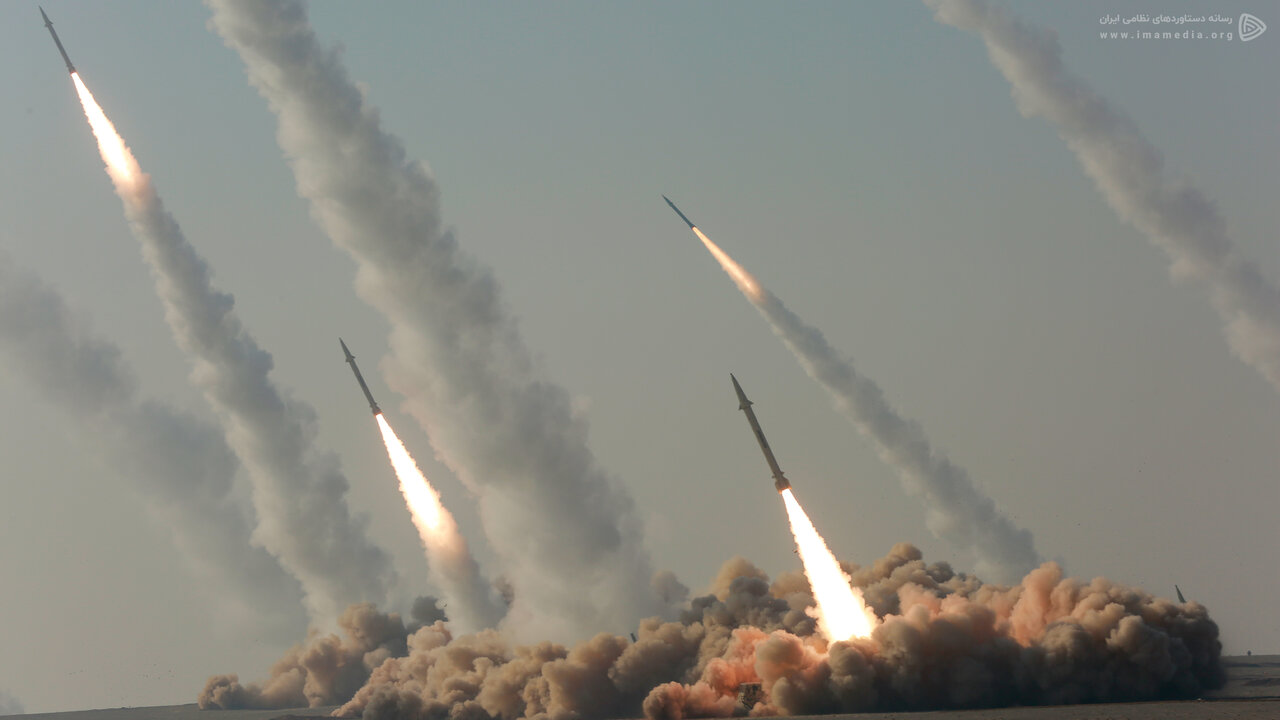
TEHRAN — A senior military official from the Khatam-al-Anbia Central Headquarters has delivered a stark ultimatum to non-regional military actors, declaring that Iran’s defense apparatus has transitioned into a state of total vigilance where the distinction between a “limited” engagement and an all-out war has effectively vanished.
As the highest operational command center within the Iranian Armed Forces, the Khatam-al-Anbia Central Headquarters is responsible for the strategic coordination of all military branches—including both the regular army (Artesh) and the Islamic Revolution Guard Corps (IRGC)—making its directives authoritative on the nation’s unified combat readiness and wartime joint operations.
Speaking on the condition of anonymity in an interview with the Islamic Republic of Iran Broadcasting (IRIB) on Monday, the commander dismissed Western and Israeli strategic theories regarding “clean” or “surgical” strikes as dangerous fantasies born of “incomplete understanding and faulty intelligence.”
He warned that any hostile scenario predicated on the element of surprise would spiral out of the control of its architects within its opening minutes.
“The Islamic Republic’s armed forces do not merely monitor actions; we track the very first signs of a threat taking shape,” the official stated, emphasizing that responsibility for “any unintended consequences” rests solely with the provocateurs.
The commander further asserted that the Persian Gulf and the Sea of Oman are under “absolute Iranian surveillance.”
Addressing the recent deployment of the USS Abraham Lincoln carrier strike group, he noted that the concentration of foreign hardware in regional waters has reached a point of diminishing returns.
Rather than acting as a deterrent, the official argued, this “accumulation of extra-regional assets” has only increased their vulnerability to Iran’s asymmetric naval doctrine and indigenous strike capabilities.
This military posture is being matched by a sharp diplomatic tone. On Monday, Iranian Foreign Ministry spokesman Esmail Baqaei characterized the U.S. military buildup as a provocative violation of international law, warning that “regional insecurity is contagious.”
He cautioned that any miscalculation by Washington would not only draw a “sweeping, regret-inducing response” but would inevitably destabilize those regional actors who facilitate such aggression.
This sentiment was bolstered by Defense Ministry spokesperson General Reza Talaei-Nik, who confirmed that the Islamic Republic’s response to any kinetic action would be “more painful and more decisive than in the past.”
The resolve within Tehran has been further solidified by a series of explicit redlines.
On the political front, President Masoud Pezeshkian and senior military officials have issued a unified warning: any threat directed toward the Leader of the Islamic Revolution, Ayatollah Seyyed Ali Khamenei, constitutes a declaration of total war.
Brigadier General Abolfazl Shekarchi, spokesperson for the General Staff of the Armed Forces, was even more direct, warning Washington that such aggression would result in Iran “setting their world on fire.”
At the heart of this defensive posture is a renewed emphasis on domestic stability.
Intelligence Minister Hojatoleslam Esmail Khatib noted on Tuesday that the history of the nation is defined by its resilience against “terrorist groups and continuous efforts by enemies to dismantle national unity.”
He said that the recent wave of unrest—which involved armed elements exploiting economic grievances caused by Western sanctions—had failed to fracture the state.
Despite the tragic loss of 3,117 lives, according to official tallies, the rapid restoration of order following a wave of riots and terror attacks has been described by Tehran as a strategic defeat for those in Washington and Tel Aviv who hoped domestic instability would pave the way for foreign aggression.
As long as the nation remains unified, “no amount of saber-rattling or fabricated incidents” can force a defeat upon the Iranian people, the intelligence minister concluded.
Leave a Comment