A framework for collective security in the Persian Gulf and West Asia
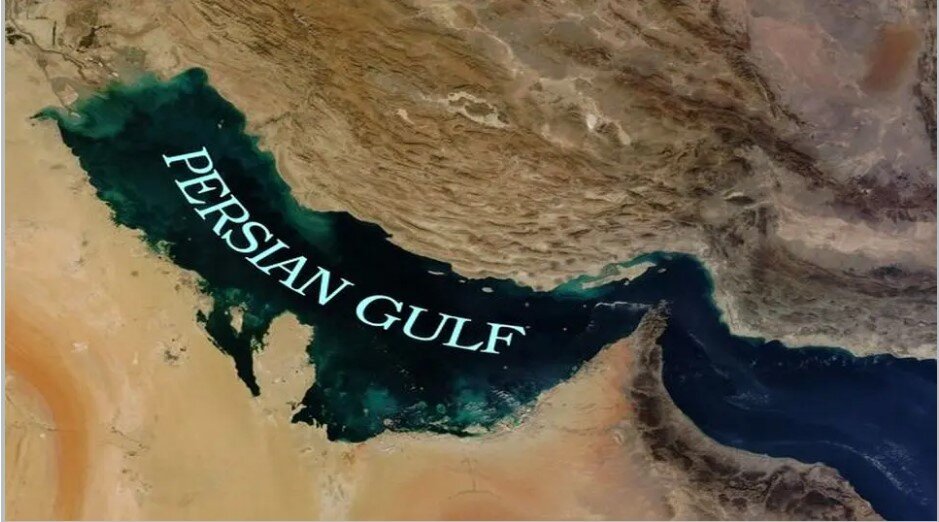
TEHRAN - The gradual erosion of the liberal international order and the emergence of a more coercive global environment have profoundly altered the security calculus for middle powers. In the current international landscape—often described as a “new world order”—the direct use of force by major powers has become increasingly normalized.
While powerful states frequently violated the rules even under the liberal order, international norms and institutions nevertheless provided limited protection for smaller and mid-sized countries. That protective buffer has now largely disappeared.
As a result, middle powers can no longer rely on external guarantees or abstract norms for their security. They must instead take an active role in shaping the structures and arrangements that safeguard their interests. The central strategic question is how to achieve this.
Two broad approaches present themselves. The first is alignment: accepting a subordinate position in the hope that compliance with a dominant power will yield protection. The experiences of Ukraine, Syria, and other conflict zones demonstrate the limitations and risks of this strategy. The second approach is the pursuit of collective security. Attempts to shield a country behind ideological, political, or economic isolation have consistently produced fragility, stagnation, and long-term instability. Iran’s recent experience underscores this reality with particular clarity. Collective action, therefore, is not merely an alternative—it is the only sustainable path forward.
Bilateral negotiations with a hegemonic power are inherently asymmetrical. While such talks should not be dismissed outright, they cannot form the backbone of a viable long-term strategy. A more effective approach is to embed diplomacy within a framework of collective security, enabling negotiations within a broader coalition rather than in isolation.
Negotiation in the emerging global order
In today’s international system, the primary question is no longer whether to negotiate with dominant powers, but how to do so. The real strategic choice lies between individual and collective negotiation. The underlying logic is simple: states that are absent from negotiations become objects of negotiation rather than participants in shaping outcomes. As famously noted by Canada’s prime minister at the World Economic Forum in Davos, “If you’re not at the table, you’re on the menu.” President Emmanuel Macron’s reported remark to Donald Trump—“We can do great things on Iran, but I don’t understand what you’re doing with Greenland”—reflects the same dynamic.
In this context, Iran increasingly risks being treated as a bargaining chip rather than an autonomous actor. The critical strategic issue, therefore, is whether Iran approaches negotiations alone or as part of a broader collective that amplifies its leverage and legitimacy.
Regional conditions and strategic vulnerability
The aftermath of October 7, Israel’s subsequent 12-day military confrontation with Iran, the suspension of indirect U.S.–Iran negotiations, and the persistence of a fragile “neither war nor peace” environment have placed Iran’s security in a prolonged state of uncertainty. Explicit threats from both the United States and Israel, coupled with Washington’s declared reluctance to resume negotiations, have elevated this uncertainty into a more immediate and existential concern.
Although Iran retains the capacity to defend itself, a more prudent strategy would be to alter the strategic framework within which threats are generated. Any opportunity for direct engagement with the United States should be pursued, but such engagement must be anchored in a broader regional vision. Without a clearly articulated strategic horizon, Iran’s actions risk appearing reactive, tactical, and aimed primarily at buying time. Under such conditions, even negotiating partners may discount Iran’s commitments and intentions.
Equally important, reliance on a single external partner—whether Washington or Beijing—is unlikely to succeed. Iran’s relations with both powers must be pursued in parallel. The objective of a collective security framework is precisely to reshape the strategic environment by introducing additional stakeholders into the Iran–U.S. equation.
Iran and the global value chain
The central analytical premise of this framework is that a threat to Iran is not merely a threat to one state; it is a threat to the global value chain (GVC). Iran occupies a structurally significant position in international energy markets, trade corridors, and the supply of raw materials. Its geographic and economic role makes it a key node in global production and distribution networks.
Any sustained military threat or conflict involving Iran would therefore produce consequences far beyond the political sphere. Disruptions would ripple through energy markets, international trade routes, and industrial supply chains, imposing systemic costs on the global economy. From this perspective, threats directed at Iran are simultaneously threats to the interests of all actors whose economic lifelines depend on stability in the Persian Gulf and West Asia.
Iran’s strategic response should therefore be to frame its security not as a narrowly national concern, but as a shared interest of the principal stakeholders in the regional segment of the global value chain. Negotiations with the United States should then take place within a collective, multilateral framework to establish a durable non-aggression arrangement.
Security, trade, and the logic of interdependence
The global value chain encompasses complex networks of production, energy transmission, transportation, raw materials, technology, finance, and consumption, distributed across multiple countries from design to final delivery. These networks bind national economies together through deep interdependence. In the emerging global order, the security of these chains has become a central concern of both governments and multinational corporations.
Supply chain resilience is now widely recognized as a core component of national economic security. Recent U.S. actions and rhetoric—whether in Venezuela or Greenland—are best understood through this lens. What is often described as a “new world order” is, in practice, the outcome of supply chain realignment. This process has given rise to new forms of cooperation among states across security, economic, and technological domains, rendering trade and security increasingly inseparable.
States that remain marginal to global economic networks face declining relevance. Power in this environment is increasingly defined by a country’s position in the global value chain, while economic interdependence translates into geopolitical influence. Iranian policymaking, however, remains primarily shaped by outdated bipolar frameworks and has yet to fully internalize these structural shifts.
Iran’s structural importance
Iran’s role within the global value chain is frequently underestimated. Its strategic importance derives from several factors:
* Iran holds approximately 10 percent of global oil reserves and 15 percent of natural gas reserves, placing it at the core of international energy security.
* More than 20 percent of global oil trade—particularly supplies destined for Europe and East Asia—passes through the Strait of Hormuz, an area under Iran’s geographic influence.
* Iran serves as a critical hub for major international transport corridors, including East–West, North–South, the China–Persian Gulf route, and TRACECA.
* It is a significant supplier of raw materials to downstream industries in major regional economies such as China, India, and Turkey.
Military threats against Iran would therefore trigger cascading effects: volatility in global energy markets, disruption of critical transit routes, increased pressure on alternatives such as the Suez Canal, higher transportation and insurance costs, weakened industrial supply chains, and elevated geopolitical risk across the Middle East.
From the standpoint of institutions such as the IMF and UNCTAD, any shock that disrupts energy flows, transportation, or the supply of raw materials constitutes a direct threat to global economic stability. Iran can—and should—reframe its security as a systemic issue: a threat to Iran is a threat to energy security, international trade, and the stability of the global value chain.
Toward a collective security architecture
The strategic implication is clear: Iran’s security cannot be ensured through unilateral deterrence alone. It must instead be embedded in a framework of collective security involving the principal stakeholders of the regional global value chain.
Among these stakeholders, China occupies a central position. As the world’s largest manufacturing hub and a country accounting for roughly 19 percent of global output, China has a profound interest in the uninterrupted flow of energy, raw materials, and trade. Saudi Arabia, the largest economy in the southern Persian Gulf and an emerging player in advanced technologies such as artificial intelligence, similarly depends on a high degree of regional stability. Pakistan, situated at the crossroads of South Asia, Central Asia, China, and Iran, also has a strong interest in preventing regional instability.
These three countries—China, Saudi Arabia, and Pakistan—thus represent key stakeholders in regional security. This does not imply endorsement of Iran’s security doctrine, but rather recognition of overlapping material interests. Iran should therefore prioritize engagement with China and, through coordination with Beijing, work with Saudi Arabia and Pakistan to establish an initial framework for securing the regional segment of the global value chain. Only at a later stage should this framework be expanded into a broader non-aggression arrangement involving the United States.
Given that the United States and the European Union together account for roughly half of global economic output, they too have a vested interest in stability in the Persian Gulf and West Asia. A shift in Iran’s security paradigm would thus create incentives for Western engagement rather than confrontation.
China’s approach to global security, shaped by its role as the world’s manufacturing center, differs fundamentally from Iran’s historically identity-driven foreign policy. Developing a credible collective security strategy will therefore require adjustments in Iran’s external posture. Such adjustments are more realistically achieved through structured dialogue with China than through confrontation with the United States, given the depth of mistrust between Tehran and Washington.
China’s facilitation of the normalization of relations between Iran and Saudi Arabia demonstrates that a core framework linking Iran, China, Pakistan, and Saudi Arabia is both plausible and scalable. Over time, this framework could expand to include the Gulf Cooperation Council states, Iraq, and Central Asia, and ultimately support a collective dialogue with the United States to establish a regional non-aggression pact.
Such an arrangement would align with the evolving logic of the global order. It would likely attract institutional support from bodies such as the United Nations Security Council and the Shanghai Cooperation Organization. In an era defined by interdependence, collective security anchored in the global value chain offers a more stable and credible path forward for Iran and the wider region.
Abbas Akhoundi is an Iranian politician, academic, and former Minister of Transport and Urban Development
Leave a Comment