Army chief says ‘Iran’s finger on the trigger’ as US talks up naval military buildup
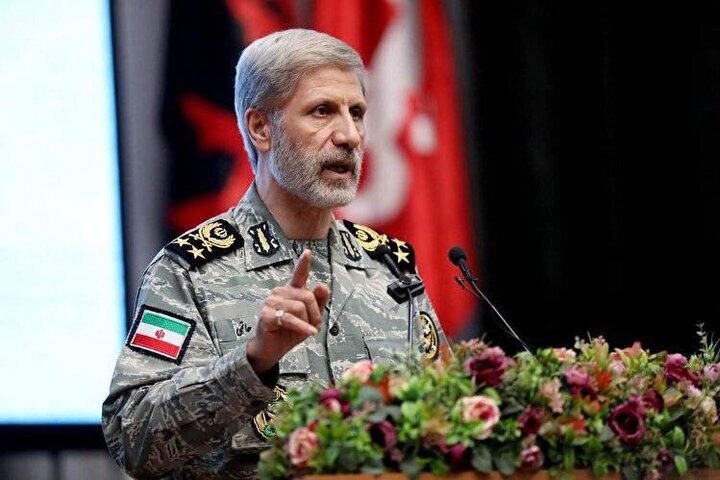
TEHRAN – The commander-in-chief of Iran’s Army (Artesh) has reaffirmed that the country’s armed forces are on full combat alert, warning that any reckless move by the United States or Israel would backfire catastrophically, threatening not only their own forces but the entire region.
Addressing the “Young Soldier of the Armed Forces” ceremony on Saturday, Major General Amir Hatami said Iran’s military operates at the highest level of readiness, with seamless coordination among all branches of the armed forces.
“Our enemies are constantly monitored,” Hatami said. “Because we clearly understand their hostile intentions, our finger remains firmly on the trigger.”
He cautioned that any miscalculation would immediately endanger “their own security, their troops, the region as a whole, and the criminal Zionist regime,” stressing that Iran would respond without hesitation.
General Hatami’s remarks come in the aftermath of a failed U.S.-Israeli attempt to destabilize Iran internally in preparation for a second military assault planned for January.
Peaceful protests over economic hardships—rooted in years of U.S. sanctions—were hijacked between January 8 and January 14 by coordinated networks linked to CIA and Mossad-backed operatives, turning demonstrations into violent riots across multiple cities. The unrest caused extensive vandalism, arson, and destruction of public infrastructure, and led to the deaths of around 2,500 people, including Iranian security personnel and ordinary civilians.
Despite the scale of the violence, Iran successfully dismantled the armed cells, restored order, and re-established nationwide security, depriving Washington of the internal collapse it had hoped would pave the way for another war.
With that plan having failed, U.S. President Donald Trump is now left weighing whether to launch a direct attack—an option analysts widely agree would not collapse the Islamic Republic but instead ignite a full-scale regional war with global economic and security consequences.
General Hatami noted that Iran’s defensive capabilities have advanced significantly since the 12-day war imposed by Israel and the United States in June, particularly in missile systems, air defenses, and deterrence doctrine.
He said the conflict transformed Iran’s understanding of modern, hybrid warfare and exposed critical weaknesses in enemy strategy.
“Even Russia, despite more than three years of confrontation with NATO, does not possess the kind of battlefield experience we gained in those 12 days,” Hatami said. “We confronted the full spectrum of enemy technology and hybrid warfare. We identified their weaknesses and our own strengths. Today, our defensive power is fundamentally different—and it is not something that can be destroyed.”
On June 13, Israel launched an unprovoked assault on civilian, military, and nuclear facilities, killing senior commanders, nuclear scientists, and civilians. Iran responded with precision drone and missile strikes against Israeli military targets in the occupied territories.
The conflict escalated further on June 22, when U.S. air and naval forces attacked three Iranian nuclear facilities in a blatant violation of international law. Iran retaliated the following day by striking a U.S. military base in Qatar, damaging parts of the installation.
By June 24, after sustaining heavy losses and failing to achieve their objectives, the United States and Israel were forced to halt the fighting and asked Iran for a ceasefire.
Despite the failure of both military escalation and internal destabilization, Washington has continued to build up naval and air forces in the Persian Gulf, while Trump now claims Iran must “sign a deal” to avoid war.
Iranian officials say Tehran is ready for a nuclear agreement that credibly guarantees Iran will not pursue nuclear weapons—but they have drawn firm red lines. Iran will not dismantle its peaceful nuclear program, nor will it negotiate over missiles, regional alliances, or defense capabilities.
Authorities in Tehran have also stressed that at the same time, the country is fully prepared to defend itself if the United States chooses confrontation over a respectful, win-win agreement.
General Hatami also underscored that neighboring countries have already refused to allow their territory or airspace to be used against Iran, warning that any new aggression would spread instability across West Asia.
He added that sanctions, pressure, and military threats have only strengthened Iran’s resolve.
Leave a Comment