Killing with sanctions, lying with statistics
Iran releases names of 3000 killed in January unrest after days of fabricated and politically motivated reporting by Western media
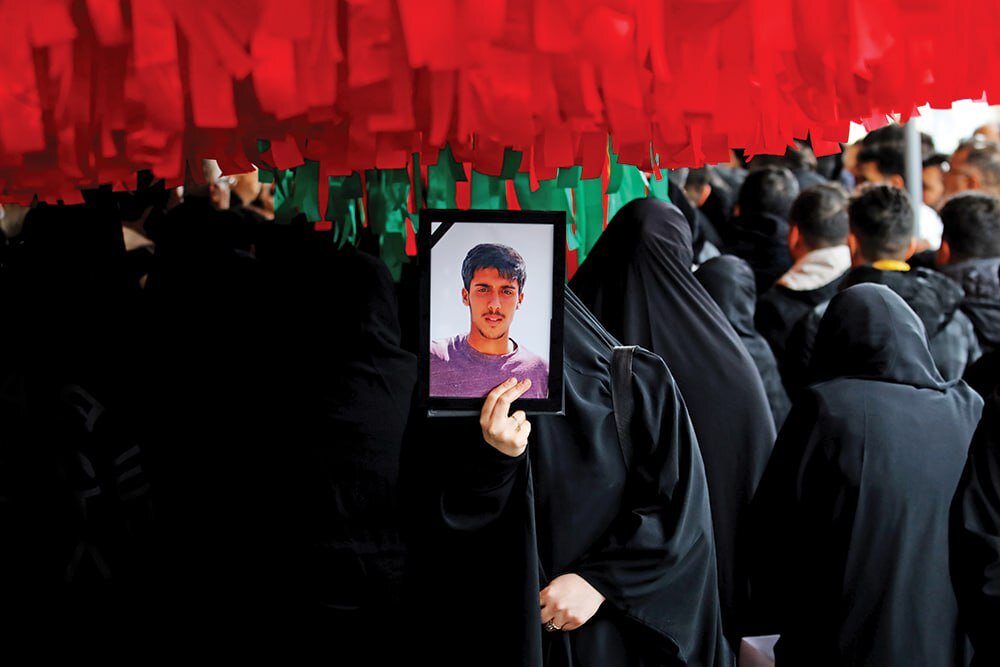
TEHRAN – On Sunday, Iran took the step of publishing the names and national ID numbers of nearly 3,000 individuals killed during the unrest that swept through the country between January 8 and January 14. According to officials, this move was a direct response to weeks of politically motivated reporting and fabrication by Western media outlets.
The disclosure comes after a relentless media campaign where unverifiable death tolls—some climbing as high as 80,000—were circulated by Western-based organizations and news platforms. These claims appeared without any accompanying names, documentation, or forensic proof. Iranian officials argue that the inflated figures aren’t the product of investigative journalism, but rather a calculated effort to manipulate international opinion precisely when U.S. military pressure on Tehran is at its peak.
A senior official from President Masoud Pezeshkian’s office noted that the decision to release the detailed data was made days prior, with the specific goal of “closing the door to fabrication.” Just before the publication, Iran’s foreign minister told CNN Türk that the death toll was consistent with the roughly 3,100 fatalities already announced by the nation’s forensic medicine organization. He challenged critics, stating that Iran is ready to revise that number if any credible party can produce even a single verified identity not currently on the list.
It took Iranian authorities several days to finalize the count once the violence subsided in mid-January. They cited the difficulty of distinguishing between civilians, security personnel, and armed attackers in the aftermath of the clashes. Western media, however, didn’t wait for confirmation. They began publishing sweeping casualty estimates early on, frequently basing their reports on anonymous “activists” or a Washington-based website run by a former detainee previously convicted in Iran for collaborating with foreign intelligence.
The disparity is striking: alleged death tolls ranging anywhere from 6,000 to 80,000, with zero corroborating evidence. Analysts suggest this inflation was deliberate—a tactic to manufacture moral urgency and legitimize foreign military intervention, all while shifting attention away from the far better-documented civilian death toll in Gaza.
A familiar pattern
For observers in Tehran, this entire episode feels like a rerun of a script that is neither new nor unique to Iran.
Go back to 1990: the fabricated story about Kuwaiti babies being thrown from incubators by Iraqi soldiers—a lie traced back to a U.S.-backed PR campaign—helped sell the [Persian] Gulf War to the public. In 2011, claims that Muammar Qaddafi was planning mass rapes and aerial massacres were used to justify NATO’s intervention in Libya, an operation that ultimately collapsed the state. In Syria, allegations of chemical weapons use by Bashar al-Assad’s government—claims later refuted by whistleblowers and independent investigators—became the moral engine for years of sanctions, military strikes, and the funding of terrorist groups.
In every single one of these instances, Western media played a key role in amplifying lies to manufacture consent for intervention. The results were catastrophic. Iraq fell into occupation and sectarian violence; Libya fractured into militia rule and open-air slave markets; Syria suffered over a decade of war and displacement. Now, the same playbook is being used against Iran.
The West exploited and derailed legitimate protests
The unrest in January started as protests over economic hardship—pain rooted largely in years of U.S. sanctions that have strangled trade, banking, and oil exports. Initially, these demonstrations were largely peaceful and actually led to significant economic reforms by the government.
The situation turned when armed elements were injected into the crowds. Iranian intelligence has since uncovered overwhelming evidence—including weapon seizures and multiple arrests—indicating that the CIA and Israel’s Mossad financed and coordinated these groups.
Just days before the violence erupted, the Mossad’s Persian-language account on X posted that Israeli agents were “on the ground” in Iran. Shortly after that signal, police stations, military sites, banks, and private buildings came under attack. The use of firearms, explosives, and incendiary devices in multiple cities transformed the protests into what was essentially organized urban warfare.
Meanwhile, U.S. President Donald Trump posted messages encouraging rioters to seize government institutions and kill security forces, promising undefined “help” and signaling an incoming U.S. military strike. Those messages served to prolong the violence.
Notably, there have been zero calls from Washington or Europe to ease the sanctions that actually hurt ordinary Iranians. Instead, new punitive measures were announced even as Western leaders claimed to care about the humanitarian plight of the Iranian people.
The victim list released this week covers everyone involved: civilians, police officers, and conscripts, alongside individuals identified as members of terrorist cells. Officials have described this transparency as a “moral duty” to the families of the deceased, but also as a sharp political message to the outside world.
Analysts suggest that the lessons of Iraq, Libya, and Syria are looming large in Tehran right now. In every one of those scenarios, humanitarian arguments were used as a prelude to military action. And in every instance, the collapse of the targeted government resulted in catastrophe rather than relief.
Leave a Comment