Trump cannot risk war with Iran, John Helmer says
Veteran journalist warns that a prolonged conflict would trigger inflation, casualties, and a political crisis in Washington
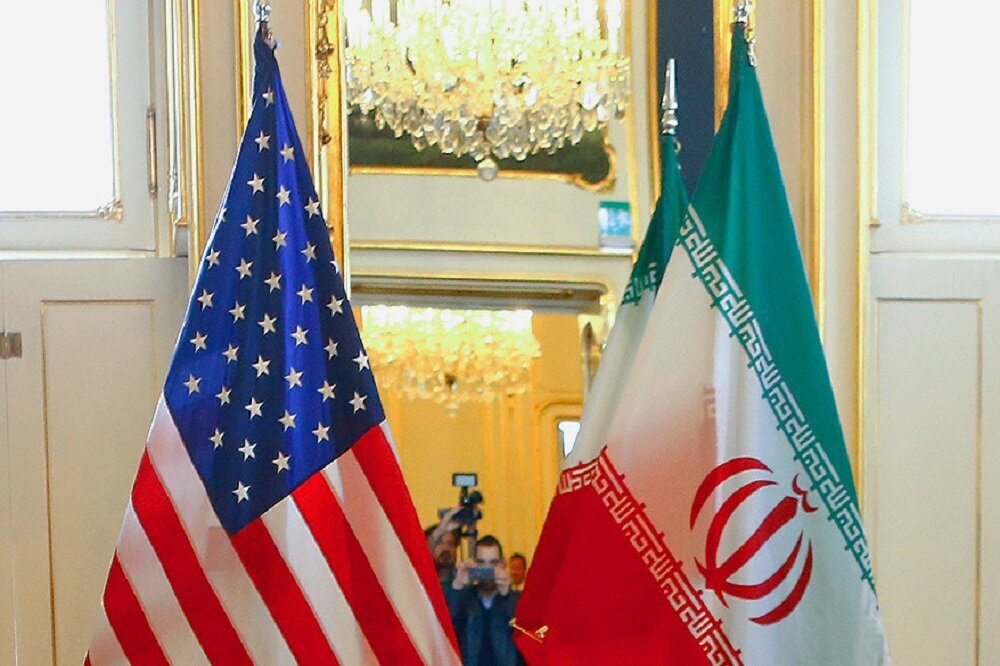
TEHRAN — As tensions persist between Iran and the United States amid intensified military signaling and renewed talk of negotiations, critical questions remain about Washington’s real strategy and the risk of a broader regional conflict. In this context, Tehran Times spoke with John Helmer, a veteran journalist and geopolitical analyst based in Moscow, to examine the shifting balance of power and the prospects for de-escalation.
Helmer is one of the longest-serving Western correspondents in Russia, where he has worked for more than three decades. He is the editor of the independent analytical website Dances With Bears ( https://johnhelmer.net/) and the author of several books on U.S.-Russia relations, military affairs, and great-power politics.
In this interview (You can watch the full video here): , Helmer analyzes Ayatollah Seyyed Ali Khamenei’s warning that any U.S. military action would expand into a regional war, critiques Washington’s reliance on coercive diplomacy, questions the credibility of U.S. mediation efforts, and assesses Russia’s potential role in shaping a comprehensive regional security framework.
Below is the full text of the interview:
In his February 1 statement, Ayatollah Khamenei warned that any U.S. military action would expand into a regional war. How does this reflect the interconnected military and political dynamics of today’s Middle East?
You understand—and I hope your audience understands—that I am a Russia correspondent. I have spent 30 years in Russia, so I am speaking from a Russian point of view. I think it is valuable for your audience to understand that perspective.
I understood the February 1 statement as expressing something obvious, but with implications that are less obvious. It is very clear that Iran’s security is being threatened from the region.
The U.S. negotiator, Steven Witkoff, has been shuttling from Miami—where he was on Saturday speaking with the Russian business representative Kirill Dmitriev—to Israel, and then to Abu Dhabi for discussions on the military terms of a settlement to the Ukraine war with Russian negotiators. These include an admiral in charge of Russian military intelligence and a general.
To the extent that I understand Ayatollah Khamenei’s statement, he is saying that Iran is facing the prospect of war from Israel, from the United States, and from those Arab states that host military bases from which attacks on Iran have been launched in the past and could be launched again. The regional dimension is that Iran is being threatened simultaneously and in coordination by Israel, the United States, Saudi Arabia, and the UAE, to name a few.
That is the first point. Therefore, Ayatollah Khamenei is saying that if Iran faces such a coordinated attack from these territories and states, its defensive response must be directed against each of them. That makes it a regional war.
The consequence is an interesting one. Is Ayatollah Khamenei saying that Iran wishes to negotiate with all of its enemies at the table at the same time? In other words, why Witkoff alone? Why not an Israeli representative, given that Witkoff appears to be shuttling between Israel and negotiations with Iran? Why not a Saudi representative? Why not an Emirati representative, or any other state—including Iraq—on whose territory an attack on Iran could be launched or threatened?
If this is a regional war, then all regional representatives should attend and be part of the negotiating process.
This position is not new at all. Ayatollah Khamenei is restating what has long been the Russian position, as articulated years ago by Foreign Minister Sergey Lavrov: that the only viable form of security for the Persian Gulf states must be comprehensive. It cannot be partial. It must involve all states pledging mutual security with one another—without exception.
President Trump says Iran is open to nuclear talks, yet the U.S. is also increasing its naval presence in the region. How do you interpret this mix of diplomacy and military pressure? What does it tell us about Washington’s real strategy?
That is a complicated question. Let me answer it this way.
In the first place, President Trump aims for all strategy to be about winning, not losing. Winning, from Trump’s point of view, has been a combination of force, coercion, and extortion—both in the trade arena through tariffs, penalty tariffs, and secondary tariffs against states such as China and India.
So the idea of a mix of diplomacy and pressure does not quite describe it accurately. All of Trump’s moves are a form of pressure. There is no real credibility to the diplomacy. Diplomacy, in this case, is the talking at the table, but the gun at the table is economic warfare and sanctions warfare.
This is not a combination of diplomacy and military pressure. It is a single combination of different types of pressure—extortion. It is negotiating at the point of a gun. President Trump’s view is that he must win.
Iran’s top security official, Ali Larijani, has described a structured negotiation framework emerging with the U.S., while Tehran insists talks cannot occur under coercive threats. In your view, what minimum conditions are needed for these talks to become serious and productive?
I have followed Mr. Larijani’s references to this closely. He was in Moscow late last week, as you and your audience know, and he laid out at the table the Iranian war plan—that is, the Iranian defense plan. The discussions with President Putin and other Russian military intelligence officials, as well as Russian military and civilian officials, remain top secret.
What is a “structured negotiation”? The surprising thing to me is that Steven Witkoff is the U.S. negotiator whom either Mr. Araqchi or Mr. Larijani appears to consider an acceptable counterparty.
From the Iranian point of view—historically, and based on Witkoff’s behavior as a so-called negotiator prior to the launching of the war last June—Witkoff is not a negotiator. He is a deception agent. The Iranian side has not publicly stated that Witkoff represents a deception operation, but that is what everyone understands him to be. The question, therefore, is why he is still considered an acceptable counterparty.
Let me give you an example from the Russian point of view. Russia has been fighting a war against the United States primarily on the Ukrainian battlefield since February 2022. What has been Witkoff’s role in the negotiations?
Take his role at the table in Abu Dhabi last week. According to the Russian side, he was present alongside Jared Kushner—Trump’s son-in-law—and another individual named Joshua Grunbaum, a New York real estate lawyer who has joined negotiations involving Israel, Gaza, and discussions on ending the genocide there. From the Russian perspective, these individuals are negotiating only economic cooperation.
Yes, in the past, Witkoff has been to the Kremlin, met with President Putin, and discussed various frameworks for negotiations on ending the Ukraine war. But he was not at the table in Abu Dhabi to discuss military issues.
To the extent that Iran faces the United States Navy, Army, and Air Force, a structured negotiation should include a U.S. military representative. In the Russian negotiations in Abu Dhabi, the U.S. military representative was General Alexus Grynkewich, a senior-ranking officer. Grynkewich is the commander of U.S. European Command and the Supreme Allied Commander Europe, and the senior operational officer responsible for the battlefield in Ukraine.
Iran should ask itself: who is the senior U.S. general in charge of operations against Iran? That individual should be at the table.
President Trump has referred to what he calls a “beautiful armada.” Leaving aside the adjective, it is an armada. Who negotiates the terms of defense or attack with an armada? Military officers do. Witkoff is not military. He is not an acceptable negotiator for the Russian side when it comes to ending killing on the battlefield.
President Trump may say otherwise, but Iran has its own experience with Witkoff.
Consequently, I am surprised that the Iranian side continues to consider that within the structured negotiation framework Mr. Larijani refers to, Witkoff is the sole counterparty.
I pose this as a rhetorical question. On the Ukrainian battlefield, a military settlement requires senior military officers on both sides. Admiral Kostyukov and Generals Zorin and Fomin are the senior Russian military officers. Generals Grynkewich and Adamski were on the U.S. side, along with Daniel Driscoll, the U.S. Secretary of the Army, who had a junior military career but now heads the U.S. Army.
These are the structured military negotiators required for resolving a military problem—hopefully through negotiation. Iran has a military problem. Witkoff represents a deception operation. He is not part of a structured negotiation; he is part of a structured deception.
In his CNN interview on February 2nd, Abbas Araghchi stressed that Iran is open to a fair and equitable deal, but that trust must be rebuilt due to past U.S. actions. How do U.S. military pressure and rhetoric affect the prospects for rebuilding that trust?
It is really a rhetorical question. Past U.S. actions have included— and you do not need a correspondent from Moscow to explain this — combined Israeli-U.S. attacks on Iran, including cross-border attacks and what amounted to a war.
There was the U.S. bombing attack on Iranian nuclear installations, which was pre-arranged in advance, as was the Iranian retaliation, since no air defense was put up against U.S. bombers.
What followed was that this particular war failed. It failed to decapitate the Iranian military leadership, failed to cause chaos within the civilian leadership, and failed to destroy Iran’s defensive capabilities. That was a failure. It was a defeat, followed by a ceasefire. We do not need to get into the history of it; you understand that history better than I do.
From where I am sitting, what followed was another method of attacking Iran — an attempt to achieve internal regime change. That, too, has been defeated, including through street rioting and similar efforts. You are in a better position than I am to describe that.
Consequently, we arrive at what I would call the third stage. The third stage is what the U.S. — and President Trump — has called a “beautiful armada.” It is intended to demonstrate massive military force in order to intimidate Iran into some form of surrender and acceptance of U.S. terms.
Now, this is not quite in your question, but on current indications, I would say that Trump is retreating from those terms. We can come back to that later.
From an Iranian point of view, a fair and equitable deal is one that allows Trump to retreat while declaring victory, because he will have to accept that each attempt to destroy the Iranian system — whether from inside or outside the country — has failed.
So, a fair and equitable deal, as described by Mr. Araghchi, your foreign minister, must be fair and equitable to Iran in very specific ways.
First, are the United States and its regional allies committing to a forward policy of non-intervention in Iranian affairs?
Second, is the United States committing to a system of mutual security — Iran versus Israel, Israel versus Iran, and so on?
Mutual security, as proposed by the Russian side, raises the question of whether the U.S. is prepared to agree to such a framework. Until now, nobody has seriously considered that the Lavrov plan for mutual assured security in the region — involving all players — should actually involve all players.
Why, to return to my first point, does the United States insist that it alone will represent every player, confronting Iran man-to-man at the point of a gun, with fleets at sea, air bases, and other military assets deployed throughout the Persian Gulf?
“Fair and equitable” normally means mutual and reciprocal security. That is what it means in the war Russia is fighting in Europe. That is what fair and equitable means on the Ukrainian battlefield. I should think it ought to mean the same on any battlefield.
Equitable means mutual and reciprocal.
Let us discuss Russia’s role in the current tensions. You have previously referred to a “formula” you use to explain great-power behavior. To what extent can — or will — Russia act as a de-escalation broker between the U.S. and Iran, given its own interest in avoiding a wider regional conflict?
There are two parts to that question.
First, there is the formula itself, which your audience can read on my website, Dances with Bears (johnhelmer.net). It is a simple formula intended to make clear what is really at stake. The formula is:
M + V + B = P
Money plus Votes plus Bullets equals Power.
Let us apply this formula to the Trump administration — or more accurately, the Trump regime.
Money:
What does money tell us about what Trump will do toward Iran right now? Look at oil prices. When billions of dollars are invested every day in forward oil prices, markets are effectively betting on whether the Strait of Hormuz will remain open or close. Everyone in the markets understands this.
If the United States opens fire, the Iranian response will be regional. One key element of Iran’s regional defense would be closing the Strait of Hormuz. That would halt eastward oil flows from Arab states as well as Iran, triggering a massive price shock.
And yet, oil markets are currently pushing crude prices downward — by roughly five percent just over this past weekend. That tells us something very important: the money says Trump will withdraw. Trump will not attack.
Votes:
Now let us look at votes — both domestic American voters and their attitude toward an attack on Iran. That attitude is extremely hostile. President Trump is losing support across key constituencies, and overall voter disapproval is rising.
None of Trump’s so-called peace initiatives is considered credible by American voters. Polling clearly shows his support collapsing. At the same time, Trump has just announced the withdrawal of federal forces from Democrat-voting cities such as Los Angeles, Portland, and Minneapolis.
This followed incidents in which Trump’s militarized Immigration and Customs Enforcement forces were involved in killings. Trump announced his retreat in a tweet — and it should be read exactly as that: a retreat.
He said:
“Under no circumstances are we going to participate in various poorly run Democrat cities with regard to their protests and or riots unless they ask us for help. We will, however, guard — and very powerfully so — any and all federal buildings.”
That is Trump running away. It reflects a broader retreat by Trump and his internal security adviser Stephen Miller. It shows how sensitive they are to votes.
I once worked in the White House under the Carter administration, and all presidential staffs understand something fundamental: electoral pressure begins long before Election Day.
The summer driving season starts in late May — about 16 weeks away. From that point, Americans must buy gasoline to travel. Trump cannot risk a major oil-price or gasoline-price spike during that period. If he does, he loses votes.
Bullets:
That brings us to bullets — military force.
Yes, the U.S. Navy has Tomahawk missiles and other weapons aboard its armada. They can be fired. But military firepower has limits. Once missiles are launched — whether offensively against Iran or defensively against Iranian drones and missiles — ships must withdraw to reload. Logistics matter.
Iran understands this very well. Having fought wars since the 1980s, Iran knows that if it survives the first wave, the second wave, and the third wave — and protracts the conflict through sustained defense — Iran wins.
Why? Because if the Strait of Hormuz is closed, and if the U.S. cannot achieve its objectives within two to seven days, but Iran sustains its defense for 16 weeks, American drivers heading into summer will face massive gasoline price increases.
Combine that with exhausted military capability and the return of U.S. casualties, and you get the kind of political crisis that destroys presidencies.
That is exactly what happened to Lyndon B. Johnson. He resigned on March 31, 1968, under the combined pressure of inflation and rising casualties from Vietnam. That date is not very far away on today’s calendar.
So when you apply the formula — Money, Votes, Bullets — it becomes clear that these elements cannot produce Power for the Trump regime in the current situation.
If Iran protracts the conflict and generates inflation and casualties, Trump faces the same political forces that ended Johnson’s presidency. All presidents are subject to this dynamic. Trump is no exception.
You can already see the consequences. Trump has withdrawn federal forces from Minneapolis and other cities. He has alienated Black voters, Hispanic voters, Asian voters, and white working-class voters. All are increasingly hostile to him.
He cannot risk an inflation-casualty combination. And time is already working against him.
He knows it, and the people behind him in the White House—figures such as Stephen Miller—are especially failing to deliver what they define as an offensive enforcement doctrine. This includes domestic enforcement as well as offensive attacks against Venezuela, Cuba, Iran, and the Palestinians in Gaza, among others. That doctrine certainly polarizes the American electorate, but not to the extent that Trump and his successors—such as J.D. Vance, the vice president—are counting on for their future political power.
In my formulation, M plus V plus B does not equal P—media plus violence plus bullying does not translate into power for Trump in this particular equation. That is how I read the situation, and that is how I invite our listeners, and you, to understand how the United States is thinking now.
This brings us back to your question about mediation—Qatar, Turkey, Russia—and what roles they can play. I hope it is clear that if you agree this reflects how Trump is behaving, not merely how he speaks, and if you agree that a structured negotiation must involve those who are most threatening, then that means U.S. generals, Israeli officials—whom Witkoff is receiving instructions from this week before he travels to Abu Dhabi —the Saudis and the Emiratis first and foremost, but also the Qataris.
If a structured negotiation involves all parties because all are threatened by one, then what we see now is retreat everywhere. That is not something Iranians should feel safe or secure about, let alone confident. No. But this is how I see the strategic situation. And if this is the strategic reality, then we must ask what role Qatar, Turkey, Russia, or the Emiratis can realistically play as mediators.
Looking ahead, what developments should regional and global observers watch most closely in the coming weeks? What do you think will be the key factor determining whether tensions escalate or stabilize?
How can I answer this? In the press—and in the constant speculation that generates headlines, pays journalists’ salaries, or provides material for propaganda—we can identify several key dimensions.
First, Trump has now withdrawn from two major demands, something Witkoff has acknowledged in the past. If you don’t mind, I will refer directly to my notes and read exactly what Trump said.
On Saturday, Trump was at the front of an airplane, flying to Miami for a wedding, when reporters asked him for an update on Iran. This staged question-and-answer format has effectively become the way the U.S. government communicates with the world.
Asked about his current thinking on Iran, Trump said: “We do have very big, powerful ships heading in that direction, as you know, but I hope they can negotiate something that’s acceptable.”
He then added: “We could make a negotiated deal that would be satisfactory, with no nuclear weapons. They should do that. I don’t know that they will, but they are talking to us—seriously talking to us now.”
What he is saying is difficult to interpret because Trump does not speak in a normal cognitive sequence. His thinking lacks the competence of most of his predecessors—I am not even referring here to Biden's early dementia.
What matters is this: Trump said in a deal the U.S. demand is zero nuclear enrichment. That had been a core demand previously, and Iran rejected it. The reasons are obvious and well documented in your newspaper.
Second, Israel in particular has pushed that no long-range missiles would be acceptable. He no longer says that the United States demands Iran have no missile program—one that threatens Israel and U.S. bases. He appears to have dropped that demand as well, for obvious reasons: Iran has never agreed to it and has made that clear.
So on Saturday—whether at the front or the back of an airplane—Trump was clearly briefed by his advisers to say that no nuclear weapons is the acceptable term, one that would avoid war from what he calls America’s “beautiful armada.” This represents a major retreat. He repeated essentially the same message again on Sunday.
What does this mean? It means Trump is in retreat. He has dropped two key terms insisted upon by Israel.
Now, when Witkoff goes to Israel this week, he is bound to be asked: “Your boss has just dropped two of the fundamental terms we insist on. Are you dropping them as well?” If that is Israel’s position, then it would be better for the Israelis to come to the table directly rather than using Witkoff as a messenger boy.
How many messages can one messenger boy carry? Historically, intermediaries who delivered false messages paid a heavy price. The lesson was clear: do not send a messenger with a false message.
So the questions are these: Has the United States dropped the missile demand and the zero-enrichment demand? If so, has Israel dropped them as well? And what about the Saudis and the Emiratis—what is their position?
As I have said repeatedly, a structured negotiation cannot occur with an individual like Witkoff alone. At best, he could be part of a delegation that includes senior American, Israeli, Saudi, and Emirati generals. But who holds the real power in such a negotiation? Obviously, the generals do.
Witkoff is a money man. That was his role before joining the White House, and it remains his role in dealings with Russia. So what kind of mediator is he?
Before we ask what kind of mediation Qatar, Turkey, or Russia can provide, we should ask what kind of mediation Witkoff represents when Trump himself is in retreat. And if Trump is retreating, will his allies allow it? Do the Israelis agree?
I would be very surprised to hear Prime Minister Netanyahu say that Israel is dropping its demand that Iran dismantle its long-range missile program or accept zero nuclear enrichment.
Since you asked about Russia’s position, let me address that briefly. Over the past few hours, President Vladimir Putin, through his spokesman Dmitry Peskov, has said that Russia is willing to take enriched uranium back from Iran as a way of safeguarding Iran’s civilian nuclear program, provided Iran agrees not to develop nuclear weapons.
In effect, Russia is saying: we will guarantee denuclearization of weapons development in Iran for the future. That is the Russian position.
Now, this is deeply ironic. The battlefield in Ukraine is filled with Europeans, NATO forces, and Asian allies, all supporting the United States in its effort to defeat Russia. How could it possibly be that Russia’s adversaries—those fighting Russia across Europe, not only in Ukraine—would accept a Russian guarantee for Iranian security?
That is a rhetorical question, and it demands skepticism. Why would the United States, after reportedly launching a missile attack near President Putin’s personal residence just days ago, accept his offer to safeguard enriched uranium so it cannot be diverted into weapons?
I am a simple individual. I cannot understand why enemies attempting to attack Russia would now accept such an undertaking from President Putin in order to avoid attacking Iran.
What I believe is happening is a series of maneuvers designed to allow Trump to declare victory, withdraw his ships, and then redirect U.S. aggression toward countries less able to defend themselves—such as Venezuela and Cuba.
Leave a Comment