Claudius returns to poison the deal
As diplomatic talks begin in Muscat, Netanyahu rushes to Washington to ensure peace with Iran never materializes
TEHRAN – Shakespeare’s Hamlet shows King Claudius as the main cause of Hamlet’s downfall. Claudius begins by secretly murdering Hamlet’s father and taking the throne, then hides his crime behind the image of a calm and caring king.
By lying about the murder and controlling what others believe, he keeps Hamlet trapped in uncertainty and doubt. This pressure leads Hamlet to make serious mistakes, especially when he accidentally kills Polonius. That single act sets off a chain of revenge and deaths that Claudius is quick to exploit. In the end, Hamlet does uncover the truth and kill Claudius, but not before Claudius’s poison also kills him.
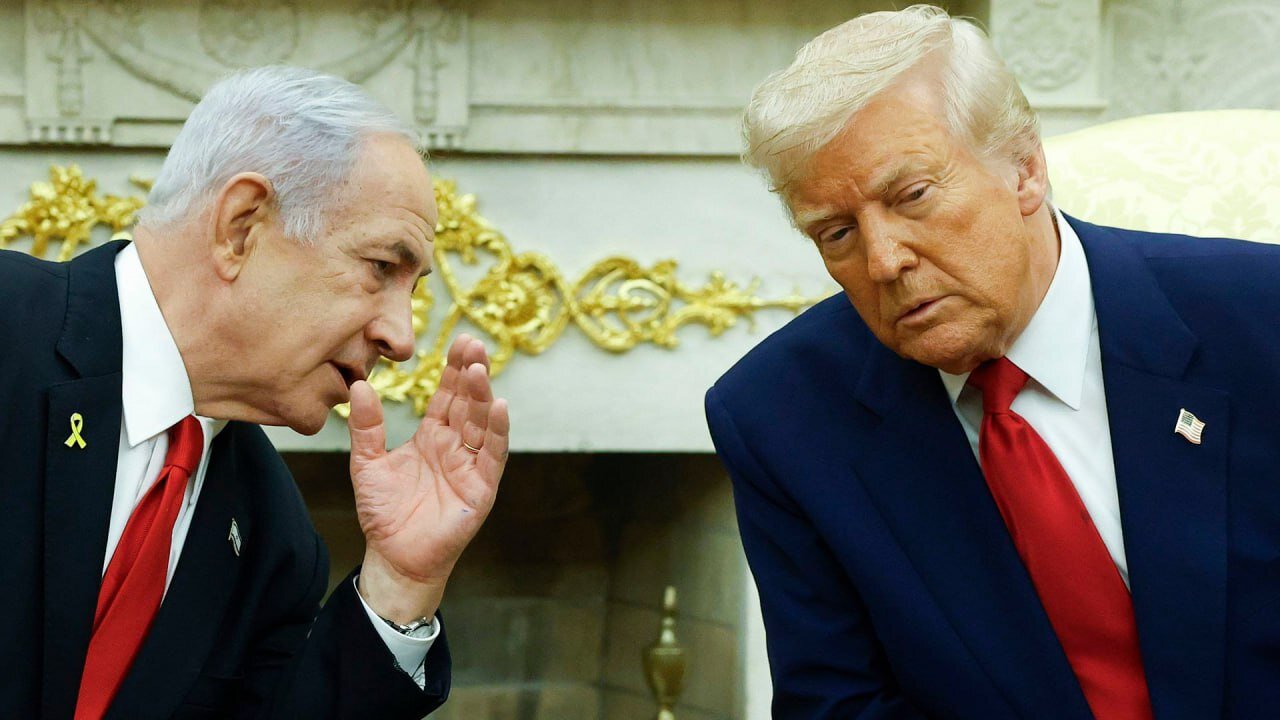
A 19th-century painting depicting Claudius pouring poison into Hamlet’s ear has resurfaced on social media in recent hours. Paired with this image, Iranian and American users have shared a photograph of Israeli Prime Minister Benjamin Netanyahu whispering into the ear of U.S. President Donald Trump during a 2025 White House visit. "Just as Claudius caused Hamlet’s downfall," one user wrote, "Netanyahu will cause Trump’s downfall by feeding him lies about Iran."
It is believed that Trump withdrew the United States from the 2015 Iran nuclear deal, the Joint Comprehensive Plan of Action (JCPOA), during his first term because he had been influenced by Netanyahu. Trump was convinced that his "maximum pressure" campaign, which severely impacted Iran's economy, would compel Iran to return to negotiations and make new concessions. These concessions were to include the complete dismantling of its nuclear program, limitations on its missile program, and a severing of ties with Resistance groups.
Upon his return to office in 2025, Trump was confronted with the reality that his debilitating campaign, also continued under the Biden administration, had failed to sway Iran. Instead, it had prompted Iran to abandon its JCPOA commitments and make nuclear advancements previously unseen. Trump then invited Iran to negotiate, promising not to challenge the country's "red lines." But the entire process was derailed in June 2025 after Netanyahu allegedly persuaded Trump that Iran was weak. Netanyahu suggested that attacking Iran would either topple the Islamic Republic or force it to make the concessions Trump desired. The lie of a “weak Iran” was once again sold to Trump this January. The president prepared to attack Iran a second time as riots convulsed the country, but refrained from acting on his plans as it became clear to him that an attack would likely not result in Iran accepting reciprocal measures without consequence. Instead, it would ignite a regional war, leading to thousands of American casualties in the region, the closure of vital waterways, and a global surge in oil prices.
With the help of regional states, Washington has now decided to return to diplomacy with Tehran after multiple unsuccessful attempts to force its capitulation. The first round of the new talks took place in Muscat on Friday, with both sides characterizing the discussions as a "good start." Washington has not indicated a continued insistence on crossing Iran's red lines, and Tehran has stated its willingness to show flexibility in other areas to facilitate a deal that the U.S. might consider superior to the JCPOA. But Claudius is still here, and he is intent on making maneuvers.
Hebrew-language media outlets reported on Saturday that Netanyahu has moved up his scheduled trip to Washington and is slated to meet with Trump on Wednesday. Those outlets have also outlined Netanyahu’s agenda: to prevent any deal with Iran from materializing.
“Any deal with Iran is a bad deal,” said an Israeli expert on the regime’s Channel 11. “Any deal means there won’t be U.S. military action against Iran and sanctions will be lifted.”
Both Iranian and American analysts have warned for years that Israel, in its pursuit of hegemony in West Asia, wants any regional rival to be dismantled. Iran is the region’s largest military power, and if it continues to exist, the chances that Tel Aviv could realize its “Greater Israel” vision are low — a vision that holds Israel’s ultimate borders should include not only the Palestinian territories but also whole or partial territories of other countries in the region. Israel cannot attack Iran on its own — a lesson it learned during the 12-day war, when some of its cities were decimated by Iranian missiles. Thus, it needs relations between Iran and Washington to remain hostile, hoping that one day the U.S. will launch an all-out war against Iran similar to the invasion of Iraq.
Iran, however, is not Iraq. Americans can bomb the country, but the consequences would be far greater than what they faced in 2003. Tehran says it favors diplomacy, but after years of failed talks and a war imposed during negotiations last year, it is also preparing for worst-case scenarios.
After failing in nearly all of his foreign-policy projects, Trump could secure a political win with Iran ahead of the midterm elections if he opts for meaningful diplomacy. Or he could let Netanyahu poison his ear like Claudius did to Hamlet, bringing about not only his own downfall but his party’s as well in the upcoming 2026 and 2028 elections — because the last thing Americans want amid a cost-of-living crisis is a war far worse than Iraq and Afghanistan, especially considering the fact that almost every honest analyst and observer can agree Iran does not constitute a threat to the United States.
By Soheila Zarfam
Leave a Comment