47 years of resistance
Iran's revolution continues to thrive despite decades of plots and pressure by US
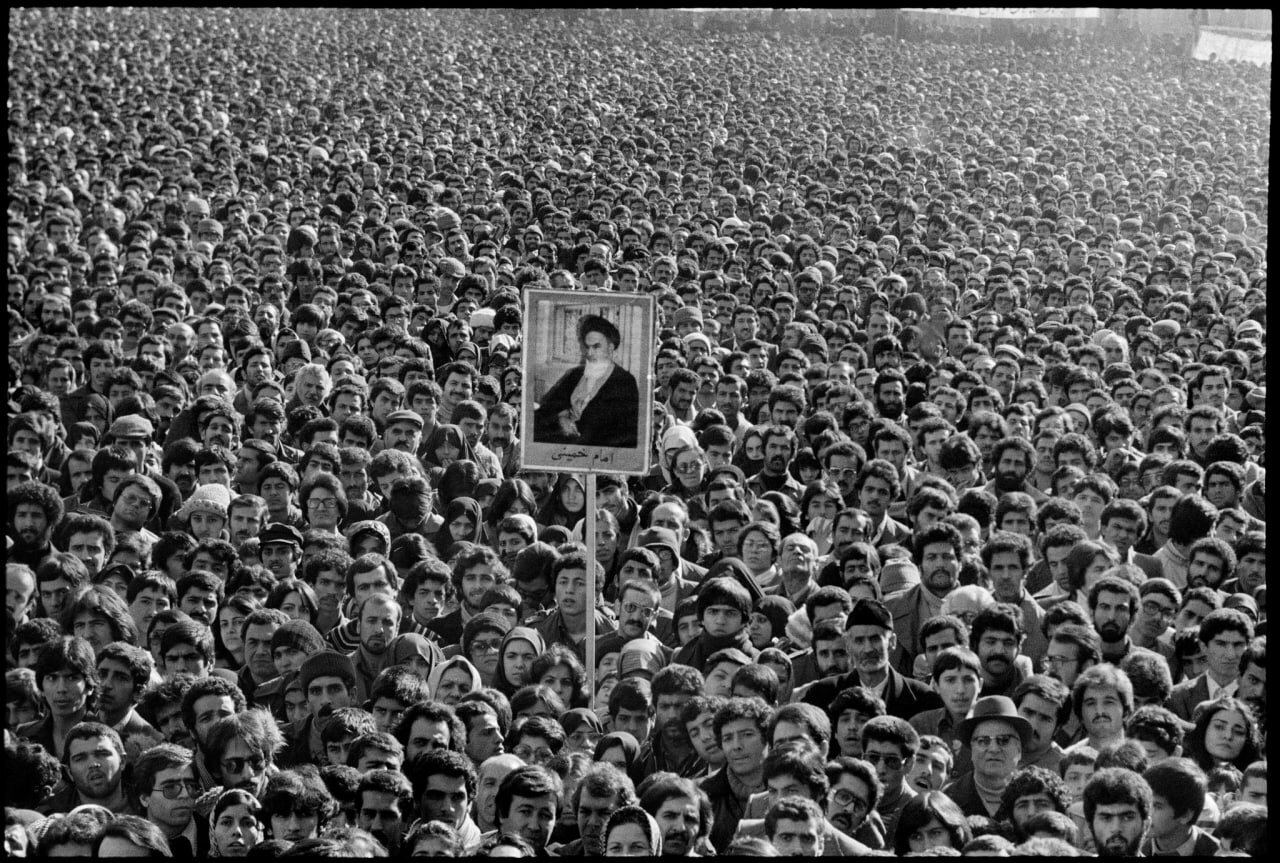
TEHRAN – In November 1979, only months after the Islamic Republic was formally established through a national referendum in which Iranians overwhelmingly voted to reshape their political system, Imam Khomeini addressed a crowd in the city of Qom.
The revolution had just dismantled the Pahlavi monarchy, toppling a shah widely viewed across the world as one of Washington’s most reliable lackeys in West Asia. The question of how the new Iran would deal with the United States loomed large, and Imam Khomeini did not equivocate.
“They [America and its agents] will plot against us,” he warned. “But they will not be able to do anything.”
Nearly five decades later, those remarks read less like revolutionary bravado and more like a blunt outline of what followed. For 47 years, successive U.S. administrations—Democratic and Republican alike—have pursued policies aimed at weakening, containing, or undoing the Islamic Republic. There has been no real pause, no lasting reassessment, and no acceptance of Iran’s insistence on charting and maintaining an independent course.
The pressure has come in many forms. In the 1980s, Iran endured an eight-year war launched by Saddam Hussein’s Iraq, a conflict that was in reality, a U.S.-backed proxy war that cost hundreds of thousands of lives. In the decades since, waves of sanctions have followed, measures designed not simply to alter specific policies but to exhaust an entire society. More recently, the confrontation has included direct military clashes, a brief but intense 12-day war, cyberattacks, assassinations of Iranian scientists and generals, and a steady stream of covert operations.
Alongside military and economic pressure, Washington has repeatedly sought to engineer political change from within. From coup attempts to efforts at exploiting economic hardship and social grievances, the underlying objective has remained consistent: either force Iran into strategic submission or replace the Islamic Republic altogether. None of it has produced the desired outcome. Iran has been damaged, sanctioned, and relentlessly vilified in much of the Western media—but it has not collapsed, surrendered, or abandoned its core principles.
That endurance is not accidental. It draws on a long historical memory shaped by repeated foreign intervention, from imperial Russia and Britain to the United States in the twentieth century. For many Iranians, the 1953 CIA-backed coup against Prime Minister Mohammad Mossadegh remains a formative lesson. The lesson is that dependence invites domination, and sovereignty, once lost, is painfully difficult to reclaim.
Every year on February 11, Iranians mark the anniversary of the Islamic Revolution by taking to the streets across the country. These gatherings are more than ritual. They function as a public reaffirmation of a decision made in 1979 and tested ever since. The crowds are not monolithic; Iran, like any society, contains deep political disagreements, economic frustrations, and competing visions for the future. Still, the central message of the anniversary has remained remarkably consistent: independence is not negotiable.
When Iranians take to the streets again this Wednesday, it will serve as another reminder—especially to Washington—that decades of pressure have failed to produce submission. The slogans may change, the faces may be younger, but the underlying sentiment endures. Iran has been bruised and strained, yet it remains standing, wary of foreign dictates and resistant to being reshaped from abroad.
As one of the world’s oldest civilizations, with a modern history repeatedly scarred by outside interference, Iran’s insistence on sovereignty is not an abstraction. It is lived experience. The Islamic Republic was born out of that history and continues to draw legitimacy from it. For many Iranians, the struggle has never been about perfection or unanimity, but about preserving the right to decide their own future.
In that sense, Imam Khomeini’s words in Qom were not simply a prediction of American failure. They were an expression of confidence in a society that had already made a fundamental choice: that independence, once reclaimed, is worth defending—no matter the cost.
Leave a Comment