Minister suggests formation of spiritual tourism triangle in Semnan province
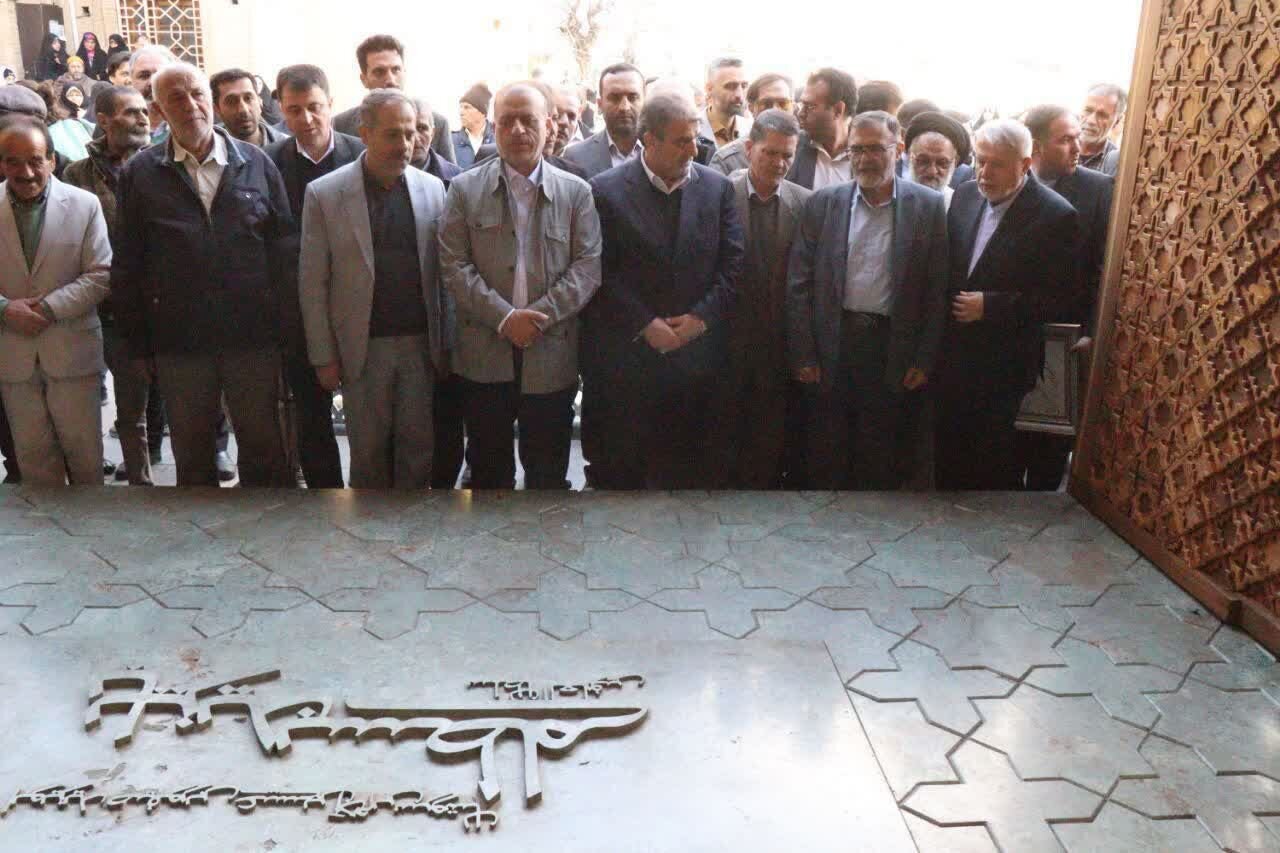
TEHRAN – Iran’s Minister of Cultural Heritage, Tourism and Handicrafts, Seyyed Reza Salehi-Amiri, on Thursday called for the formation of a spiritual tourism triangle stretching from Shahroud to the capital city of Semnan, during a visit to eastern Semnan province.
Speaking at the mausoleum of Bayazid Bastami (Abu Yazid al-Bistami) in Shahroud, Salehi-Amiri said a study group comprising academics and experts would be formed to draft a “spiritual tourism belt” in the triangle of Bastam, Kharaqan and the shrine of Ala al-Dawla Semnani.
He said the group would also identify investment resources, attract private sector participation and pursue infrastructure development.
Salehi-Amiri noted that Shahroud is one of Iran’s civilizational centers and requires targeted planning to develop tourism, citing its historical, natural and spiritual capacities.
Referring to the shrines of Abu al-Hasan Kharaqani and Bayazid Bastami, he said the sites require detailed study of their structure and design, adding that restoration, preservation, promotion and tourist attraction efforts should be pursued under a comprehensive plan.
He said Shahroud’s tourism potential ranges from desert zones to Jangal-e Abr (Cloud Forest), and includes religious sites and natural attractions that provide diverse opportunities for development.
“All tourism, cultural heritage and handicraft capacities of Shahroud and Semnan province must be introduced and strengthened in an integrated manner,” he said.
The minister said efforts are under way to establish a six-language institute to promote tourism capacities of Shahroud and Semnan, adding that professional multilingual promotion plays a role in attracting domestic and foreign tourists.
On the possibility of World Heritage inscription, Salehi-Amiri said no promises can be made, as such decisions are not in the hands of national authorities.
He said inscriptions are decided by UNESCO after documents are submitted and experts conduct assessments.
Lats November, Bastam was added to Iran’s list of historical cities. The ancient city is known for monuments clustered around the tomb of Bayazid al-Bastami, a poet and mystic who died in c. 874 CE.
Much of Bastam’s historic architecture was built under Mongol rulers Mahmud Ghazan (r. 1295–1304) and Oljeitu also known as Mohammad-e Khodabandeh (r.1304–1316).
Situated on the way of invasions and migrations between East and West, Semnan embraces the remains of the most important ancient civilizations, including historical areas, cisterns, and aqueducts with multiple unique architectures related to various eras. The province can be split into two sections: the plains at the base of the mountains and the mountainous region. While the latter includes some ancient Iranian cities, including one of the capitals of the ancient Parthian Empire, the former offers opportunities for recreational activities as well as being a source of minerals.
AM
Leave a Comment