Iranian negotiator says US can have a nuclear deal with Tehran if it lifts sanctions
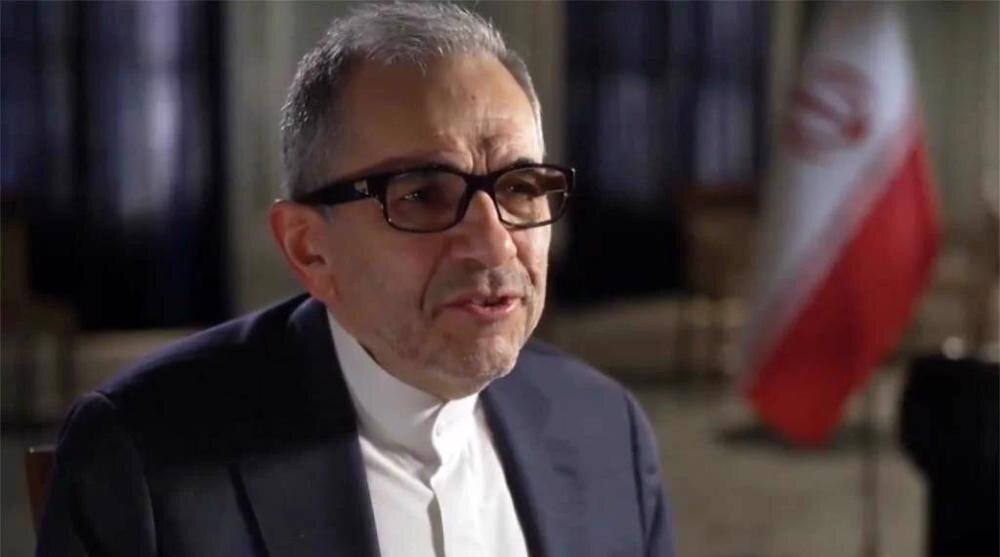
TEHRAN - Iran is ready to consider compromises to reach a nuclear deal with the U.S. if the Americans are willing to discuss lifting sanctions, a senior Iranian diplomat has told the BBC.
U.S. officials have repeatedly claimed that Iran, not the U.S., is holding up progress in this protracted negotiating process.
But in an interview with the BBC in Tehran, Majid Takht-Ravanchi, Iran's deputy foreign minister, said the ball was "in America's court to prove that they want to do a deal", adding: "If they are sincere, I'm sure we will be on the road to an agreement."
The U.S. and Iran held indirect talks in the Persian Gulf state of Oman on February 6, and Takht-Ravanchi, who confirmed a second round was set to take place in Geneva on Tuesday, said they had been "more or less in a positive direction but it is too early to judge". Trump has also described those talks as positive.
The deputy foreign minister pointed to Tehran's offer to dilute its 60%-enriched uranium as evidence of its willingness to compromise.
"We are ready to discuss this and other issues related to our program if they are ready to talk about sanctions," Takht-Ravanchi said.
As to whether Iran would agree to ship its stockpile of more than 400kg of highly enriched uranium out of Iran, as it did in the 2015 nuclear deal, Takht-Ravanchi said, "It was too early to say what will happen in the course of negotiations".
Russia, which accepted 11,000kg of uranium enriched to a low level as part of the 2015 multilateral accord that Trump pulled out of three years later, has offered to accept this material again.
Other proposals previously reported in the media include an offer from Tehran to temporarily suspend nuclear enrichment.
One of Iran's main demands has been that talks should focus only on the nuclear file, and Takht-Ravanchi said: "Our understanding is that they have come to the conclusion that if you want to have a deal you have to focus on the nuclear issue."
Iran has viewed Washington's maximalist demands for zero enrichment as an obstacle to any deal.
Iran regards that as a red line, a violation of its rights under the Nuclear Non-Proliferation Treaty (NPT).
Takht-Ravanchi said the "issue of zero enrichment is not an issue anymore and as far as Iran is concerned, it is not on the table anymore".
Iran's negotiator also reiterated Tehran's refusal to discuss its ballistic missile program with American negotiators – which has been a key demand of Israel.
"When we were attacked by Israelis and Americans, our missiles came to our rescue so how can we accept depriving ourselves of our defensive capabilities?" Takht-Ravanchi stressed.
The senior diplomat, who is playing a key role in the current talks as he did in the negotiations more than a decade ago, also expressed concern about the American president's conflicting messages.
"We are hearing that they are interested in negotiations," he said. "They have said it publicly; they have said it in private conversations through Oman that they are interested to have these matters resolved peacefully."
But in his latest remarks, Trump focused again on regime change, musing: "It seems that would be the best thing that would happen."
"We are not hearing that in the private messages," Takht-Ravanchi observed, referring to the notes being passed through Oman's foreign minister Sayyid Badr bin Hamad Al-Busaidi, who is now the main Arab mediator, with other regional powers also playing a significant role, including Qatar.
Takht-Ravanchi also questioned the U.S. military build-up in the region, warning another war would be "traumatic, bad for everybody… everybody will suffer, particularly those who have initiated this aggression".
He added: "If we feel this is an existential threat, we will respond accordingly." As to whether Iran would regard an American campaign as a battle for survival, he replied: "It is not wise to even think about such a very dangerous scenario because the whole region will be in a mess."
Iran has repeatedly made it clear that U.S. military bases in the region would be regarded as a legitimate target.
Asked about more than 40,000 U.S. soldiers now being posted in the region, Takht-Ravanchi replied, "It would be a different game".
Senior Iranian officials have been engaged in intensive discussions with their counterparts across the region, who have in turn been on the phone to President
Trump about the urgency of avoiding a war that would have far-reaching repercussions.
"We see an almost unanimous agreement in the region against war," Takht-Ravanchi said.
Iran has repeatedly accused Israel of trying to sabotage this negotiating track.
"We are hopeful we can do this through diplomacy, although we can't be 100% sure," he reflected, adding Iran has "to be alert so we are not surprised". That is a reference to Israel's unexpected attack last June, which triggered what is now known as the 12-day war, just days before Iran was preparing to meet U.S.
Envoy Steve Witkoff for a sixth round of indirect talks in Oman. It has left Tehran with little trust in this process.
Iran is known to have been dismayed by the lack of progress in last year's talks, with Witkoff understood to have often attended without experts on what is a highly technical matter.
Iranian officials, including President Masoud Pezeshkian, have been critical over understandings reached in one round often being changed by the time of the next meeting.
The presence of Trump’s son-in-law Jared Kushner at the last talks in early February has been seen by Iran as a positive signal of greater U.S. engagement.
Takht-Ravanchi said Iran would head to the next round in Geneva with hope that a deal could be done. "We will do our best but the other side also has to prove that they are also sincere," he said.
Leave a Comment