Urmia mosque restoration nears completion ahead of UNESCO evaluation
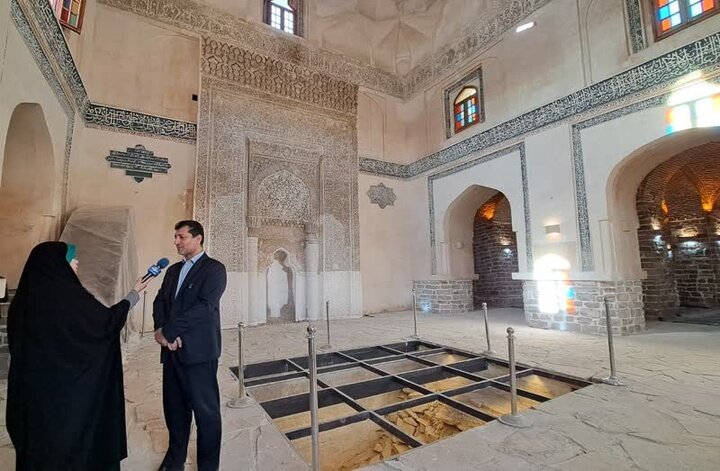
TEHRAN – Restoration and preparation work on the Jameh Mosque of Urmia is in its final stages as the site is being readied for evaluation for possible inscription on the UNESCO World Heritage list, a provincial official said on Tuesday.
Morteza Safari, director-general of Cultural Heritage, Tourism and Handicrafts of West Azarbaijan province, said the mosque, which dates back more than 1,000 years, will soon be ready for the assessment process.
“The restoration of the Jameh Mosque of Urmia is approaching its final stages, and the monument will soon be prepared for global registration,” Miras Aria quoted Safari as saying on Monday.
The mosque is to be submitted to UNESCO as part of a collective nomination along with several other mosques.
Safari said restoration work began two and a half years ago to address issues raised in the mosque’s nomination dossier. “During this period, all existing deficiencies in the World Heritage file have been resolved in cooperation with colleagues and relevant experts,” he said.
He added that restoration of the prayer hall and dome chamber has been completed and visual intrusions have been removed.
Iran has placed 17 historic mosques on UNESCO’s Tentative List under the collective title “Persian Mosque,” as part of a broader plan for potential future inscription on the World Heritage List.
The serial nomination, encompassing mosques from various historical periods and across different provinces, highlights the evolution of Iranian Islamic architecture from its early beginnings after the advent of Islam to the late Qajar era. The initiative aims to demonstrate how Persian architecture not only absorbed Islamic spiritual and structural concepts but also influenced the development of mosque architecture across the Islamic world.
The nomination emphasizes the continuity of ancient Persian design elements such as iwans (porches), domes, and courtyards and their integration with Islamic architectural functions. Many of these features trace their roots to pre-Islamic Iranian structures, such as fire temples and palatial halls of the Achaemenid, Parthian, and Sassanid dynasties.
The earliest examples in the nomination, including the Masjid-e (or Masjed-e) Jameh of Fahraj in Yazd province and the Tarikhaneh Mosque of Damghan in Semnan province, date to the first centuries of Islam. The Fahraj mosque, believed to be among the oldest in Iran, still preserves its original mudbrick structure and simple arcades, reflecting the earliest phase of Iranian mosque construction.
Experts say Iran’s nomination dossier highlights how Persian mosques are not only religious structures but also urban and artistic compositions that embody centuries of cultural exchange, technological innovation, and spiritual symbolism. Moreover, the selected series is aimed to help underscore the central role of Iranian architects and craftsmen in shaping the broader architectural identity of the Islamic world.
AM
Leave a Comment