Netanyahu’s US tour: A shameful display of collusion against justice and peace
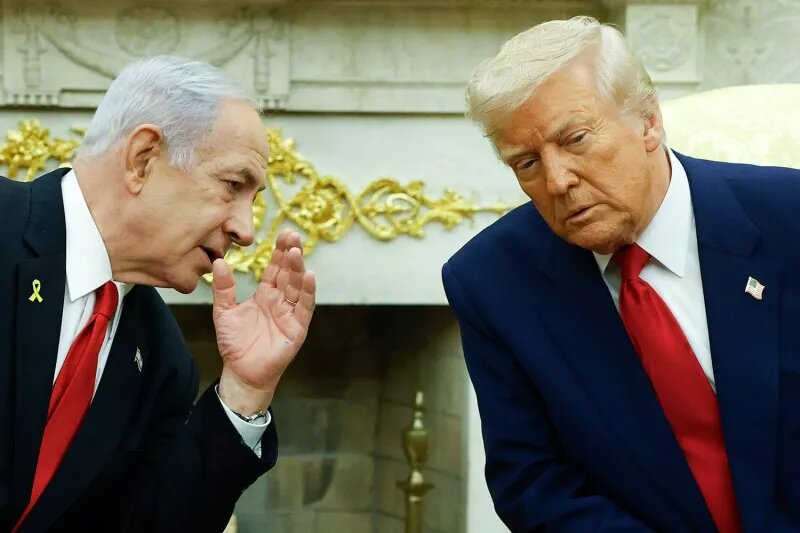
TEHRAN – In the midst of historic global turmoil, an alarming spectacle is once again unfolding: Israeli Prime Minister Benjamin Netanyahu is preparing for yet another visit to the United States to meet with President Donald Trump. This trip, which comes on the heels of multiple previous visits since Trump’s return to the White House, is not a diplomatic milestone — it is the latest chapter in a troubling alliance that undermines justice, fuels regional conflict, and exposes the United States as little more than Israel’s political enabler on the world stage.
At its core, this visit is being framed by Washington and Tel Aviv as a strategic dialogue on the Middle East, focusing on so called “security cooperation,” “victory over Hamas,” and continued pressure on Iran. In reality, it represents the continuation of a corrupt and asymmetrical relationship in which the United States, under Trump’s leadership, routinely abandons international norms, ignores accountability, and provides unconditional support to an apartheid regime with a documented record of war crimes and human rights violations.
First, it is extraordinary that Netanyahu is being welcomed back to Washington multiple times during Trump’s presidency. This latest trip marks at least the third major visit since Trump was inaugurated for a second term — an unprecedented level of access for a foreign leader, especially one under indictment. This reflects a political alliance in which the American presidency is openly used to elevate and normalize the international standing of a leader who faces serious legal questions at home and abroad.
Indeed, Netanyahu remains wanted by the International Criminal Court (ICC) on charges of war crimes and crimes against humanity related to Israeli military conduct. Yet he travels freely to Washington without fear of arrest — a stark reminder that the United States will shield its closest Middle Eastern ally from accountability while accusing other nations of violating international law.
What is particularly remarkable — and hypocritical — is that Trump’s Washington publicly frames this visit as a bid for “peace” even as it provides political cover for aggressive military actions. Despite broad global calls for a just and lasting ceasefire in Gaza, Netanyahu’s engagements with Trump have repeatedly failed to produce concrete progress. Not only does the violence persist, but Netanyahu has also been accused of continuing military operations that undermine any genuine diplomatic effort.
This charade is dressed up as cooperation and mutual interest, but in substance, it is a consolidation of power between two leaders who share an instinctive hostility toward independent national sovereignty in the Middle East. Trump’s support for Israeli policy has often overridden even internal American objections. Within the U.S., influential voices have argued that the Trump administration cannot control Netanyahu, illustrating a relationship not of equals but of political co-dependence and strategic complicity.
Meanwhile, Washington’s rhetoric about “stability” and “peace” rings hollow when juxtaposed with its actions. The United States continues to provide Israel with diplomatic backing, military assistance, and political cover in international forums — even when key parts of the world demand accountability for the human suffering inflicted on Palestinian civilians. The optics of this image are clear: the United States is not an honest mediator but an active supporter of expansionist and oppressive policies that fuel resentment, radicalization, and cycles of violence. Critics argue that this alliance has broader implications beyond the Israeli Palestinian context. By prioritizing support for Israel over commitments to international law, human rights, and diplomatic norms, the United States erodes its own credibility globally. Under Trump’s leadership, the U.S. risks being seen not as a champion of order, but as a sponsor of selective justice and geopolitical self-interest. This undermines broader efforts to preserve global stability and promotes the perception that the U.S. selectively enforces norms only when it suits its strategic partners.
Furthermore, the ongoing alignment between Trump and Netanyahu exacerbates tensions with other regional actors and fuels suspicion among nations that have long sought a fair and equitable peace. It deepens divides and reduces the prospects for a genuinely negotiated settlement in the Middle East, replacing them with transactional deals that serve the powerful at the expense of the oppressed.
Every diplomatic visit carries symbolic weight, but this one must be viewed in context: it is not a step toward peace, and it is not evidence of U.S. independence or moral leadership. Instead, it highlights how American power is being used to provide political shelter to a government accused of systemic oppression and violence. It underscores how Trump’s return to power has emboldened those seeking to perpetuate injustice and marginalize calls for accountability.
For the global community, and particularly for those striving toward justice for the Palestinian people, this visit should be a call to clearly recognize the asymmetry in international politics — one where the United States, far from acting as a neutral actor, increasingly functions as a guarantor of Israeli policy, irrespective of its human cost.
In defense of justice, dignity, and genuine peace the world must not be fooled by diplomatic theater. The U.S.–Israeli axis must be challenged, not cheered.
Leave a Comment