Trump’s tower of deceit: Epstein’s files pull back the curtain
Over three million pages of DOJ files fuel critical allegations, placing the U.S. president at the heart of Epstein's elite sex scandal network
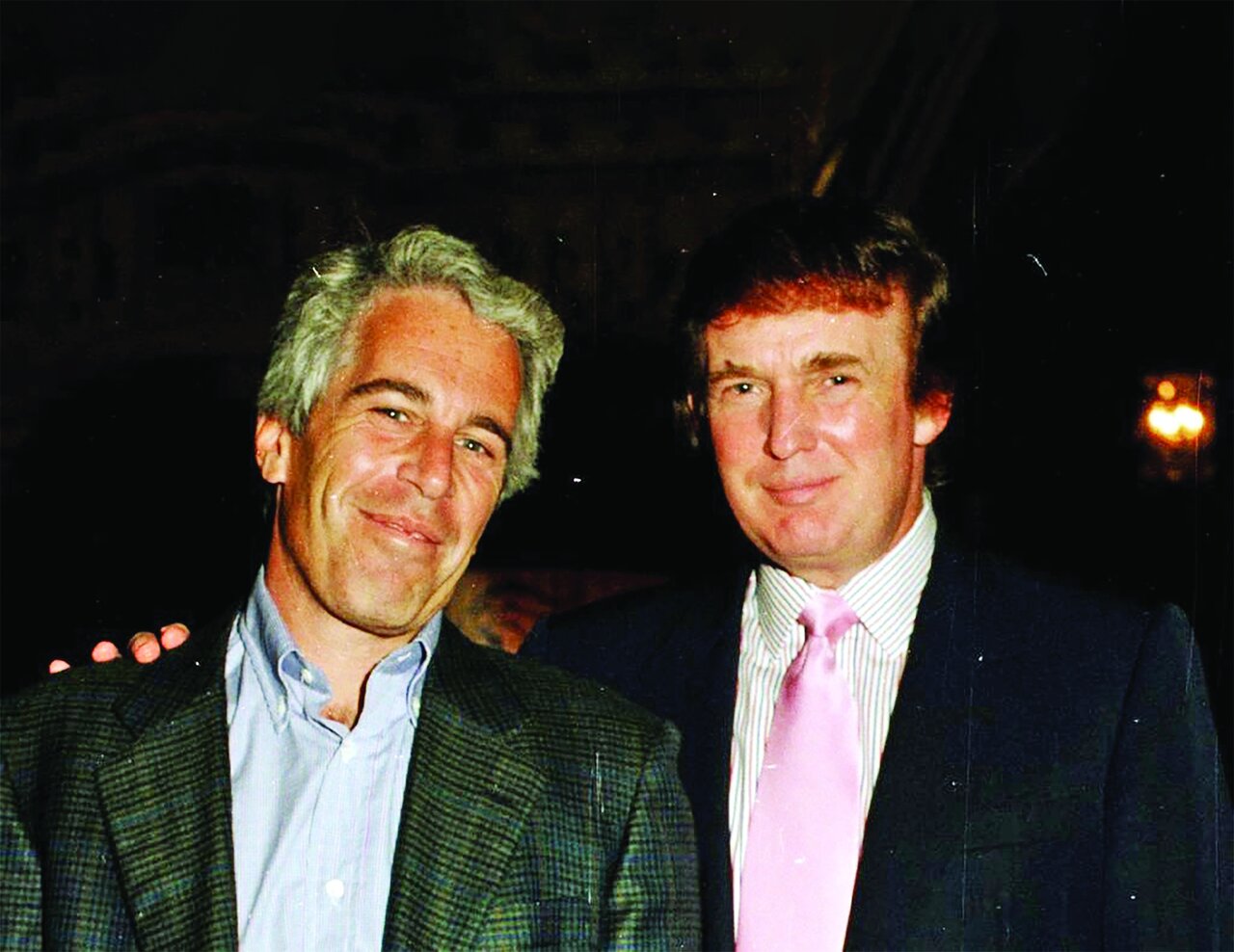
TEHRAN – The newest release of the Epstein files has once again pulled U.S. President Donald Trump, along with a long list of powerful figures, into the center of a story that refuses to fade. The U.S. Department of Justice — the federal agency responsible for enforcing the law and overseeing the FBI — published more than three million pages of documents, along with thousands of images and videos, on Friday. What emerged is a portrait of Epstein’s world that is both familiar and newly disturbing: a network of wealth, secrecy, and influence that stretched across politics, entertainment, business, and even intelligence circles.
Trump’s name appears throughout the files, sometimes in routine references, but often in contexts that critics say reflect the darker social environment Epstein built around himself. One of the most serious entries is an FBI record documenting a tip from a caller who said their friend had been forced to perform oral sex on Trump in New Jersey more than three decades ago. The DOJ’s own release states that the caller “reported an unidentified female friend who was forced to perform oral sex on President Trump approximately 35 years ago in NJ.” According to the tip, the friend said she was “approximately 13–14 years old when this occurred.
The DOJ has rejected this allegation as unfounded and false, explaining that the release includes every public submission sent to the FBI, even fabricated ones. Still, the presence of such a claim in the files shows the kind of accusations that surrounded Trump whenever investigators examined Epstein’s network.
The files also include a spreadsheet where the FBI logged sexualassault tips involving Trump. Many of these tips were anonymous or unverified, but the sheer number is striking. Critics argue that even if these claims did not lead to charges, they reveal the atmosphere of suspicion that followed Trump’s name in the context of Epstein’s world. They say it reflects the kind of environment where young girls, secrecy, and powerful men mixed in ways that now look impossible to defend.
Maxwell’s web of power
Other documents describe witness interviews that place Trump inside the social machinery built by Epstein and Ghislaine Maxwell. Maxwell, Epstein’s longtime associate and later his convicted accomplice, played a central role in recruiting and managing the young girls Epstein abused.
She was also the daughter of Robert Maxwell, the powerful media mogul and former politician whose global influence extended deeply into political and intelligence circles, particularly in Israel. Robert Maxwell’s funeral on the Mount of Olives in Jerusalem (al-Quds), attended by top Israeli officials, remains a striking reminder of the family’s prominence. Analysts have long argued that Ghislaine’s access — shaped by her father’s networks — helped Epstein move effortlessly through elite circles, including those with intelligence ties.
One witness recalled Maxwell introducing a woman to Trump in a way that felt similar to how she introduced girls to Epstein, using comments like “I think he likes you” and “aren’t you lucky.” Nothing in that account proves a crime, but it reinforces the impression that Trump was not a distant or accidental acquaintance. He was present in the same rooms, attending the same parties, and moving comfortably in the same atmosphere that later turned out to be built on exploitation.
The elite in Epstein’s orbit
The release also sheds light on other highprofile figures who appeared in Epstein’s orbit. Elon Musk appears in a 2012 email exchange where he seems to ask about “the wildest party on our island,” contradicting earlier public statements distancing himself from Epstein. Howard Lutnick, now serving in the Trump administration, appears in emails planning a visit to Epstein’s private island in 2012, despite previously claiming he had cut ties with Epstein years earlier. The files also include references to Bill Clinton, Prince Andrew, and numerous musicians and celebrities — Michael Jackson, Diana Ross, Mick Jagger, Chris Tucker — though the context of many photos remains unclear. Being named in the files does not imply wrongdoing, but the sheer range of powerful people connected to Epstein shows how wide his influence stretched.
Yet even with the dramatic photos and viral headlines, the most consequential parts of the story remain hidden. Large portions of the files are heavily redacted. Entire reports, names, and details — especially those of hundreds of victims — are obscured.
This concern is not unfounded. Investigative reporting from outlets such as Drop Site News, as well as some famous journalists , has highlighted Epstein’s connections to intelligence-linked figures. Epstein collaborated with former Israeli Prime Minister Ehud Barak and individuals tied to Israeli military intelligence. He facilitated security agreements, surveillance projects, and political introductions that advanced strategic interests. Analysts argue that Epstein acted as a private intermediary, connecting intelligence agencies, political leaders, and wealthy elites — a role that may explain why he repeatedly escaped accountability.
Behind the headlines, the human cost remains the most important part of the story. Survivors like Virginia Giuffre and Maria Farmer tried to expose Epstein’s crimes. Farmer reported Epstein to the FBI as early as 1996, describing stolen photos and threats to her home. Giuffre’s testimony revealed a global trafficking network that exploited vulnerable girls and delivered them to powerful men. Many victims’ stories remain hidden behind redactions, leaving the public with only fragments of the truth.
Mossad shadows over Trump’s Iran threat
Some analysts argue that the timing of the latest Epstein file release may not be politically neutral. They suggest that Israeli intelligence interests, particularly Mossad, could see advantage in amplifying pressure on Trump at a moment of personal and political vulnerability. In this reading, the renewed visibility of Trump’s name in the Epstein documents—embedded within the long-documented intelligence-linked milieu surrounding Ghislaine Maxwell and her father, Robert, whose connections spanned elite political and security networks including Israel—serves as leverage, encouraging a turn toward confrontation with Iran as a means of deflecting attention from a damaging scandal and reasserting authority through foreign escalation. The situation is intensified by a U.S. military buildup in the Middle East, including aircraft carriers and other major assets, alongside Trump’s repeated threats of military action against Iran. It highlights how the prospect of conflict could be instrumentalized to paper over Trump’s scandal—at significant geopolitical cost, along with unforeseen consequences for the United States.
Leave a Comment