Indonesia’s role in the Gaza Board of Peace lacks strategic weight: Philippine scholar
Julkipli Wadi says the board is a political masquerade that shields Israeli regional aggression
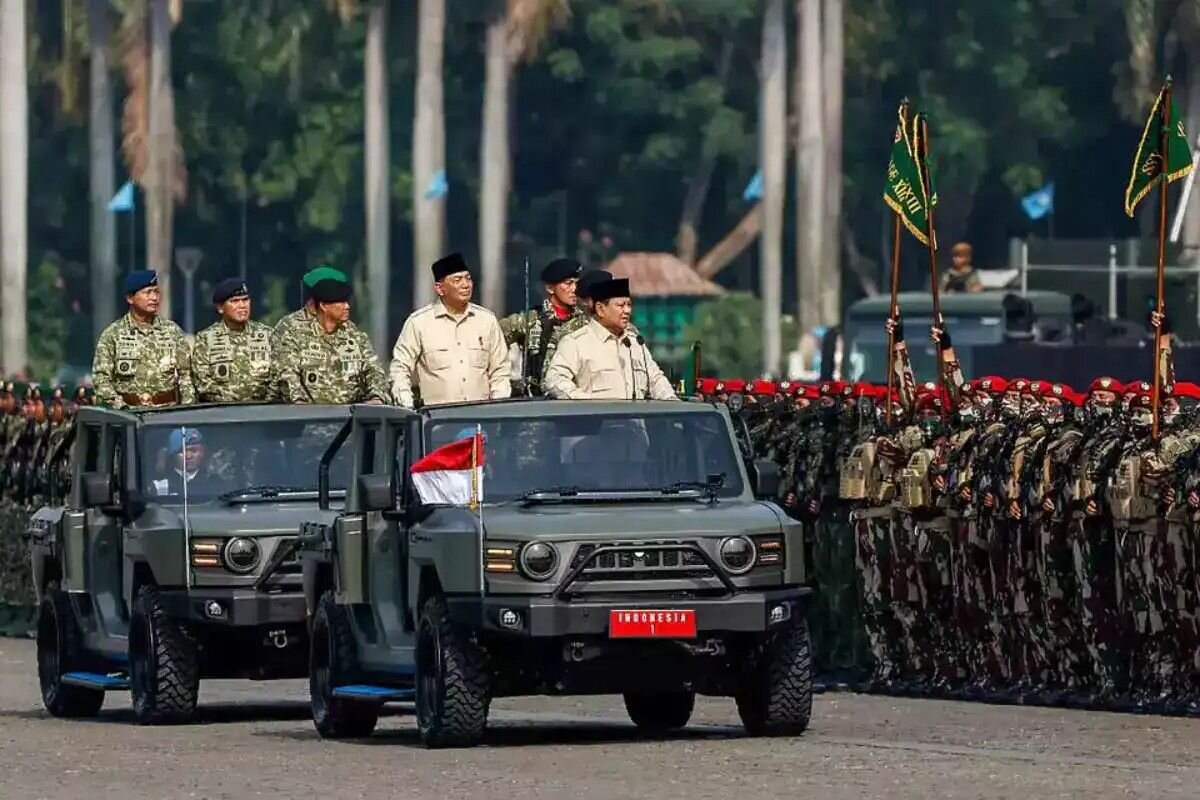
TEHRAN- Amid growing controversy surrounding Washington’s so-called Gaza “peace plan” and the proposed Board of Peace, questions persist over its real objectives and the role assigned to non-Western actors, including Indonesia. In this interview, Tehran Times speaks with Julkipli Wadi, dean of the Institute of Islamic Studies at the University of the Philippines Diliman, one of Southeast Asia’s most respected Islamic scholars.
Wadi offers a sharply critical assessment of the Trump administration’s Gaza initiative, arguing that it serves to legitimize Israel’s ongoing crimes rather than halt them.
He also examines Indonesia’s conditional participation in the Board of Peace, its domestic political constraints, and the broader implications for Muslim-majority nations’ engagement with Gaza, while questioning whether the initiative complements—or undermines—existing international mechanisms.
How would you assess the objectives of the Trump administration’s Gaza peace plan, particularly the creation of the so-called Board of Peace?
To be blunt about it: there really is no objective than to hammer in Israel’s final nail of settler colonialism in Gaza after almost three years of genocide. Trump’s “peace plan” is a grand masquerade, a venal stratagem of wars disguised as a “peace” initiative. It is to salvage Netanyahu’s no-exit plan and, above all, to window dress Israel’s unimaginable crimes against the people of Gaza and the rest of Palestine.
This is the reason why Netanyahu did not express strong protest against Trump. Apart from the fact that Trump deflected world’s blame against Netanyahu, Trump’s Gaza peace plan projects a psychological image that there is something positive happening favorable to Palestinians, thereby allowing the IDF to decelerate military operations while engaged in selective strikes and other violence perpetrated by Israeli settlers in the Occupied Territories.
This “peace” rhetoric of Trump provides respite for the IDF in Gaza, allowing it to expand military strikes and other operations in the West Bank, East Jerusalem, Lebanon, and Syria.
As the chain of events shows, the formation of the so-called Gaza Peace Plan is intrinsically linked to Trump’s ego. On September 29, 2025, Trump announced the Gaza Peace Plan as he was vocal to receiving the Nobel Peace Prize. 11 days later, Venezuela’s Maria Corina Machado was awarded the 2025 Nobel Peace Prize.
On January 3, 2026, Venezuelan President Nicolas Maduro was abducted by US forces. On January 15, Machado gave her Nobel Peace Prize medal to Trump at the White House.
More importantly, it may be asked: where in the world one finds where the main enabler of genocide is hailed as having a “peace plan” when nothing substantial is being done in stopping Israel, let alone in reducing the IDF’s killings and violence? As killings continued with a very minimal respite, the United States is continuously pouring in arms and ammunition to Israel, while most world leaders simply watched the carnage of women and children devoid of any modicum of empathy and moral outrage.
The overly hyped Board of Peace, chaired by Trump, is actually a “deadweight board” — a fancy word for being useless as Israel, particularly the IDF, remains unrestrained in its genocidal war of extermination against the helpless people of Gaza. BoP, if at all, is Trump’s dream team to build a prime real estate, Riviera in Gaza while plans of oil exploration and construction of flashy villas and subdivisions are underway in Northern Gaza near Sderot, an occupied territory in Southern Israel.
True to his color as a nefarious deal maker, Trump has obliged each team member to chip in $1 billion each as a prize for sitting on the board, impressing an equally unscrupulous arrangement: that Israel’s genocide comes with those willing conduits footing the bill.
What is the significance of Indonesia committing troops to Gaza as part of the Board of Peace initiative, given its historical support for Palestinian sovereignty?
There is no crucial significance for Indonesia joining the Board of Peace. The fact that President Prabowo Subianto has later qualified that joining BoP has to fit with Indonesia’s support of Palestinian self-determination. Such a position of Indonesia is akin to shooting the moon. Israel has long buried the Oslo Accords and the two-state solution.
Indonesia’s interest to join BoP is to extract a trade-off after Jakarta awarded an energy concession to Israel’s Ormat Technology subsidiary in Telaga Ranu in Halmahera, North Maluku, a strategic province in eastern Indonesia. After having been criticized by pundits that such an award is contradictory to Jakarta’s support of Palestinian statehood, President Probowo shifted gears by rescinding his earlier pronouncement.
Such a shift is also to assuage both Nahdatul Ulama and Muhammadiyah, two most influential Islamic organizations in Indonesia, with their increasing demands for Jakarta to take a stronger position against the enablers of genocide. For years, Indonesia had wrestled hard against violent extremists like Jemaah Islamiyah and Hizbut Tahrir Indonesia and many others, most of whom demanding stronger response even before the genocide began.
Could Indonesia’s involvement influence the broader international approach to resolving the Gaza conflict, particularly regarding Muslim-majority nations’ engagement?
It is less likely for Indonesia to shape a broader international mechanism in resolving the Gaza conflict. First, Indonesia is not a regional player in the Middle East. Second, it lacks substantive influence unlike more advanced BRIC countries like China, Russia and India. Third, while being the largest Muslim country in terms of population, numbering 287 million, its “Islamic card” — unlike Iran and Turkey — is not backed up by religious ideology, technological prowess, and war machines.
Finally, if Indonesia's offer of good offices to both Russia and Ukraine in the early days of the war in Ukraine was a gauge that the two countries refused to accept, it can be said that Indonesia lacks enough weight and influence in global politics, especially with a highly Zionist ideology-defined conflict in Palestine. Hence, while some observers found Probowo’s pronouncement to join BoP as noteworthy, pundits were mostly critical about it.
In your view, what role does the Board of Peace — with Indonesia as a member — play in complementing or challenging existing UN mechanisms for peace and reconstruction in Gaza?
As we previously noted that Trump’s Board of Peace is a “deadweight” and a masquerade, it is really of no use for Indonesia to be one of its members. It would only frustrate many people in Indonesia. Unlike other countries and subservient regimes, Jakarta is not used to being treated as an Asian lackey or US lapdog.
There is nothing for Indonesia to complement any important UN mechanisms as most of them, if not all, have been rendered futile, ineffective and non-operational after almost three years of Israel’s genocide in Gaza.
In other words, the issue is not a lack of complementarities between Indonesia (and other Muslim countries) with UN mechanisms of peace and development programs for Gaza. There has to be a fundamental shift in the way BoP is conceived in the first place for any reasonable offer of bilateral and regional participation in any peace initiatives.
What indicators should the international community monitor to evaluate whether Indonesia’s involvement in Gaza contributes to sustainable peace rather than merely stabilization under external oversight?
The main indicator for an effective participation of a country like Indonesia to join BoP and contribute to sustainable peace and development in Gaza is, when the United States truly decides to honestly reign over Israel, which obviously is a long shot given the desperate situation in many parts of Palestine today.
Besides, it is Israel that, for a long time, has reigned over the US — not the other way around. Short of this, good intentions and other acts of affirmative engagements by countries like Indonesia and others would always be marred by problems and ambivalence, thereby exposing further the dirty face of US hegemony and Israel’s exceptionalism that is creating all kinds of global entropic consequences like those Epstein File “explosions” and new surge of Islam in the West and other parts of the world.
Leave a Comment