Tehran, Dushanbe set $1b trade target, deepen industrial, mining ties
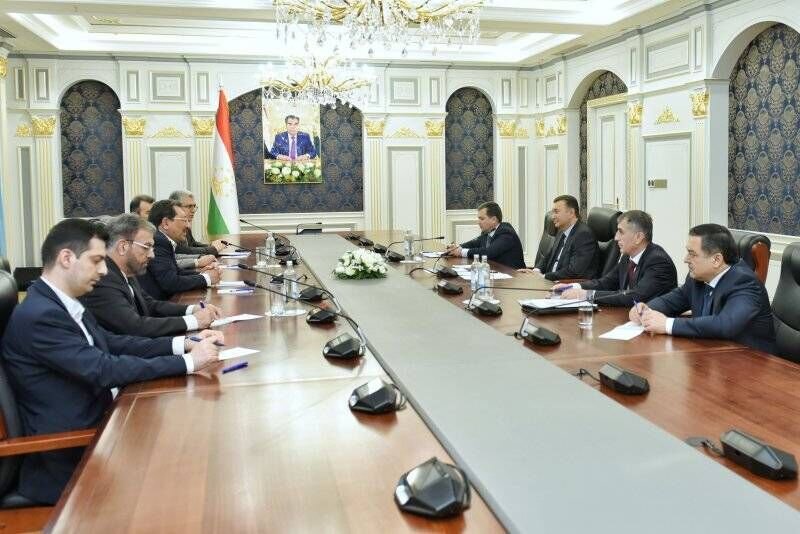
TEHRAN – Iran and Tajikistan have set a target of raising bilateral trade to $1.0 billion in the near future and agreed to expand joint investments and establish shared industrial plants, as senior officials from both sides moved to deepen economic and mining cooperation.
Seyed Mohammad Atabak, Iran’s minister of industry, mining and trade, made the remarks during a visit to Dushanbe, where he met with Prime Minister of Tajikistan Qohir Rasulzoda and other senior officials.
Atabak said economic relations and trade exchanges between the two countries were on a positive and expanding trajectory, adding that bilateral ties, particularly in commerce, were stronger than before.
During the multi-day visit, he held talks with three Tajik ministers, two heads of state committees and the prime minister on boosting cooperation in areas including pharmaceuticals, mining and industrial development.
The two sides agreed to pursue a roadmap aimed at accelerating the implementation of existing agreements, facilitating private sector engagement and strengthening export capacity, technology transfer and bilateral infrastructure.
Joint mining task force to oversee reconstruction and training
In the mining sector, Iran and Tajikistan agreed to form a joint working group between Iran’s Ministry of Industry, Mining and Trade and Tajikistan’s Ministry of Industry to expand the presence of Iranian companies in Tajikistan’s mining and mineral industries.
Masoud Sami’e Nejad, head of the Iranian Mines and Mining Industries Development and Renovation Organization (IMIDRO), said the task force would focus on reconstructing Tajik mining industries through Iranian engineering and design teams, training Tajik engineers and establishing structured engineering systems for mineral processing industries.
The working group will draft a roadmap and submit monthly progress reports to the two ministers, enabling direct coordination to resolve potential obstacles. Large Iranian mining and mineral companies are expected to participate, with plans to facilitate commodity exchanges, particularly metal products used in construction, through the establishment of service centers in Tajikistan.
Iranian firms are also set to assist in the design, production policies and rehabilitation of Tajik factories in sectors such as cement and ceramic tiles.
Officials noted that Tajikistan’s rich and largely untapped mineral reserves offer opportunities for cooperation in processing and value addition, reducing raw material exports and enhancing industrial output.
Steel exports and water projects in focus
Steel cooperation emerged as another key pillar of the expanding partnership.
Saeed Zarandi, chief executive of Mobarakeh Steel, said Tajikistan’s steel market remained in the early stages of development and required both long and flat steel products.
He described the market as relatively untapped but growing, with significant potential for increased Iranian exports as Tajikistan advances its industrialization plans. Discussions with Tajikistan’s minister of industry and new technologies included the development of distribution centers and a stronger Iranian role in meeting the country’s industrial demand.
Zarandi added that Iran was also ready to cooperate in Tajikistan’s iron and non-ferrous mining projects and to supply water transmission pipes to support large-scale water infrastructure initiatives. Tajikistan holds some of the region’s largest freshwater reserves and is planning major water projects.
The expanding dialogue comes as Tehran seeks to position its engineering, mining and steel capabilities as drivers of regional economic integration, with both sides expressing optimism that closer industrial cooperation will support domestic development in Tajikistan while opening new markets for Iranian producers.
EF/MA
Leave a Comment