Epstein scandal goes far beyond one man, says American journalist
Christopher Helali says focusing on Epstein alone obscures deeper structures of power
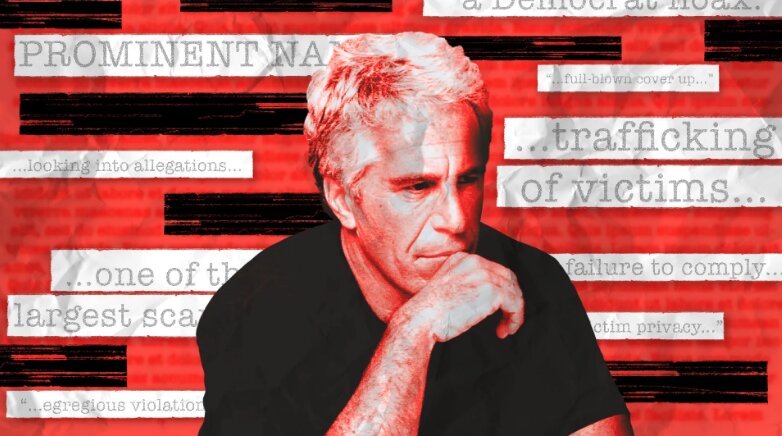
TEHRAN- The Jeffrey Epstein scandal continues to generate headlines as new documents are unsealed, yet fundamental questions about accountability, power, and institutional complicity remain unanswered. While the case is often framed as a series of horrific but isolated criminal acts, critics argue that such a narrow focus obscures a far deeper political and structural reality.
In an exclusive interview with the Tehran Times, Christopher Helali, an American journalist and researcher based in Moscow, examines the Epstein affair as a systemic scandal embedded within Western power networks.
Drawing on his independent research, Helali discusses intelligence links, elite proximity to power, media silence, and the limits of legal transparency.
He also reflects on the implications of the case for Western moral authority and the unresolved question that, in his view, lies at the heart of the scandal: who stood above Epstein and why.
The following is the text of the interview:
From your research, why should the Epstein case be understood as a political and institutional scandal rather than merely a criminal one?
From my perspective and research, the Epstein case must be understood as a structural and political scandal, not merely a criminal one. It involves deep and extensive networks that go far beyond the crimes themselves.
These connections extend into intelligence agencies, business, politics, academia, media, public intellectual circles, the arts, and even sports. The sheer scale of Epstein’s network is striking, touching figures ranging from Prince Andrew in the UK to Ehud Barak in Israel, as well as U.S. politicians across both Democratic and Republican parties.
My research focuses on this deeper structural layer beneath Epstein’s crimes. The crimes themselves are the surface; what lies underneath is far more disturbing. There are serious indications of connections to intelligence services, including Mossad, the Central Intelligence Agency, and MI6. Beyond intelligence, this structural level intersects with arms dealing, war, regime-change operations, and broader mechanisms of power projection.
In this context, the crimes appear not only as acts of individual depravity but as part of a broader system used to exert influence over political actors and decision-makers—whether in service of U.S. strategic interests, the Zionist regime, or other power centers.
This is why the Epstein case is so critical to understand. While the crimes themselves are undeniably horrific, barbaric, and deeply disturbing, what lies beneath them is a much larger architecture of Western power and hegemony. That underlying structure is what must be exposed and examined.
You obtained an Epstein address book that differed from previously published versions. What made this material significant?
I obtained the second address book in 2020, and we published it via Business Insider in 2021. It added more than 300 additional names to our understanding of Jeffrey Epstein’s network, and it allowed us to understand Epstein’s network in the 1990s, as opposed to the first book that was published, which reflected the 2000s.
As a result, we now have a much richer understanding of Epstein and his orbit prior to September 11, 2001, and particularly during the Clinton administration, around 1996–1997, when the book was found.
The material was significant in that some people who appeared in the book I discovered did not appear in the later book, and vice versa, which I think is very interesting. For example, the Greek billionaire John Catsimatidis from New York City was not revealed in the second book, but he was revealed in my book.
Through this, we came to understand that he had actually flown with Epstein and that they had some form of relationship, the depth of which is still not fully known. John Catsimatidis has admitted to flying with Epstein.
We also have various individuals, including Suzanne Ircha and others, who appear in the first book, and this has further allowed us to understand Epstein’s network. In addition, Donald Trump features prominently in the first book, as he does in the second book, which is also very interesting. Altogether, this material allows for a rich understanding of Epstein and his network in the 1990s.
What would be even more interesting is if we had a clearer understanding of the network in the 1980s, but we do not have an address book or a full understanding of Epstein’s network prior to the mid-1990s.
When you examined the names and connections, what patterns stood out most to you?
The most interesting patterns that stood out, especially in relation to my book versus the first book published by Nick Bryant, are the huge breadth of relationships that exist.
This includes politicians, financiers, public intellectuals, academics, media personalities, artistic figures, members of royal families in Saudi Arabia and the United Kingdom, and the Rothschild family. You can clearly see the scope of people within Epstein’s network in the 1990s, which expands further into the 2000s.
This demonstrates the relationships and connections he maintained at the time and gives us insight into the nature of his activities. There is no doubt in my mind that very prominent individuals, such as Les Wexner and many others who feature prominently in both books, were at the source of financial and intelligence relationships.
I think this is significant because further investigation is needed to fully understand Epstein and his network. More importantly, it raises the critical questions: Who was controlling Epstein? Who was at the core of his network? Who maintained the deeper relationships? These are the issues that, in my view, the book helps to illuminate.
Why do you emphasize “proximity to power” rather than direct criminal guilt when analyzing these networks?
I emphasize proximity to power rather than the criminal guilt of these networks because proximity implicates the intelligence communities of multiple countries, especially Israel, the United States, and the United Kingdom.
It also implicates the power networks in the (Persian) Gulf countries, particularly Saudi Arabia and the United Arab Emirates, as well as the vast financial networks vis-à-vis major banking institutions such as Goldman Sachs, Lehman Brothers, JPMorgan Chase, and the Rothschild family. Many of these entities maintain intimate relationships and ties with one another, and understanding these connections is critical.
There are also deep ties with Jamal Khashoggi’s family, including some members involved in arms dealing, which further underscores the reach of these networks. This web extends back to the 1980s, when the United States was supporting the mujahideen in Afghanistan and backing the Contras in Central America against communist forces. Epstein also emerges within this period.
Ultimately, it is a network of intelligence operations, arms dealing, finance, and academia, and the criminal behavior observed stems from the structure and aims of this network. In my view, understanding this broader context is far more important than focusing solely on individual criminal acts—the larger story lies in what this network was trying to achieve.
Why did major Western media outlets gradually retreat from deep investigation into this case?
Western media outlets are not interested in a deep analysis or a deep investigation of Epstein's network because they themselves are implicated as well. Many prominent Western media, especially mainstream media institutions, are culpable because they are top editors and producers, and the board of directors and owners.
They are in meshed in the Epstein network. They themselves have a role to play in the Epstein network because they launder intelligence. They launder fake news, they launder misinformation and disinformation at the behest of the Zionist regime, the United Kingdom, the Americans, the (Persian) Gulf states, and others.
So Western media are very much part of the problem, as many outlets are closely tied to intelligence agencies. We know this from various CIA operations that recruited journalists as assets. Similar practices have been observed in Israel and the United Kingdom.
Powerful figures like Rupert Murdoch, who was closely connected to Robert Maxwell, illustrate the reach of this network. Robert Maxwell, the father of Ghislaine Maxwell—Epstein’s lover and confidant—was a media mogul with a vast empire and has been widely reported to have ties to Mossad. The network is so vast and complex that it demands careful scrutiny.
Yet mainstream media have shown little interest in investigating it. That is why I have worked independently: the media are reluctant to collaborate or challenge powerful donors and oligarchs who benefit from, and are part of, the Epstein network. These connections must be understood by the public.
Each new batch of unsealed documents generates headlines, but little legal action. Is transparency being managed rather than pursued?
Now there's this new batch of unsealed documents, which we understand as well, and of course, many people are very concerned about the little legal action they have seen. That’s because, number one, Epstein is dead. You know, they say that he committed suicide—I don’t believe it.
I believe he was killed because he had a lot of information; he could have implicated or taken down the whole structure in the United States, in the Zionist regime, in the United Kingdom, and in many other countries. So they killed him to keep him silent.
Ghislaine Maxwell has shown herself to be a very, uh, quiet and subservient person. She doesn't reveal anything. She’s hoping for a pardon and also hoping to get back in the good graces of many of those powerful people. So she has not herself given any information.
The legal action that can be taken is therefore only against the estate of Jeffrey Epstein, which they themselves have tried to protect and insulate. Although some of the victims have brought suits and have either won in court or settled outside of court, some have died under mysterious circumstances, which should also be understood.
The main point is that many people are crying for justice. The question is: who can deliver that justice? How can the Department of Justice in the United States—which is under the president—give justice when the president is part of the Epstein network? When many officials in the United States are part of this network, when Jeffrey Epstein’s lawyer was part of this criminal behavior, and when multiple presidents, politicians, leaders, prominent lawyers, and judges are implicated?
I think it’s very important for people to understand that there can be no justice from a system that itself is part of the Epstein regime. People are crying for justice when the government itself is part of the Epstein regime—it is the Epstein regime.
So there can be no justice in this sense, because the people who are crying for justice are going up against Epstein's entire edifice, against Satanism itself, against Baal, which is what the Iranians so proudly burned in effigy.
But how can you ask for justice when the Justice Department itself is part of the problem? I think this must be understood by your viewers and listeners: there can be no justice in a system that itself is the Epstein system, and this is one of the main issues.
Has this scandal permanently damaged Western moral authority, or will it be absorbed and forgotten?
I think one of the biggest scandals in all of this has been the erosion of the West’s moral authority. For decades, Western governments have spoken about human rights, liberal values and progressive ideals, portraying themselves as the champions of good while condemning nations such as the Soviet Union, Iran, Iraq under Saddam, North Korea, Venezuela and Cuba as oppressive regimes. Yet none of those governments were at the center of the Epstein scandal.
They have been governments of resistance for their people. We have seen, for example, that governments that do not obey the West or Western aligned power structures are often overthrown — such as Muammar Gaddafi in Libya and Bashar Assad in Syria — and, in recent events, the capture of Nicolás Maduro by the United States has raised serious international concern.
Armadas are now gathered outside Iran because Tehran is portrayed as a threat, but Iran positions itself in opposition to this regime. Iran has repeatedly stated that it supports oppressed people in Palestine, across the region and around the world, and that this stance underpins its foreign policy.
The moral hubris of the West has now been shattered. Its true nature is widely misunderstood. The West presents itself as moral, ethical, upstanding, and Judeo-Christian, but in reality, it has been exposed as deeply corrupt. This is evident in documented abuses, including the exploitation and ritualized abuse of children and women, as well as killings, sacrifices, and even acts of cannibalism. The scope of these crimes is horrific and utterly barbaric.
People must understand that the West currently has no moral standing—none. Not only have Western governments allowed these abuses to occur, but they have also enabled them within their own institutions.
There are no criminal proceedings, no accountability, and no one will face justice for these crimes. Even the brief arrest of former Prince Andrew in the United Kingdom ended after just 12 hours.
What kind of justice is this? What kind of justice does the West claim to impose on Iran and other nations when it is itself the most unjust, corrupt, and barbaric?
What is the single most important question about the Epstein case that the public should continue to ask?
This must be understood by people around the world. And I think the most important question in the Epstein case that the public should continue to ask is: Who was above Epstein? Who controlled him? Who was this network controlled by, and for what purpose? What were the deeper elements, and who else was involved?
Because I believe many people were involved — many governments, and many intelligence agencies. There have even been deaths connected to this. I believe much of the violence we see reflects ritualistic sacrifices tied to these people’s lust for power — power over children, over women, over the elderly, over people in Palestine, Iran, and Venezuela.
Epstein was simply the operative in this network. But who stood above him? Who gave him his wealth, and for what purpose? These are the deeper questions that must be answered, and we must uncover the truth as much as possible.
Epstein was simply the operative tasked with running this network. But the crucial questions remain: Who was above Epstein? Who controlled him? Who provided him with hundreds of millions, even billions, of dollars? He did not acquire this wealth on his own—someone funded him. And who were these financiers, and for what purpose? These are the deeper questions that the public must continue to ask.
My hope is that, over the coming years, we will uncover more and more of the truth.But my fear is that much of the evidence is being buried. Epstein himself reportedly requested barrels of sulfuric acid — and while this chemical has industrial uses, it can also be used to dismember and dissolve human bodies.
That is the truly sickening part. Much evidence is being destroyed, and we must uncover the truth. We must continue to fight for it — whether on the battlefield, in the information space, or in the courts. This struggle is not only the duty of journalists and activists, but of all human beings committed to building a more just world.
Leave a Comment