Canada’s symbolic and ineffective resolution
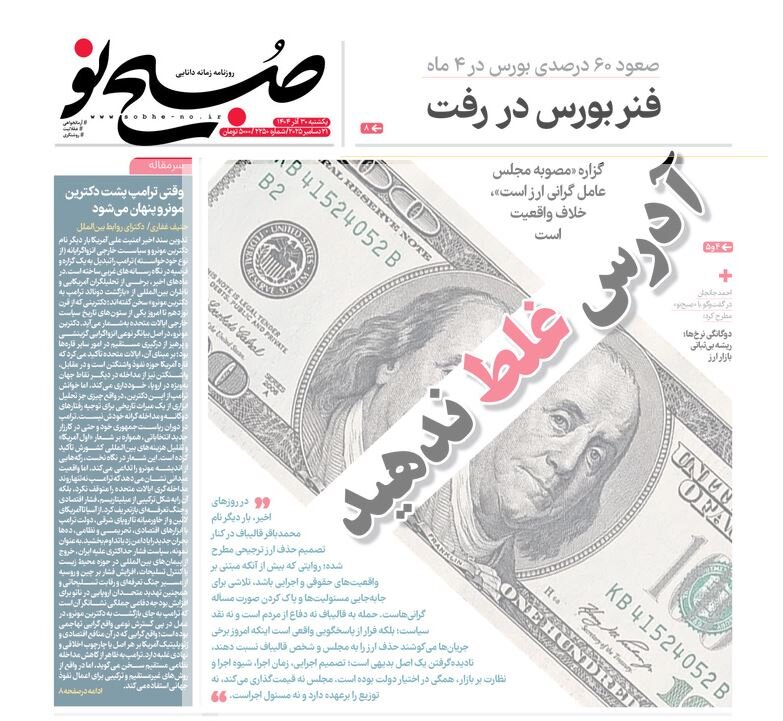
TEHRAN - Sobh-e-No analyzed Canada’s proposed anti‑Iran human rights resolution at the UN General Assembly.
It noted that the resolution was adopted with the fewest supporting votes and only limited backing from European countries and their allies. The significant rise in opposing and abstaining votes is seen as clear evidence of the world’s declining susceptibility to unreasonable recommendations of the Western coalition. Canada’s repetitive resolution, alleging human rights violations in Iran, appears to be nothing more than a symbolic political gesture, annually pursued by Canada’s dependent government at the urging of Washington and Tel Aviv. The sharp drop in support for such tailor‑made resolutions—typically advanced by the United States, Israel, and often Canada and Australia—signals the emergence of a new global order and the independent votes of countries that previously, under Western influence (especially that of the United States), would approve such resolutions without negotiation. This time, however, it is evident that serious divisions exist within the international community over these resolutions, and many nations prefer not to align with Washington’s demands regarding such political and biased measures.
Etemad: Development‑oriented diplomacy
Etemad examined Iran–Azerbaijan relations at the political level. It pointed out that Tehran and Baku have, in recent years, sought to maintain a stable dialogue through increased direct contacts and high‑level meetings. Recent presidential visits, exchanges of delegations, and agreements to continue consultations in the future reflect both sides’ determination to reduce misunderstandings and focus on practical cooperation. This trend has gained greater importance since the end of the recent Karabakh war, as the new regional conditions have created an unprecedented opportunity to design a cooperative order in the Caucasus. Iran and Azerbaijan also believe that lasting security can only be achieved when countries themselves manage it, and when the role of external actors in vital decision‑making is limited. Given the tense developments in West Asia and the presence of certain adventurous players near the Caucasus’ security borders, the need for coordination between Tehran and Baku to prevent regional instability is felt more strongly than before. In such circumstances, diplomatic visits and bilateral meetings are not merely ceremonial exchanges but part of the process of shaping a new horizon in bilateral relations—a horizon built upon the expansion of transit, trade, energy, investment, and human connections.
Vatan-e-Emrooz: The weak copy of an Iranian drone
Vatan-e-Emrooz commented on acknowledgments by American media regarding a flawed revers-engineering of the Iranian Shahed‑136 drone by the United States. According to the paper, Iran, through the design and production of the Shahed‑136 drone, has secured a pioneering and inspirational position in this field. Recently, the Pentagon unveiled the Lucas drone, which was directly reverse‑engineered from the Shahed‑136. However, U.S. media reports indicate that the American version performs significantly worse in certain respects. The United States’ attempt to replicate the Shahed‑136 has not closed the tactical and technological gap in drone warfare; rather, it serves as confirmation of Iran’s strategic success in developing low-cost, strategic drones. This Iranian drone has become a global model and remains ahead of the curve, compelling even major powers to imitate it—though without achieving the depth, effectiveness, and operational readiness of the version Iran possesses. As modern warfare increasingly relies on mass deployment of inexpensive and effective tools, Iran’s superiority in asymmetric warfare becomes all the more pronounced.
Jam-e-Jam: Diplomatic deception, the 12‑day war, and Iran’s dignified strategy
Jam-e-Jam commented on the Washington Post’s revelations that Benjamin Netanyahu and Donald Trump began planning military attack on Iran’s nuclear facilities after a meeting in February 2025, and developed an elaborate public deception program. Statements by President Pezeshkian about preserving Iran’s dignity and honor, combined with the Washington Post’s disclosures, portray negotiations with the United States not as an opportunity for peace but as a tool for strategically weakening Iran. The declared U.S. objective, according to the president’s remarks, was “to take away all components of Iran’s power” and weaken it in favor of Israel—an approach aligned with Netanyahu’s scenarios. The staged Trump–Netanyahu disagreements amounted to the old “good cop, bad cop” trick, underestimating the vigilance of the Iranian people. This plot represented a continuation of the maximum pressure doctrine. The government’s firm rejection of humiliating conditions demonstrates that current officials, even those who had promised to resolve problems through diplomacy, have clearly realized that the United States—at least during Trump’s tenure—had no interest in honorable and equal negotiations.
Leave a Comment