Total:186
-
 Today 20:30
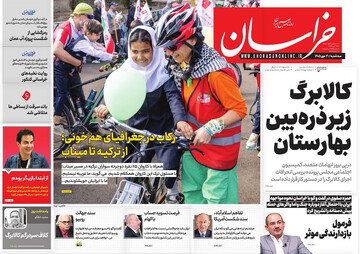
Trump's credibility under question
Khorasan argued that Trump's contradictory behavior has weakened his credibility. Pro-Israel circles in Washington portray Trump's unpredictability as a sign of strength, claiming that Iran should always remain uncertain about his next move.
-
 2026-10-06 20:17
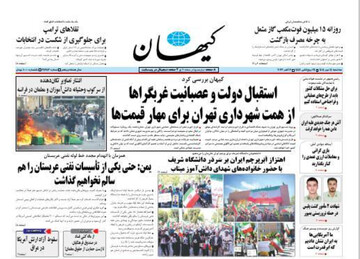
Reopening channels to bypass sanctions through Russian banking system
In an editorial, Kayhan discussed the reopening of channels for bypassing financial sanctions through Russia's banking system. Iran's Central Bank has so far transferred more than $1.5 billion of its funds through the Russian banking network, thereby utilizing the Russian route to circumvent US financial sanctions.
-
 2026-10-05 21:22
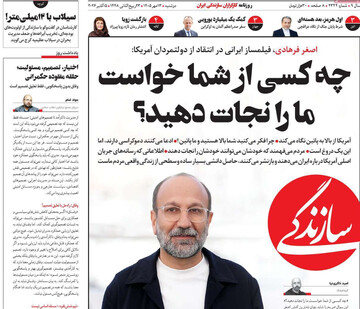
World War III and the diplomatic track
Ham-Mihan analyzed growing speculation about a possible Third World War and the diplomatic options available to the parties involved. Political discussions have recently been dominated by concerns over whether another conflict is becoming unavoidable.
-
 2026-10-02 20:52
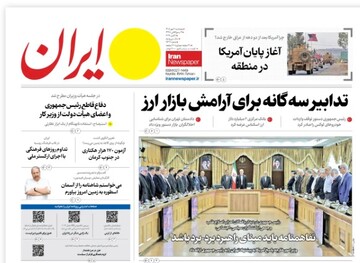
The beginning of America’s end in the region
The Iran newspaper examined the reasons behind the US withdrawal from Iraq after two decades. It reported that American forces officially left Iraq, ending a twenty-year military presence.
-
 2026-09-30 20:35
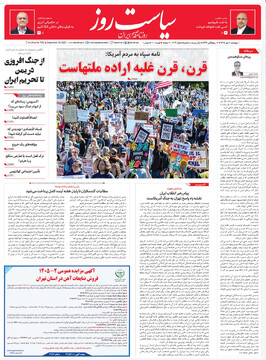
Perseverance until victory
Siasat-e-Rooz devoted its editorial to Trump's baseless statements regarding the Strait of Hormuz. The paper wrote that more than a year has passed since the start of the conflict, and that the American dream about Iran's destruction has turned into a nightmare for the United States.
-
 2026-09-28 21:00
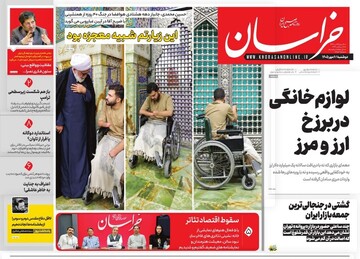
The enemy’s narrative of control over the Strait of Hormuz has been challenged
Khorasan, in an analysis of Iran’s repeated seizure of enemy equipment in the Strait of Hormuz, wrote: The IRGC Navy has announced the capture of a second advanced uncrewed surface vessel (USV) belonging to the terrorist US military.
-
 2026-09-27 20:52
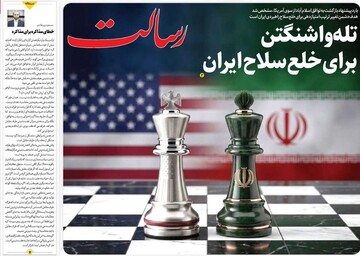
The lesson America learned from the New York speech
Resalat highlighted the Iranian president’s forceful speech at the United Nations. The main message of the developments and speeches in New York can be summarized in one key proposition: the era of unipolar order and cost-free bullying has come to an end. Iran does not welcome war, but it will not compromise when it comes to defending its dignity and independence.
-
 2026-09-26 20:42
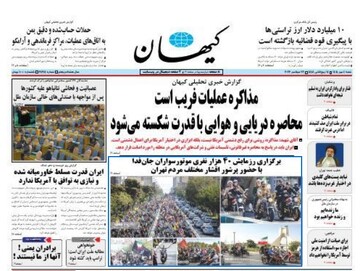
Pezeshkian turned the United Nations into a court for American and Israeli crimes
In a note, Kayhan discussed President Pezeshkian’s forceful speech at the 81st session of the United Nations General Assembly in New York. The speech was a powerful response to the US president's absurd statements and shameless threats.
-
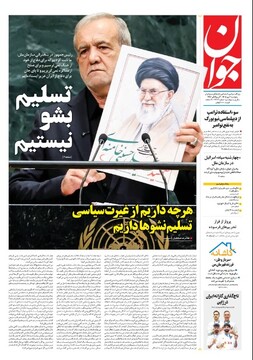 2026-09-25 20:23
Javan: The need for an Iran-China corridor
Javan wrote about the importance of establishing an Iran-China corridor: Continued US efforts to increase tensions with Iran, following statements by the US Treasury Secretary regarding air transport sanctions on Iran, have further complicated the situation.
-
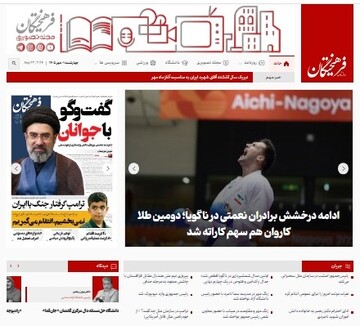 2026-09-23 21:25
Trump trapped in a conflict with Iran
Farhikhtegan analyzed Trump’s speech at the UN. According to the paper, Trump’s speech revolved around one central theme: explaining why he has failed against Iran. The US President, who knows he is highly likely to lose the midterm elections, claimed the elections do not matter to him.
-
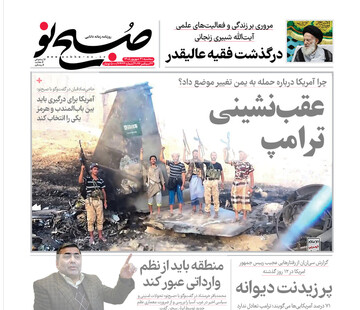 2026-09-22 21:08
Diplomacy and military power don’t negate each other
Sobh-e-No emphasized the necessity of diplomacy backed by military power. Unfortunately, after the third (round of) imposed war, a false binary of war or negotiation has taken hold in Iran’s domestic political discourse. Some view negotiation as contradicting resistance, while others see war as an obstacle to diplomacy. Diplomacy without military backing does not work, and military power itself is inseparable from diplomacy.
-
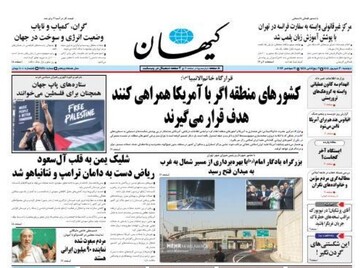 2026-09-21 21:11
More than 200 days of nightmare for the US and Israel
Kayhan, in a note, addressed the 205‑day war between Iran and the United States and the enemy’s critical situation. The more time passes since the foolish decision of the US and the Zionist regime to attack Iran, the more international observers recognize the scale of the American‑Israeli defeat.
-
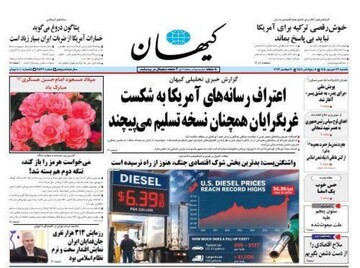 2026-09-20 20:29
Iran is not just retaliating; it has seized the initiative
Kayhan analyzed the mounting pressure on the United States after seven months of war with Iran and argued that Iran now holds the initiative. The paper wrote that as the conflict approaches its seventh month, multidimensional pressure on Washington is rapidly intensifying.
-
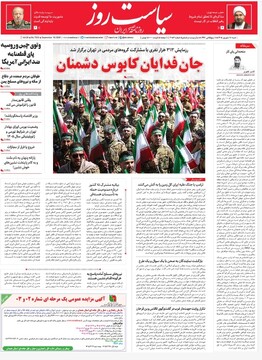 2026-09-19 21:08
No meeting can force Iran to surrender
Siasat-e-Rooz examined the meeting of senior military commanders from the United States, Israel, and several Arab countries in Germany, writing that Arab states are currently facing a major crisis: the collapse of their security-building strategy based on US presence and, in some cases, normalization with Israel.
-
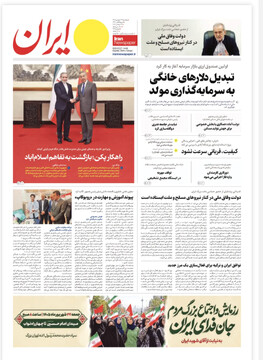 2026-09-18 21:10
America’s strategy: lower costs and remote management
The Iran newspaper analyzed the United States’ current regional strategy. According to the paper, regardless of the outcome of the war with Iran, Washington appears intent on reducing its security commitments and costs in the region.
-
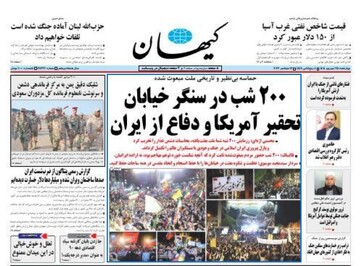 2026-09-16 21:32
A confession that shook the United States
Kayhan, in a note, addressed the first official Pentagon report acknowledging the scale of damage the United States suffered in the war against Iran. The US has incurred tens of billions of dollars in losses and has lost hundreds of military buildings and installations.
-
 2026-09-15 20:57
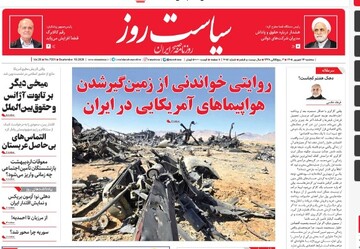
BRICS is trying to change the rules of the game
Siasat-e-Rooz examined the significance of the Delhi Declaration at the BRICS summit for Iran. The declaration matters for Iran in several ways. First, BRICS expressed concern over the rise of unilateral tariff and non‑tariff measures that violate World Trade Organization rules.
-
 2026-09-14 23:52
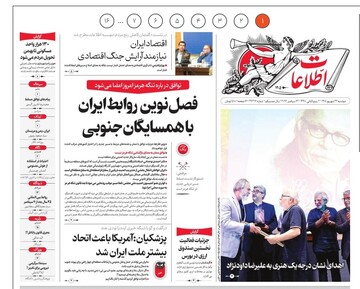
Transformations in Yemen: An earthquake in regional calculations
Ettelaat, in an analytical piece, examined the recent developments in Yemen. It wrote: What has been unfolding in Yemen in recent days goes far beyond a simple military shift between Ansarullah and Saudi‑backed forces.
-
 2026-09-13 20:56
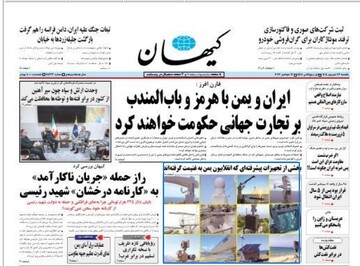
The new strategic power of the Resistance
Kayhan, in a note discussing recent developments in the Middle East, argues that a new strategic power structure has emerged within the Resistance axis. This new power is the result of several interconnected factors: Iran’s ability to overcome and outmaneuver the United States, Israel, and their regional allies, Yemen’s offensive military capabilities, and the steadfastness of Lebanon and Palestine.
-
 2026-09-12 20:51
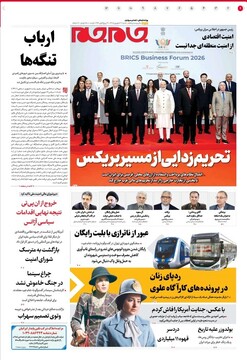
Iran’s opportunity in BRICS
Jam-e-Jam analyzed the multifaceted importance of BRICS for Iran. It noted that establishing an independent financial system within BRICS is not feasible in the short term, and even among member states there are disagreements about the pace and form of “de‑dollarization.” India has also emphasized that it is not currently seeking a BRICS common currency, focusing instead on cross‑border payments and the use of national currencies.
-
 2026-09-11 20:16
Americans are seeking a pretext for another strike on Iran’s nuclear facilities
In an interview with Hassan Hanizadeh, an international affairs expert, Shargh referred to the anti‑Iran resolution passed by the Board of Governors of the International Atomic Energy Agency (IAEA). Hanizadeh said that this resolution was adopted under pressure from the United States and certain European countries to increase pressure on Iran and isolate it, and that its political dimension outweighs its technical aspects.
-
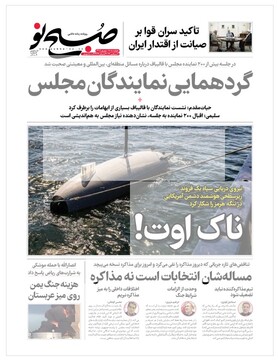 2026-09-09 20:21
From war to resolution
Sobh‑e‑No analyzed Trump’s “invalid policy,” arguing that it stems from Washington’s inability to confront Iran’s power. After months of conflict and failure to counter Iran, the United States now intends to use another pressure lever — referring Iran’s case to the UN Security Council — in hopes of forcing Iran to yield.
-
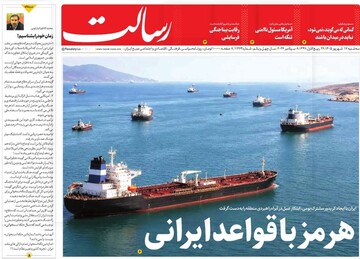 2026-09-08 21:44
Resalat: The US fleet under Iranian ballistic fire
Resalat analyzed the complex IRGC operation targeting two American vessels. The IRGC stated the two US vessels, after being struck and sustaining damage, quickly left the engagement zone out of deep fear of a second wave of missile attacks and were forced into a tactical retreat.
-
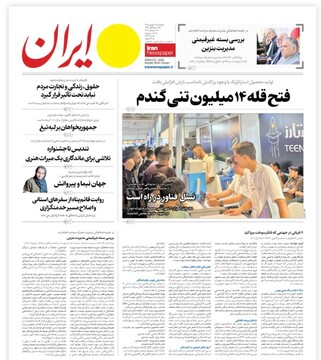 2026-09-07 20:53
The Strait of Hormuz as the US president’s political thermometer
The Iran newspaper analyzed the management of the Strait of Hormuz and the control of tensions in the region: The current situation in the Strait of Hormuz must be understood within the conceptual framework of “erosive peace.
-
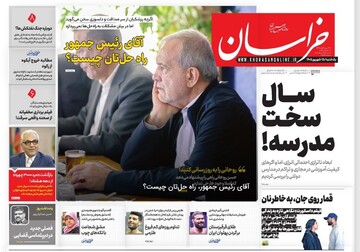 2026-09-06 20:59
A new chapter in judicial diplomacy
Khorasan examined the Judiciary chief’s trip to New Delhi and his participation in the BRICS judicial summit. According to Khorasan, today’s world is moving through a historic transition and entering a new phase in the global configuration of power, economics, politics, and international law.
-
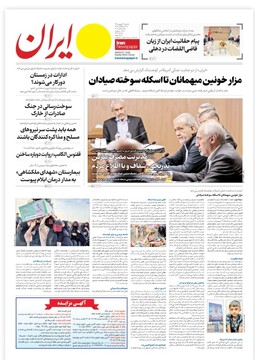 2026-09-05 20:36
The only viable path — America must return to the agreement
The Iran newspaper, in an interview with Mashallah Shakeri, former ambassador of the Islamic Republic of Iran to Pakistan, explored why Pakistan is once again attempting to mediate between Iran and the United States.
-
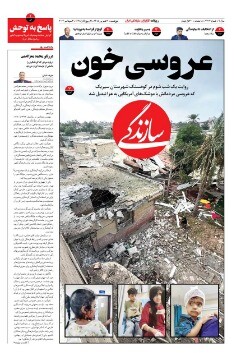 2026-09-04 20:18
Why did Beijing reject the G20 statement?
Sazandegi assessed China’s refusal to join the G20 statement. The meeting was supposed to focus mainly on economic issues, but disagreements over the Strait of Hormuz once again exposed geopolitical rifts among major powers. The G20 countries emphasized the need for safe and free navigation in the Strait of Hormuz, but China declined to endorse the position.
-
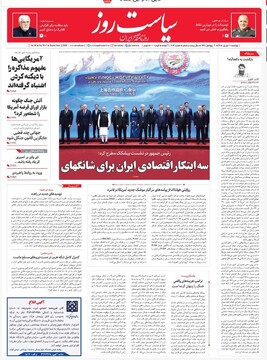 2026-09-02 20:58
America’s humanitarian masks
Siasat‑e‑Rooz dedicates its editorial to the US exploitation of Venezuela’s oil, arguing that Trump’s approach is partly rooted in Washington’s failure in the Strait of Hormuz and partly a continuation of the same “promise‑based” policy whose expiration date has long passed.
-
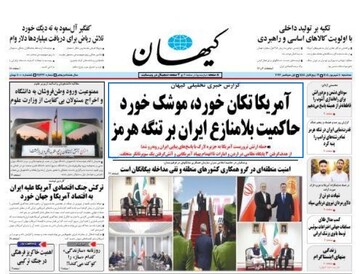 2026-09-01 21:13
The agreement emboldens the Zionists
Kayhan, in an article, criticized the reformist camp’s view of the Islamabad memorandum. The paper wrote: Reformist claimants portray a return to the memorandum as a guarantee of peace, yet an Israeli minister has threatened Iran, saying that an agreement with the United States will not restrain Israel’s determination.
-
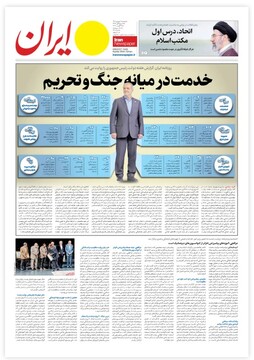 2026-08-31 21:16
SCO summit: Iran’s opportunity to contain unilateralism
The Iran newspaper, in an analytical article, refers to Masoud Pezeshkian’s trip to Bishkek to attend the Shanghai Cooperation Organization summit. Given the ongoing Iran–US war and its consequences for regional and global order, this visit should not be viewed as a routine diplomatic appearance.