Mossad’s ‘low intensity’ war inside Iran
The anarchical riots are traceable to Mossad’s Iran Desk. Organic protests that emerged in the bazaar on 28 Dec 25 were hijacked by operatives controlled by Mossad. The violence was not intended to foment revolution, but to (a) disorient, divide, and weaken the government; (b) de-stabilize Iran before the U.S. and Israel resume the June war; and (c) distress Iranians and shred the unity they displayed during the 12-Day War. This essay is a political-military analysis of Israel’s roles and objectives.
From protest to anarchy
Peaceful protests emerged consequent to economic woes and the Rial’s devaluation. Protests followed patterns observed in historical protests since the Tobacco Concession protests of 1890. On the third night, however, protests unexpectedly transformed into riots.
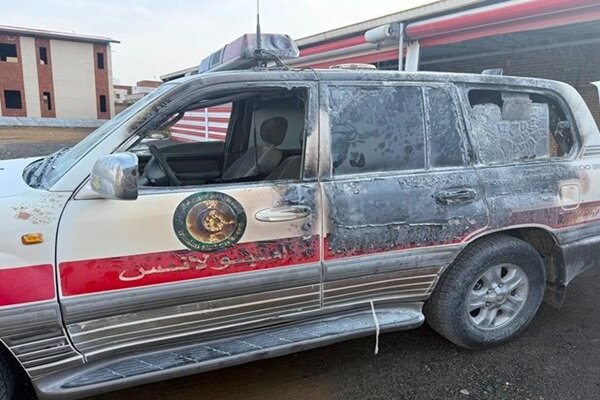
The intensity of the violence and barbarism displayed—such as beheadings and burnings—was horrendous. Targets selected by rioters were puzzling; fire stations, hospitals, ambulances, fire trucks, buses, bazaars, supermarkets, grocers, homes, etc. were destroyed. Why destroy public and private property if “regime change” is the goal? It is sine qua non of victory in “revolutionary warfare” that militants need to secure public support for their cause (see Mao Tse-tung, et al.). Rioters, however, were intentionally alienating the population by destroying infrastructure and economic centers that working men and women and families depend on every day; and killing, maiming or beating civilians and police officers. If violence was not to advance revolution, evidently, something else was afoot.
Armaments and Training
The “something else” became clear when videos emerged of militants in Kermanshah and Ilam wearing Kurdish trousers (sharwall) and brandishing military grade firearms. They were PJAK (Kurdish separatists). Days after Mike Pompeo tweeted, “next stop: Baluchistan,” Lt. Haqiqat was assassinated in Baluchistan by Jaysh al-Adl (Baluch Islamist-separatists). PJAK and Jaysh are materially aided by CIA and Mossad, have harassed Iranian security forces on the western and eastern frontiers, respectively.
CCTV imagery from cities across Iran showed bands of 25–50 men and women disengage from larger groups of peaceful protestors and destroy public property. It became evident that each band had a core leadership of 4–5 individuals (“operatives”), who displayed military training. They were instigating protestors and rioters, and identifying targets. Protestors that refused to engage in violence were kicked and beaten.
Mobile phone recordings and messages on detained rioters showed messages from foreigners—including Germans—instructing them on making improvised explosive devices, targeting of people (to shoot people in the head), and how to behave during interrogations if captured.
Limited information released from interrogations of detainees showed they had been managed from overseas. Seizures of firearms, ammunition, explosives, and scores of Starlink units prove the supply of weapons and electronics came from outside Iran.
Mossad’s hands
Involvement of Mossad—and allied intelligence agencies—is demonstrable. Israeli Minister, Amichai Eliyahu, admitted to a reporter that Mossad agents were operating inside Iran: “I can assure you that our people are working there right now.” Responding to a question about the riots and possible Israeli involvement, he explained, “are they now acting directly to topple the regime? No. Are they acting to ensure that Iran cannot threaten us from all other aspects? Yes.” However, we do not have to rely on Eliyahu’s claim or Israeli media to demonstrate Israeli involvement. “Handala Hack” cracked the work phone of Mossad’s Iran Desk officer, Mehrdad Rahimi. His contacts file held over 600 phone numbers in Iran (+98 code).
Starlink
Iran’s “signals intelligence” (SIGINT) undoubtedly tracked Mehrdad Rahimi’s 600+ contacts and other phones in Iran to develop a map of social connections (called “social network analysis”). To illustrate, if “A” calls five people and “B” calls seven, and A and B have contacts C, D, E in common, phones A to C comprise a “social network.” Internet and mobile communications were not throttled until SIGINT had developed a map of the operatives directing the riots and communicating with outsiders. Once communications were throttled, operatives switched to using Starlink units that were activated free of cost by Elon Musk, owner of X and Starlink. But, unbeknownst to them and Mossad, SIGINT tracked connections using Russian “electronic warfare” equipment, just as the Russian Army does in Ukraine. Starlink is used—apart from communications between operatives and their Mossad handlers—to upload videos to Iran International and Manoto TV. Iran International is an anti-Iranian media outlet. Mehrdad Rahimi had two Iran International telephone numbers in his contacts.
Media campaign
Coordinated media and social media campaigns prove state involvement. Take, for example, X/Twitter, where the “Head of Product” is Nikita Bier, a Zionist, who changed the Iranian flag emoji to the defunct Pahlavi flag. X, since 7 Oct 2023, has suppressed or suspended accounts critical of Israel. Once the riots exploded, pro-Pahlavi accounts—many hitherto unknown—were boosted, while accounts contradicting the “regime change” narrative were deboosted. At the same time, “bots” proliferated, promoting the “official” narrative and attacking critics of Pahlavi. Bots are often easy to identify; say, accounts created in January 2026 with no followers or activity, and displaying generic avatars. On 3 Oct 2025, Haaretz, published an expose on how Israel had used deepfake videos and bots during the 12-Day War. Israeli “bot farms” were active during the riots. An “Iranian revolution” did take place, but only on X.
Israel’s Objectives
My view, supported in part by Eliyahu’s statement, is that Israel’s actions were to keep Iranians frightened and unsettled, and Tehran on the defensive. This to prevent or delay a preemptive strike by Iran: not coincidentally, some of violence was near missile bases that had seen action in the June war. Moreover, anarchy throughout Iran will weaken the government and country ahead of the next attack by U.S. and Israel. If revolution was sparked accidently, that is the benefit of Israel, but Tel Aviv was not counting on it.
Burning mosques was not going to secure popular support for the rioters. Iranian Shia, Sunni, Zoroastrians, Christians, and Jews are appalled by the sacrileges. Desecrations of spiritual and sepulchral edifices—mosques, seminaries, and shrines—were for two reasons: first, so Western media can say, “Iranians hate Islam and the Islamic Republic”; and second, to incense religious officials and law enforcement into using excessive force so Western media can claim “horrific massacres of innocent Iranians.”
Regime change was not the objective, and now that riots have been quelled, media and allied nations are exaggerating deaths as an excuse for intervention by the U.S.
Leave a Comment