Ancient Sadeh festival can reinforce social cohesion and unity, governor-general says

TEHRAN – Kerman’s governor-general Mohammad-Ali Talebi said on Wednesday that the ancient Sadeh festival is a national ritual belonging to all Iranians and can contribute to social cohesion and unity.
Speaking on the sidelines of Sadeh celebrations in Kerman province, Talebi said the festival goes beyond a religious ceremony and should be viewed as part of Iran’s shared cultural heritage, Miras Aria reported.
Talebi said Sadeh has deep historical roots in Iran and has, at times, faced neglect despite its national character. He added that the festival has historically carried limited religious aspects and cannot be attributed exclusively to a single community.
He said the Zoroastrian community has played a key role in preserving the festival, while stressing that Sadeh is an Iranian tradition open to all citizens.
Talebi said Kerman province was prepared to support broader celebrations of the festival, but added that the Zoroastrian community had opted for a more limited event this year in consideration of current conditions and in respect for victims of recent incidents.
The official then underlined the festival has the potential to strengthen national solidarity by reinforcing shared values and social cohesion in support of national interests and territorial integrity.
Talebi said there is no distinction between Muslims and Zoroastrians in this regard, adding that all Iranians share the goal of promoting the country’s dignity.
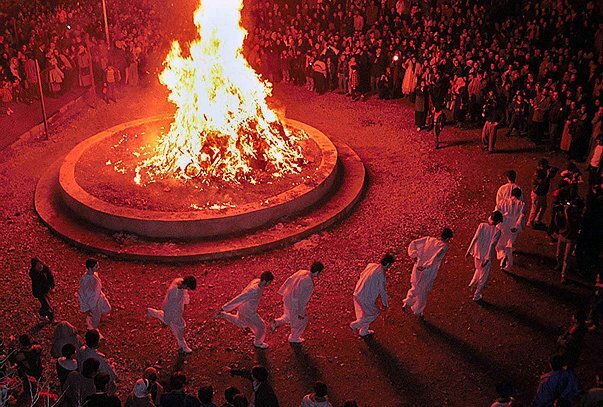
Sadeh, also known as Jashn-e Sadeh, is an ancient Persian festival marked by a communal fire ritual symbolizing light and warmth during mid-winter.
The festival is held annually on the 10th day of the Iranian month of Bahman, which this year falls on Jan. 29. It is traditionally celebrated 50 days before Nowruz, the Iranian New Year, and 40 days after Yalda Night.
Sadeh is observed in several Iranian cities, including Yazd, Isfahan and Shiraz, as well as among Iranian communities abroad. In 2023, UNESCO recognized Sadeh as a shared cultural heritage of Iran and Tajikistan.
AM
Leave a Comment